

Your website just cost you a million-dollar client. They never told you this, of course. They simply clicked away after three seconds, decided your brand wasn’t credible, and chose your competitor instead.A website credibility audit reveals a shocking truth: 94% of people lose trust in a website due to poor design. Not content. Not pricing. Design.Your website isn’t just a digital brochure anymore. It’s your brand’s credibility engine: and right now, it might be running in reverse.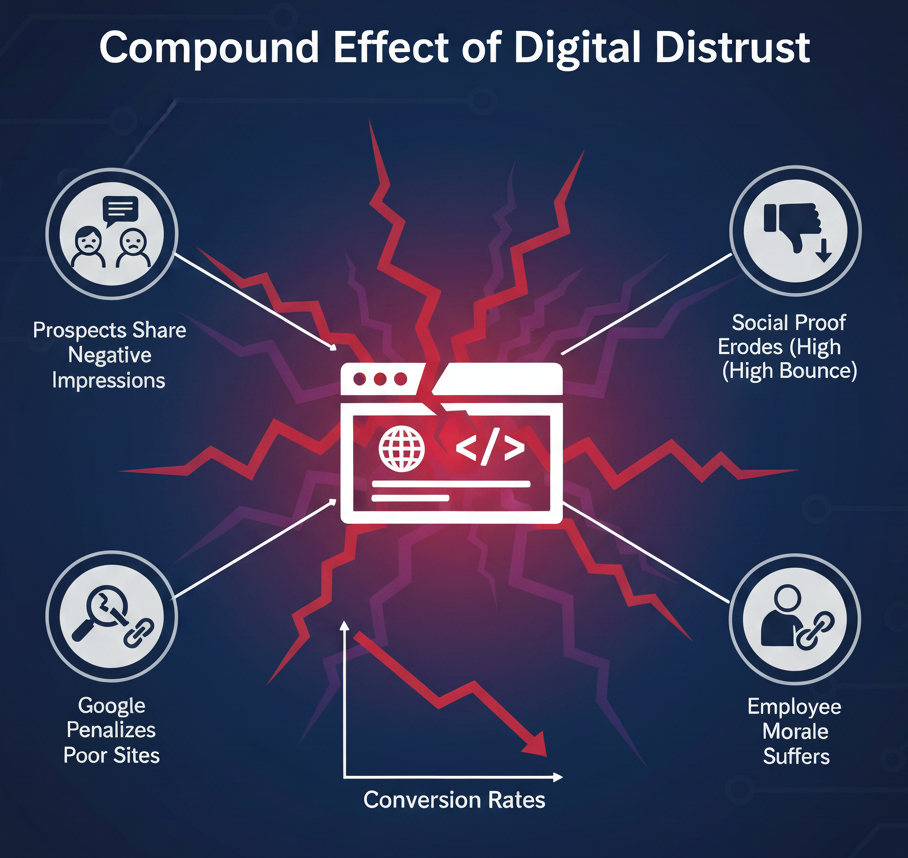 Poor website experiences don’t just lose individual sales. They create reputation ripple effects:
 Website improvements compound over time. Better design increases trust. Higher trust improves conversion rates. Better conversions reduce acquisition costs. Lower acquisition costs improve profitability.Companies that invest strategically in website credibility see measurable impacts:
The Silent Revenue Killer
Most CEOs obsess over sales funnels, ad spend, and conversion rates. They miss the elephant stomping through their digital front door.Your prospects form judgments about your company within 50 milliseconds of landing on your site. That’s faster than a blink. Faster than conscious thought.Think of your website like a storefront on Fifth Avenue. Would you let peeling paint, broken windows, and mismatched signage represent your million-dollar brand? Of course not.Yet that’s exactly what’s happening online. Every broken link whispers “unprofessional.” Every slow-loading page screams “outdated.” Every mobile formatting issue shouts “we don’t care about half our audience.”The Credibility Killers Hiding in Plain Sight
Visual Inconsistency Breeds DistrustYour logo appears in three different sizes across five pages. Your color scheme shifts from navy to royal blue randomly. Your fonts look like they were chosen by committee: a committee that never met.These aren’t minor details. They’re credibility landmines.When strategic messaging doesn’t align with visual execution, prospects notice. Subconsciously, they’re asking: “If they can’t maintain consistency on their own website, how can they manage my project?”Technical Decay Reflects Operational DecayDead links don’t just frustrate users: they signal organizational neglect. Site speed issues suggest you don’t understand modern customer expectations. Security warnings imply you cut corners on important things.Your competitors know this. While you’re debating quarterly budgets, they’re investing in digital infrastructure that makes them look more established, more reliable, more trustworthy.Mobile Experience Exposes PrioritiesOver 60% of web traffic comes from mobile devices. If your site isn’t mobile-optimized, you’re telling the majority of your audience they don’t matter.This isn’t about technology: it’s about values. Companies that ignore mobile optimization reveal they’re reactive, not proactive. They follow trends instead of setting them.When Your Website Becomes Your Biggest Competitor
Revenue-focused executives often miss this connection: brand credibility directly impacts conversion rates. A website that undermines credibility creates an invisible sales ceiling.Your sales team works overtime to build trust. Your marketing team crafts compelling campaigns. Your product team delivers excellence.Then prospects visit your website and undo months of relationship-building in seconds.The Compound Effect of Digital DistrustPoor website experiences don’t just lose individual sales. They create reputation ripple effects:- Prospects share negative impressions with colleagues
- Google’s algorithm penalizes slow, poorly-structured sites
- Social proof erodes as visitors bounce quickly
- Employee morale suffers when they’re embarrassed to share company links
What a Website Credibility Audit Actually Reveals
Most “website audits” focus on technical minutiae. They count broken links and measure page speed: important, but insufficient.Strategic audits examine the deeper question: Does your digital presence reinforce or undermine your market positioning?Brand Alignment AssessmentEvery page should tell the same brand story. Same values. Same voice. Same visual identity.Audits reveal where this breaks down. Where your homepage promises innovation but your about page feels corporate. Where your service descriptions sound confident but your blog posts seem uncertain.Competitive Positioning AnalysisYour website exists in context. While you’re focused internally, prospects are comparing you to alternatives.Strategic audits benchmark your digital presence against market leaders. They identify where competitors are outpacing you in user experience, content depth, and credibility signals.Revenue Impact EvaluationThe most valuable audits connect website performance to business outcomes. They track how design changes affect conversion rates. How messaging adjustments influence lead quality. How technical improvements impact customer acquisition costs.The Executive’s Website Audit Checklist
Smart leaders approach website evaluation systematically:First Impression Analysis Load your homepage on mobile. Time how long it takes. Evaluate it like a first-time visitor would. Is your value proposition clear within five seconds? Does the design reflect your premium positioning?Competitive Benchmark Visit your top three competitors’ websites. Compare user experience, content quality, and visual sophistication. Where do they appear more credible or established?Technical Foundation Review Test core functionality across devices. Check contact forms, search features, and navigation paths. Broken functionality equals broken trust.Content Consistency Audit Review messaging across all pages. Do they reinforce the same brand personality? Do they speak to your target audience’s priorities and pain points?The ROI of Getting This Right
Website improvements compound over time. Better design increases trust. Higher trust improves conversion rates. Better conversions reduce acquisition costs. Lower acquisition costs improve profitability.Companies that invest strategically in website credibility see measurable impacts:- Trust signals can increase signups by 16% (Conversion Rate Experts).
- 63% of shoppers abandon purchases due to incomplete or inconsistent information (Retail Times).
- Prioritizing user experience (UX) design can boost conversion rates by up to 400% (RMS).
- Strategic optimization can lead to landing-page conversion rates between 21-50% (Salesgenie).