

Here’s the marketing paradox keeping CMOs up at night: AI can churn out content faster than a caffeinated intern, but consumers are getting savvier at spotting robotic messaging, and they hate it.We’re living in an age where AI-generated content is projected to make up 90% of online material by 2025, yet consumer trust in artificial messaging is plummeting faster than a poorly targeted ad campaign. The challenge isn’t whether to use AI in your AI content strategy, it’s how to use it without sacrificing the human connection that drives real brand loyalty.The stakes couldn’t be higher. Get this balance wrong, and you’ll join the growing graveyard of brands that sound like they’re run by chatbots.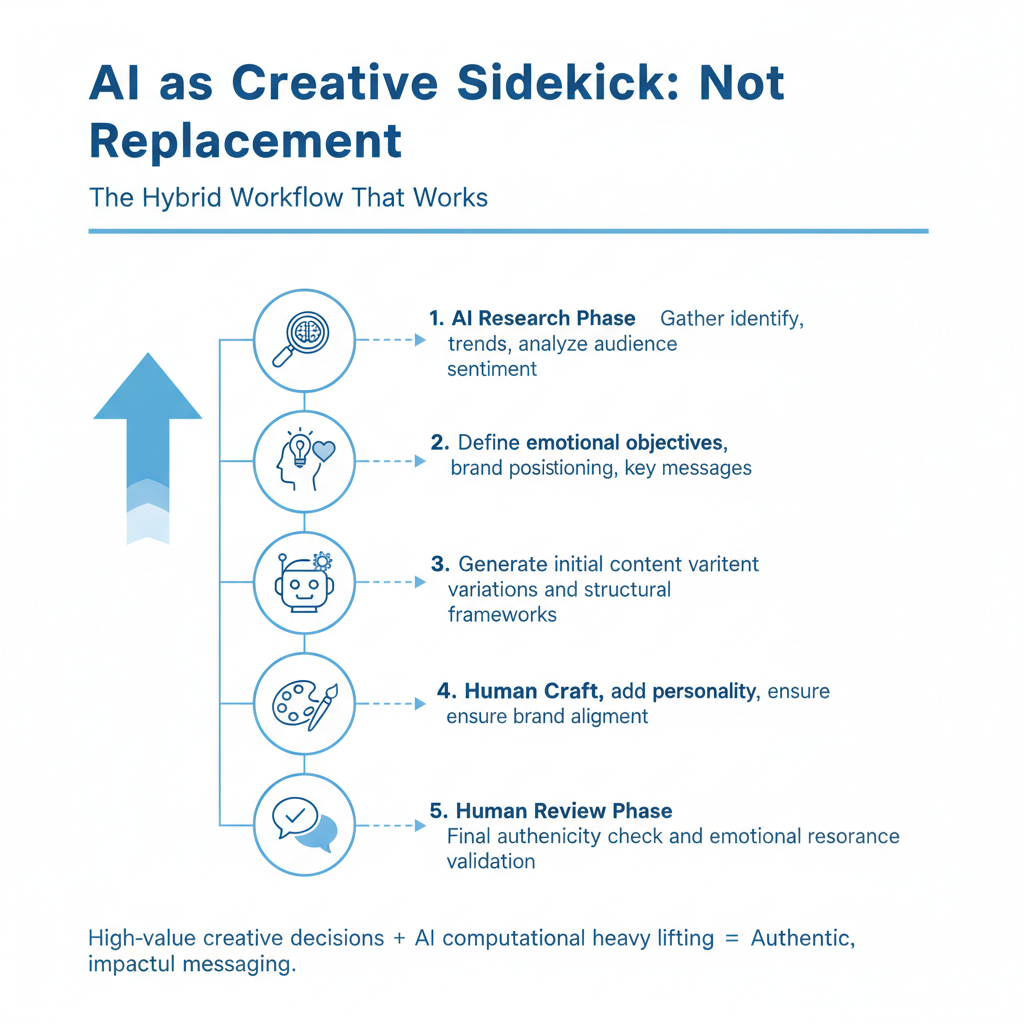 The most successful AI content marketing strategies position artificial intelligence as the ultimate research assistant and brainstorming partner.The Hybrid Workflow That WorksStart with AI for ideation and research. Use it to identify trending topics, analyze competitor messaging, and generate initial drafts. Then apply the human filter: emotional intelligence, brand intuition, and creative flair that transforms good content into memorable messaging.Here’s a workflow that preserves authenticity while leveraging AI efficiency:
Where Bots Shine, Where Brands Falter
AI excels at the heavy lifting: data analysis, trend identification, and content production at scale. Your AI powered marketing tools can generate dozens of social media posts, email subject lines, and product descriptions in minutes.But here’s where things get messy.Consumers experience what researchers call “moral disgust” when they discover emotional messages are AI-generated rather than human-authored. Studies show that when people realize a heartfelt message from a brand was written by AI, they respond with negative brand perceptions, reduced recommendations, and increased brand switching.The authenticity penalty hits hardest with emotional communications. A fitness brand’s motivational message about overcoming challenges? Pure gold when human-written. The same message labeled as AI-generated? Brand poison.This isn’t about consumer irrationality, it’s about trust. When your audience feels deceived, even unintentionally, you’ve damaged the foundation of every relationship: authenticity.Secrets to Unmistakably Human Messaging
The solution isn’t abandoning AI, it’s mastering the art of strategic messaging that blends efficiency with empathy.Tone: The Emotional FingerprintHuman messaging breathes with personality quirks, cultural references, and conversational imperfections that AI struggles to replicate naturally. Your brand’s tone should feel like a conversation with a knowledgeable friend, not a dissertation from a search algorithm.Consider how Dollar Shave Club revolutionized razor marketing not through superior technology, but through irreverent, human-centric messaging that made shaving feel like a personal choice rather than a chore.Voice Consistency: The Brand DNAWhile AI can maintain grammatical consistency, human oversight ensures your voice remains authentically yours across all touchpoints. This goes beyond style guides, it’s about embedding your brand’s values into every sentence.Smart Personalization: Beyond “Hi, [Name]!”True personalization isn’t about mail merge fields. It’s about understanding customer context, pain points, and aspirations. AI can identify patterns, but humans craft the emotional bridges that turn data into meaningful connections.AI as Creative Sidekick: Not Replacement
The most successful AI content marketing strategies position artificial intelligence as the ultimate research assistant and brainstorming partner.The Hybrid Workflow That WorksStart with AI for ideation and research. Use it to identify trending topics, analyze competitor messaging, and generate initial drafts. Then apply the human filter: emotional intelligence, brand intuition, and creative flair that transforms good content into memorable messaging.Here’s a workflow that preserves authenticity while leveraging AI efficiency:- AI Research Phase: Gather data, identify trends, analyze audience sentiment
- Human Strategy Phase: Define emotional objectives, brand positioning, key messages
- AI Draft Phase: Generate initial content variations and structural frameworks
- Human Craft Phase: Refine tone, add personality, ensure brand alignment
- Human Review Phase: Final authenticity check and emotional resonance validation