Most brands are drowning in data but starving for connection.You’ve got metrics coming out of your ears. Click-through rates, conversion funnels, attribution models. But your audience? They’re scrolling past your content like it’s another billboard on the highway.Here’s the thing: People don’t buy products. They buy stories. They buy transformation. They buy the version of themselves they want to become.That’s where AIDA storytelling comes in: the bridge between cold marketing frameworks and warm human connection. It’s not just about grabbing attention anymore. It’s about crafting narratives that guide prospects from that first spark of curiosity all the way to becoming loyal advocates.
Why Traditional AIDA Falls Short
The classic AIDA model: Attention, Interest, Desire, Action: isn’t wrong. It’s just incomplete.Think about it. When was the last time a bulleted list of features made you fall in love with a brand? When did a generic “Buy Now” button make your heart race?Never.Because traditional AIDA treats people like robots following programmed steps. Real humans don’t work that way. We make decisions with our emotions and justify them with logic. We connect through stories, not statistics.The brands winning today understand this. They’ve evolved beyond transactional AIDA into transformational storytelling. They don’t just capture attention: they capture imagination.
The Four Acts of Narrative Conversion
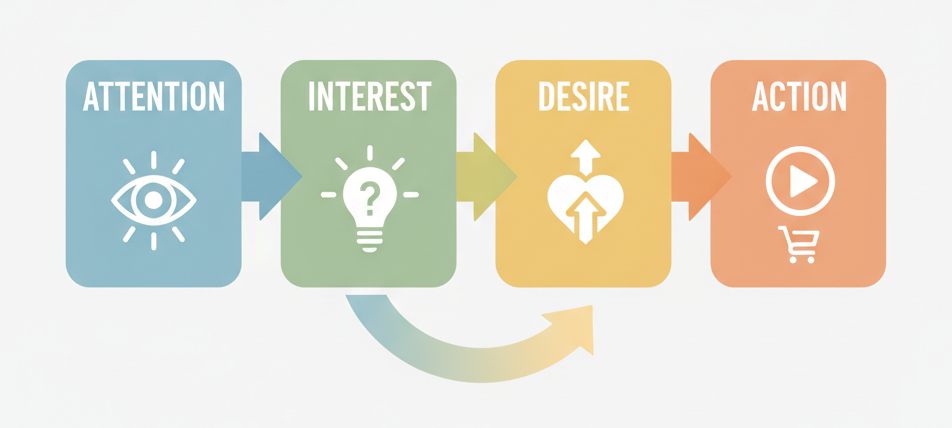
Let’s rebuild AIDA through a storytelling lens. Each stage becomes an act in your brand’s ongoing narrative.
Act 1: Attention Through Intrigue
Your opening moment isn’t about being the loudest voice in the room. It’s about being the most intriguing.Consider how Apple doesn’t lead with technical specs. They lead with possibility. “Think Different” wasn’t describing a computer: it was describing a mindset. That’s narrative attention.Your attention-grabbing story needs three elements:
- A hook that disrupts expected patterns
- A promise of transformation worth pursuing
- An emotional entry point that resonates immediately
The best attention-grabbing narratives feel like the beginning of a movie you can’t turn off. They pose questions that demand answers.
Act 2: Interest Through Identification
Once you have their attention, you need their empathy. This is where most brands stumble. They pivot immediately to product features instead of deepening the emotional connection.Smart brands use this stage to build what psychologists call “narrative transportation”: the feeling of being absorbed into a story world. Your prospect should see themselves as the protagonist facing a challenge your brand can help overcome.Netflix masters this. Their interface doesn’t just show you movies: it shows you versions of yourself. “Because you watched…” creates micro-narratives around your identity and preferences. Every recommendation feels personally curated.For your brand, interest means demonstrating understanding before showcasing solutions. Show that you get their world, their challenges, their aspirations.
Act 3: Desire Through Demonstration
Desire isn’t built through features. It’s built through vivid scenarios of transformation.This is where your story needs to paint a picture so compelling that not taking action feels like missing out on their best possible future. You’re not selling a product: you’re selling a better version of their life.Patagonia does this brilliantly. They don’t sell jackets: they sell adventures. Their storytelling consistently shows customers living more authentic, connected lives through outdoor experiences. The jacket becomes a tool for transformation, not the end goal.Your desire stage should answer the unspoken question: “What does life look like after I make this decision?”
Act 4: Action Through Alignment
The final act isn’t about pushing harder. It’s about making the next step feel inevitable.When your story has been crafted well, the call to action doesn’t feel like a sales pitch. It feels like the natural conclusion to the narrative journey you’ve taken together.Think about how Airbnb frames their booking process. It’s not “Reserve this property.” It’s “Book this experience.” The action aligns perfectly with the story they’ve told about belonging anywhere.
The Narrative Architecture Framework
Here’s how to structure your AIDA storytelling systematically:
The Setup (Attention): Introduce a relatable character facing a recognizable challenge. This character should mirror your ideal customer’s situation.
The Struggle (Interest): Deepen the challenge. Show the consequences of inaction. Help your audience feel the weight of the problem.
The Solution (Desire): Introduce your brand as the guide, not the hero. Position your product or service as the tool that enables transformation.
The Success (Action): Show the transformed life. Make the call to action feel like claiming their deserved outcome.This isn’t just marketing: it’s modern mythology. You’re helping people see themselves in heroic narratives where your brand plays a supporting but crucial role.
Common Storytelling Mistakes That Kill Conversion
Even with good intentions, most brands sabotage their own narratives. Here are the biggest conversion killers:
Making your brand the hero: Your customer is the protagonist. Your brand is the wise mentor providing tools and guidance. When you make your company the hero, the story becomes about you instead of them.
Skipping emotional stakes: Features don’t create urgency. Consequences do. If your story doesn’t establish what’s at risk, why should anyone care about your solution?
Generic transformation promises: “Increase efficiency” is not a story. “Work fewer weekends while growing your business” paints a specific, desirable picture.
Weak story resolution: If your call to action doesn’t feel like the natural next chapter in the story you’ve told, you haven’t earned the conversion.
Measuring Narrative Impact
Traditional metrics still matter, but they don’t tell the complete story. You need to measure engagement depth, not just engagement frequency.Look beyond click-through rates to time spent with content. Track how far people progress through your narrative before dropping off. Monitor social sharing and word-of-mouth referrals: strong indicators that your story resonates enough to retell.The ultimate measurement? Customer lifetime value. When your AIDA storytelling creates genuine connection, people don’t just buy once. They become part of your brand’s ongoing narrative.
Implementation Strategy for Brand Leaders
Start with your customer success stories. Every testimonial is a potential AIDA narrative waiting to be developed. Look for transformation moments: the before and after states that showcase real change.Map these stories to your customer journey. Which narratives work best at different stages? How can you sequence multiple story arcs to guide prospects through longer sales cycles?Test story elements systematically. A/B test different opening hooks, transformation promises, and resolution styles. Let data inform your narrative decisions without letting it override human connection.Most importantly, ensure your entire team understands the stories you’re telling. From sales to customer service, everyone should be able to advance the narrative consistently.
The Competitive Advantage of Authentic Storytelling
In a world where anyone can replicate features, copy pricing, or match convenience, stories become your sustainable differentiator. Your unique narrative: rooted in authentic experience and values: can’t be commoditized.Companies like Warby Parker didn’t win by making better glasses. They won by telling a better story about what it means to see clearly in every sense of the word. Their narrative connected practical vision correction with personal style and social responsibility.When you master AIDA storytelling, you’re not just improving conversion rates. You’re building brand equity that compounds over time. Each touchpoint reinforces the narrative, creating deeper connection and stronger loyalty.
Your Next Chapter Starts Now
AIDA storytelling transforms marketing from interruption into invitation. Instead of breaking into conversations, you create stories worth joining.The framework gives you structure, but the magic happens when you understand your audience deeply enough to craft narratives that feel personally meaningful. When prospects see themselves in your story, conversion becomes connection.Ready to transform your brand narratives from features to feelings? The first step is auditing your current content through the lens of story structure. Where are you grabbing attention versus building intrigue? How are you creating desire versus listing benefits?
Contact our team to discover how strategic storytelling can revolutionize your conversion rates and build the kind of brand loyalty that drives sustainable growth.