

Your competitors are playing checkers while you could be playing chess.Most brands scatter their content like confetti, hoping something sticks. They chase individual keywords, create isolated blog posts, and wonder why their organic traffic plateaus. Meanwhile, savvy marketers are building content empires: strategic networks that establish them as the undisputed authority in their space.The difference? They understand that search engines don’t just want good content. They want proof you’re the definitive expert on a topic. Content clusters deliver that proof through systematic, interconnected content architecture that signals deep expertise to both users and algorithms.This isn’t about publishing more content. It’s about publishing smarter content that compounds your authority over time.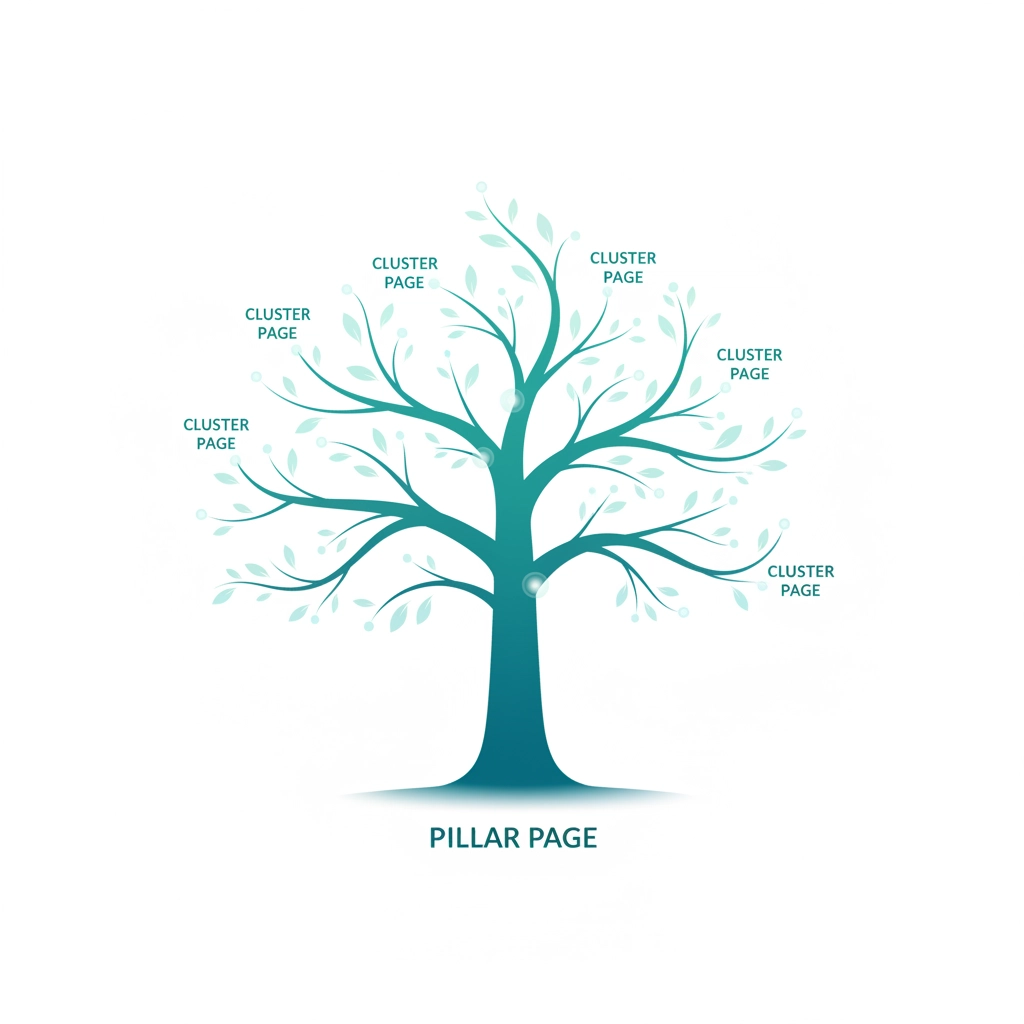 Strategic planning separates successful cluster implementations from scattered content efforts. Your planning phase determines whether you’ll build sustainable authority or simply create more content noise.Identifying Pillar Topics TemplateUse this framework to evaluate potential pillar topics:Business Alignment: Does this topic directly relate to your products, services, or expertise? Can you naturally transition readers from education to engagement with your offerings?Search Demand: Use tools like Ahrefs or SEMrush to verify substantial search volume for your main topic and related subtopics. Look for topics with at least 1,000 monthly searches and multiple related keywords.Authority Potential: Can you realistically become a recognized expert in this area? Do you have the knowledge, experience, or resources to create truly comprehensive content?Competition Analysis: Examine existing content in the space. Look for gaps in coverage, outdated information, or opportunities to provide unique insights.Subtopic Abundance: Does your pillar topic have enough related subtopics to support 8-12 cluster pages? If you can’t identify multiple supporting topics, your pillar may be too narrow.Mapping Supporting Cluster Ideas ExampleLet’s say your pillar topic is “Email Marketing Automation.” Your cluster map might include:
What Are Content Clusters?
Content clusters are strategic groupings of thematically related pages that comprehensively cover a broad topic from multiple angles. Think of them as content ecosystems where every piece serves a specific purpose while contributing to a larger narrative about your expertise.Unlike traditional content strategies that target individual keywords in isolation, content clusters create semantic relationships between your pages. Each piece of content supports and amplifies the others through strategic internal linking, creating a web of authority that search engines can’t ignore.The core components include:Topic Authority: Deep, comprehensive coverage of a subject that demonstrates genuine expertise rather than surface-level keyword targeting.Semantic Relationships: Content pieces that naturally connect through shared themes, concepts, and user intent rather than forced keyword associations.Strategic Internal Linking: A deliberate linking structure that guides users through your content journey while sending clear topical signals to search engines.User Journey Mapping: Content that addresses different stages of the customer journey, from awareness through decision-making, all within your area of expertise.This approach transforms your content from a collection of individual pages into a cohesive knowledge base that positions you as the go-to resource in your field.Pillar-Cluster Architecture: Definition & Benefits
The pillar-cluster model revolutionizes how you structure content by creating a hub-and-spoke system centered around topical expertise.Pillar Pages: Your Content FoundationPillar pages serve as comprehensive, authoritative resources that broadly cover your main topic. These aren’t just long blog posts: they’re definitive guides that could stand alone as complete resources. A quality pillar page typically ranges from 3,000 to 10,000 words and addresses the core topic from multiple angles.Your pillar page should answer the fundamental questions your audience has about the topic while providing enough depth to establish authority. It’s the content equivalent of a textbook chapter: comprehensive enough to educate, but organized enough to guide readers to more specific information.Cluster Pages: Specialized Deep DivesCluster pages are focused content pieces that explore specific subtopics, questions, or applications related to your pillar theme. These typically range from 1,500 to 3,000 words and target long-tail keywords that support your main topic.Each cluster page should be valuable on its own while naturally connecting back to your pillar page. They address specific pain points, use cases, or questions that your pillar page introduces but doesn’t fully explore.How Search Engines Reward Structured ContentSearch algorithms have evolved beyond keyword matching to understanding topical relevance and authority. When you create comprehensive cluster architecture, you’re providing search engines with clear signals about your expertise depth.When executed well, structured pillar–cluster architecture tends to expand your ranking footprint across related queries and increases click-through rates by clarifying topical relevance for both users and crawlers.The algorithm recognizes patterns in your content structure, internal linking, and topical coverage. When done correctly, this signals that your site is a comprehensive resource worthy of higher rankings across related keywords.Planning Your Content Cluster Strategy
Strategic planning separates successful cluster implementations from scattered content efforts. Your planning phase determines whether you’ll build sustainable authority or simply create more content noise.Identifying Pillar Topics TemplateUse this framework to evaluate potential pillar topics:Business Alignment: Does this topic directly relate to your products, services, or expertise? Can you naturally transition readers from education to engagement with your offerings?Search Demand: Use tools like Ahrefs or SEMrush to verify substantial search volume for your main topic and related subtopics. Look for topics with at least 1,000 monthly searches and multiple related keywords.Authority Potential: Can you realistically become a recognized expert in this area? Do you have the knowledge, experience, or resources to create truly comprehensive content?Competition Analysis: Examine existing content in the space. Look for gaps in coverage, outdated information, or opportunities to provide unique insights.Subtopic Abundance: Does your pillar topic have enough related subtopics to support 8-12 cluster pages? If you can’t identify multiple supporting topics, your pillar may be too narrow.Mapping Supporting Cluster Ideas ExampleLet’s say your pillar topic is “Email Marketing Automation.” Your cluster map might include:- Email segmentation strategies
- Automation workflow design
- Email personalization techniques
- Lead nurturing sequences
- Abandoned cart recovery campaigns
- Email deliverability optimization
- A/B testing for automated emails
- Integration with CRM systems
- Behavioral trigger campaigns
- Email automation metrics and KPIs
Step-by-Step Content Cluster Implementation
Implementation success depends on systematic execution rather than sporadic content creation. This framework ensures your cluster builds authority methodically.- Map your topical universe
- Start with your pillar keyword and expand outward using semantic research. Modern SEO isn’t about exact keyword matches: it’s about topical relevance and comprehensive coverage.
- Use keyword research tools to identify related terms, analyze Google’s “People Also Ask,” explore related searches, and examine competitor content to understand the full topical landscape.
- Create a semantic map that shows how your cluster topics relate to each other and to your main pillar. This visual representation helps identify content gaps and ensures comprehensive coverage. For brands looking to optimize for emerging search technologies, understanding answer engine optimization becomes crucial as AI-powered search evolves.
- Build the pillar page
- Structure for both comprehensive reading and quick scanning.
- Executive Summary: lead with a clear overview of what readers will learn and why it matters to their business outcomes.
- Logical Content Flow: organize information in a sequence that builds understanding progressively, from foundational concepts to advanced applications.
- Scannable Format: use descriptive headings, bullet points, and visual elements to make content easily digestible.
- Strategic CTAs: include relevant calls-to-action that connect your expertise to your services without being pushy.
- Cluster Page Previews: briefly introduce related topics with links to your cluster pages, setting up the internal linking structure.
- Create cluster deep dives
- Each cluster page should go deep on its specific topic while maintaining clear connections to your pillar theme. Aim for comprehensive coverage so a reader feels confident they understand that aspect thoroughly.
- Balance expert-level insights with accessibility. Demonstrate expertise without alienating non-experts.
- Use examples, case studies, and practical applications to make complex concepts understandable.
- Interlink with intent
- Link from your pillar page to relevant cluster pages using descriptive anchor text that includes target keywords naturally.
- Each cluster page should link back to the pillar page and to related cluster pages where contextually appropriate.
- Avoid over-linking or forced connections. Each link should provide genuine value by directing readers to relevant, helpful information. For comprehensive internal linking strategies, conducting regular SEO audits helps identify optimization opportunities across your content cluster.
Optimizing With AI Content Creation Tools
AI can accelerate specific tasks, but unchecked automation risks factual errors, tone drift, bias, and erosion of perceived authority. Treat AI as an assistant—not an author.Integrating AI for Research, Outlining, and QAUse tools like ChatGPT, Claude, or Jasper to support the process:- Research enhancement: identify subtopics, generate outlines, and surface related questions within your cluster.
- Outline and prompt scaffolding: structure sections and talking points. Do not publish AI-written copy; human authors should draft or heavily rewrite any AI-assisted text.
- Quality control: use AI to flag inconsistencies, suggest semantic keywords, and surface potential internal linking opportunities—then validate manually.
- Use AI to brainstorm cluster topics and create content briefs
- Generate comprehensive outlines for pillar and cluster pages
- Identify keyword variations and semantic terms to include
- Assign a human author to draft each piece using the approved brief and outline
- Use AI only to ideate examples, definitions, or counterpoints—never paste output verbatim
- Require subject-matter expert (SME) review for accuracy, claims, and nuance
- Human editor performs line edits for voice, clarity, and narrative cohesion
- Fact-check all stats, dates, and quotes; add citations to primary sources
- Run compliance, bias, originality, and copyright checks; avoid pasting sensitive data into public tools
- Use AI to suggest internal links and identify content gaps against top-ranking competitors
- Generate meta descriptions and social snippets as starting points—finalize by hand
Measuring Success: KPIs for Content Clusters
Track KPIs that connect topical authority to revenue. Tag your pillar and cluster URLs consistently so you can isolate performance in analytics and Search Console.Acquisition KPIs- Organic sessions to pillar and clusters: Trend 28/90-day windows in Google Analytics 4. Filter by page path or a content grouping for the cluster.
- Share of site organic from the cluster: cluster organic sessions ÷ total organic sessions. Target steady share growth as new pages publish.
- New organic landing pages (top 100): Count cluster URLs with impressions/clicks in Google Search Console and ranking keywords in Ahrefs or SEMrush.
- Keyword coverage: total ranking keywords mapped to the cluster; report Top 3, Top 10, and Top 20 counts in Ahrefs/SEMrush.
- Impressions and average position: GSC Performance report filtered to cluster URLs; monitor impression growth and weighted average position.
- SERP features won: featured snippets, People Also Ask, and sitelinks for cluster pages (track counts in SEO tools).
- CTR from SERP: GSC CTR for cluster pages; improve titles/meta to lift CTR on high-impression queries.
- Engagement time per session and scroll depth: GA4 engagement time and scroll events on cluster pages; set thresholds by content type.
- Pages per cluster session: GA4 pages/session where landing page is within the cluster; aim to see users follow internal links.
- Referring domains to pillar and clusters: new linking domains/month measured in Ahrefs/SEMrush to gauge earned authority.
- Internal link flow: count internal links pointing to the pillar and between clusters; audit quarterly and add links from high-traffic pages.
- Topical breadth index: percentage of planned subtopics with at least one ranking page; target 80%+ coverage over 6 months.
- Assisted conversions and conversion rate: GA4 conversion events attributed to cluster sessions; segment by landing page group.
- Lead quality: MQL→SQL rate and pipeline created from cluster-sourced leads in your CRM; report quarterly.
- Micro-CTA completion rate: downloads, newsletter signups, demo video views on cluster pages; optimize CTAs by page intent.
- Content freshness: percentage of cluster pages updated in last 90 days; maintain 30–50% for competitive topics.
- Content decay watchlist: pages with 20%+ traffic drop over 60 days; schedule refreshes and internal link boosts.
- Index coverage and crawl health: GSC Pages report for cluster URLs; resolve soft 404s, redirects, and canonical issues.
- Define the cluster: use a URL structure (e.g., /topic/) or a page tag so you can filter in GA4 and GSC.
- Build reports:
- GA4 Explore with a segment for cluster URLs and custom metrics (engagement time, conversions).
- GSC saved filters for cluster pages and regex query groups.
- A Looker Studio dashboard combining GA4, GSC, and Ahrefs/SEMrush exports.
- Set targets by phase:
- 0–30 days: indexing, impressions, keyword coverage.
- 31–90 days: organic sessions, CTR, engagement depth.
- 91–180 days: Top 10 share, assisted conversions, pipeline influence.
- Review cadence:
- Weekly: impressions, new keywords, crawl/index issues.
- Monthly: traffic, rankings, engagement, internal link additions.
- Quarterly: conversions, SQL rate, pipeline and revenue attribution.
- Annotate changes: log publishes, updates, and link additions in your dashboard to explain trend shifts.
Templates & Resources
These practical tools accelerate your cluster implementation while ensuring strategic consistency.Pillar & Cluster Content Planning TemplatePillar Page Framework:- Topic: [Main keyword/theme]
- Target Audience: [Specific persona and pain points]
- Search Intent: [Information, comparison, solution]
- Content Goals: [Awareness, consideration, decision]
- Key Sections: [5-8 main topic areas to cover]
- Target Word Count: [3,000-10,000 words]
- Internal Links: [Planned connections to cluster pages]
- Subtopic: [Specific aspect of pillar theme]
- Primary Keyword: [Long-tail keyword, 3+ words]
- Secondary Keywords: [2-4 related terms]
- User Questions Addressed: [Specific questions this content answers]
- Connection to Pillar: [How this supports main topic]
- Target Word Count: [1,500-3,000 words]
- Internal Links: [Connections to pillar and related clusters]
- Pillar page links to all relevant cluster pages
- Each cluster page links back to pillar page
- Cluster pages link to related cluster pages where contextually relevant
- Anchor text is descriptive and includes target keywords naturally
- All links provide genuine value to readers
- No more than 3-5 internal links per cluster page
- Links are distributed throughout content, not clustered at the end
- Address segmentation based on behavior, demographics, engagement, and purchase history
- Include specific examples for e-commerce and SaaS businesses
- Provide implementation templates and tools recommendations
- Connect to broader email automation strategy (pillar page topic)
- Target 2,000 words with actionable takeaways