

What is Rebranding and Why Does It Matter?
A company rebranding strategy is the process of changing a business’s identity—its name, logo, messaging, and market positioning—to better align with its current goals. It’s not just a cosmetic change; it’s a strategic response to business shifts like entering new markets, outgrowing an old identity, or repositioning against competitors.
Key components of a successful rebrand include:
- Strategic Assessment: Auditing your current brand and defining clear objectives.
- Deep Research: Understanding your audience, competitors, and market.
- Identity Development: Creating new brand elements like a mission, values, and visual identity.
- Stakeholder Engagement: Involving employees and customers in the process.
- Phased Rollout: Launching internally first, then externally with clear communication.
- Performance Monitoring: Tracking KPIs and gathering feedback to refine the approach.
The stakes are high: a well-executed rebrand can increase revenue by up to 23%, while a poorly planned one can alienate customers. Done right, rebranding strengthens loyalty, opens new revenue streams, and positions your company for long-term growth.
I’m Chris Hornak, Co-Founder of Swift Growth Marketing. We help brands develop rebranding strategies that transform them into category authorities through strategic positioning and creative execution.
Key Triggers: When to Consider a Rebrand
Deciding to launch a company rebranding strategy is a strategic response to business challenges. Common triggers include market repositioning, an outdated brand identity, major business changes like a merger, or the need for reputational recovery. If your brand no longer reflects your capabilities, target audience, or competitive edge, it may be time for a change. For a deeper exploration, check out our guide on Business Rebrand.
Before you begin, it’s important to understand the difference between a full rebrand and a partial refresh.
| Full Rebrand | Partial Brand Refresh |
|---|---|
| Complete overhaul of brand | Updates to select elements |
| New logo, messaging, visuals | Refined logo, colors, or tone |
| Major shift in positioning | Modernization, not reinvention |
| Used for major milestones | Used for minor updates |
A full rebrand involves starting from scratch with a new identity and market position. A brand refresh is more surgical, updating specific elements to stay current without abandoning what already works.
Addressing a Shift in Your Target Audience
As demographics and consumer values evolve, your brand must adapt. Today’s consumers expect personalization; research from Epsilon shows that 80% are more likely to purchase from brands that offer personalized experiences. If your brand was built for yesterday’s audience, a rebrand can help you realign with the customers who matter to your business now. Deep audience research is critical to crafting messaging and visuals that resonate.
Overcoming an Outdated or Irrelevant Brand Image
An outdated identity can signal that your business is stuck in the past, creating a credibility problem. If your brand looks dated, customers may assume your products and services are as well. Modernizing a legacy brand doesn’t mean abandoning your heritage, but ensuring it feels contemporary. A rebrand allows you to shed a dated image and position your company as forward-thinking. Learn more in our article on Building Brand Trust: Generative AI’s Impact on Credibility.
Responding to Major Business Milestones
Rebranding can also celebrate progress. Significant growth, entering new markets, or mergers and acquisitions are natural opportunities to refresh your identity. When your business scope changes, your brand should reflect that evolution. For instance, a local business in Wheeling, WV expanding across states needs a brand that supports its new, broader market. A rebrand can unify business units, signal a new chapter, and establish authority in expanded territories. This is key to positioning your company as a market leader, a topic we explore in our guide on how to Become Category Leader.
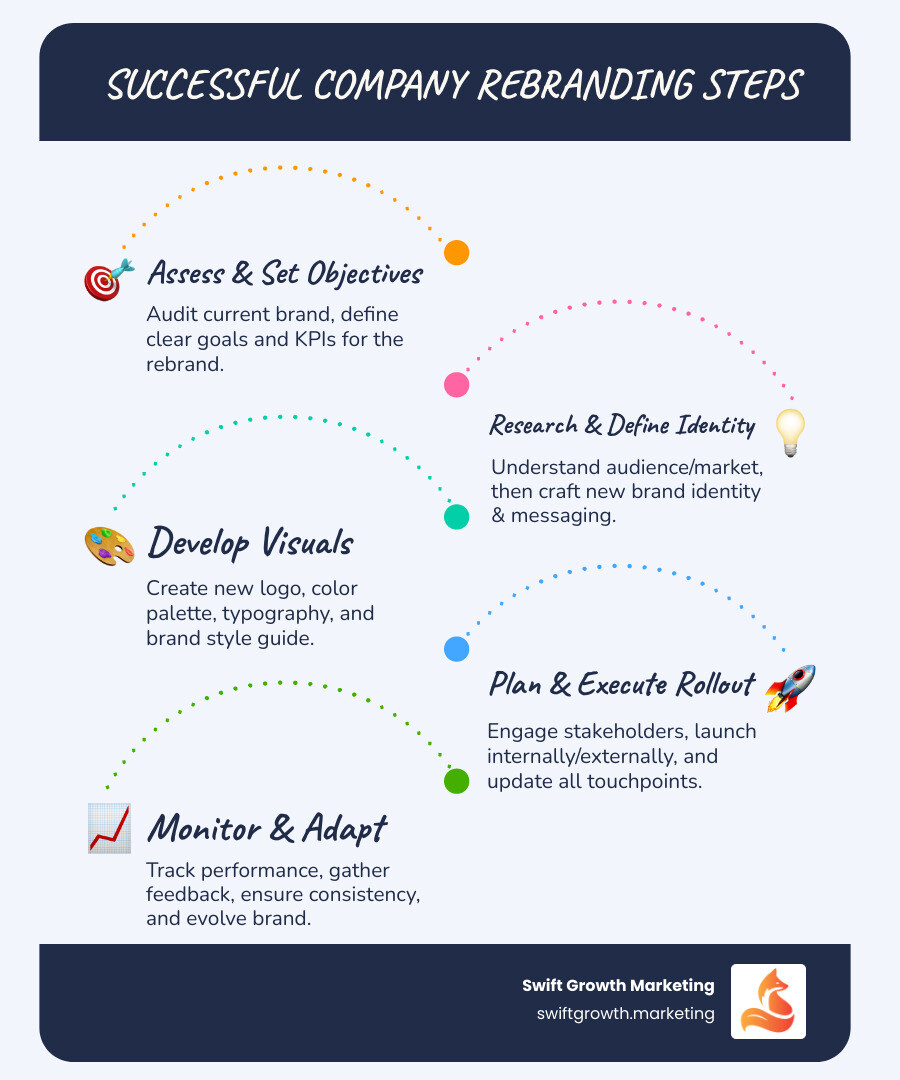
Your Step-by-Step Company Rebranding Strategy

A successful company rebranding strategy is a comprehensive journey requiring strategic foresight, deep research, and organizational alignment. Rushing the process or cutting corners often leads to a brand that fails to resonate with customers or creates internal confusion. Let’s walk through each step to approach your rebrand with confidence.
Step 1: Assess Your Current Brand and Set Objectives
A thorough brand audit is the first priority. This involves an honest look at your logo, color palette, messaging, and all marketing materials. It’s also crucial to understand how your brand is perceived by customers, employees, and the market. According to Edelman’s research, 81% of consumers need to trust a brand to buy from them, making brand perception critical. A SWOT analysis (Strengths, Weaknesses, Opportunities, Threats) can provide an objective view. With this clarity, you can set meaningful objectives and measurable Key Performance Indicators (KPIs) to track your rebrand’s success. If your website is outdated, now is the time to address it. Consider an audit to see if your website is hurting brand credibility.
Step 2: Research Your Audience and Market Landscape
Assuming you know what your customers want is a common mistake. Understanding your target audience is foundational. Use customer surveys and focus groups to build detailed buyer personas that capture their motivations and pain points. Over 90% of companies that exceed their revenue goals segment their database by buyer persona. You also need to analyze the competitive landscape to find white space where your brand can differentiate itself. A study by Kantar found that brands that successfully differentiate are 3.5 times more likely to grow their market share. This analysis helps you spot opportunities and stand out. You can learn more about market analysis approaches to guide your research.
Step 3: Define Your New Brand Identity and Messaging
With your research complete, it’s time to define your company’s core identity. This starts with your mission (why you exist), vision (where you’re headed), and values (what you stand for). These fundamentals inform every brand decision. From there, craft a compelling brand story that connects emotionally with your audience. Define your brand voice and personality—whether it’s authoritative, friendly, or bold—and ensure it’s consistent. Finally, develop a clear positioning statement that articulates your unique value proposition. For more on this, explore our thoughts on strategic messaging and brand voice elements.
Step 4: Develop the New Visual Identity

Your visual identity is the face of your brand. A strong logo design should be memorable and versatile, working across all contexts from a website in Wheeling to a billboard in Pittsburgh. Your color palette evokes specific emotions, while typography contributes to your brand’s tone. Your imagery style—photography and illustrations—must also create a cohesive feel. As Investopedia explains, brand identity includes all elements a company creates to portray the right image. Document everything in a comprehensive brand style guide to ensure consistency.
Step 5: Plan the Rollout and Involve Stakeholders
Internal buy-in is as critical as the external launch. Your employees are your most vital brand ambassadors, so they must understand and believe in the new brand. Involving key stakeholders and providing employee training builds ownership and enthusiasm. For the external rollout, a phased approach is crucial. Create a clear timeline for updating all touchpoints, from your website to marketing collateral. Prioritizing a future-proof website design is often the first step, as it’s a primary point of contact. A strategic, phased rollout minimizes disruption and builds excitement.
Measuring Success and Avoiding Common Pitfalls
Launching your rebrand is the beginning of a new chapter. The real work is monitoring how your company rebranding strategy performs and avoiding potential stumbling blocks. Post-launch monitoring is how you ensure your investment pays off. Effective AI Brand Reputation Management can help you track sentiment and audience reception.
How to Measure the Success of Your Rebranding Strategy
Track your rebrand’s impact through a mix of meaningful metrics:
- Brand Awareness: Monitor website traffic, social media engagement, and brand recognition to see if your new identity is reaching people.
- Customer Perception: Use surveys and direct feedback to gauge if the rebrand resonates emotionally and if your new positioning is understood.
- Sales Data: Look for increases in revenue, customer acquisition, and purchase values. Consistent brand presentation can increase revenue by up to 23%.
- Website Analytics: Analyze visitor duration, bounce rates, and conversion rates to see how the new brand performs online.
- Employee Morale: Use internal surveys to ensure your team is aligned with the new direction.
Regularly review these metrics and be willing to make adjustments based on real feedback, as we explore in Fast Marketing Wins Happen When You Listen to Customer Data.
Common Rebranding Pitfalls to Avoid

Even well-intentioned rebrands can stumble. Avoid these common obstacles:
- Skipping Research: Guessing what your audience wants is dangerous. Base your strategy on objective data.
- Alienating Your Core Audience: Don’t forget the customers who got you here. Communicate changes clearly and explain the “why.”
- Inconsistent Application: A fragmented brand identity across touchpoints erodes trust. Ensure every detail is aligned.
- Poor Communication: Failing to prepare your audience and employees for the change can lead to backlash. Provide context for the rebrand.
- Neglecting Legal Protections: Protect your investment by clearing and registering new trademarks before you launch.
- Rushing the Process: Each phase—research, design, testing, and rollout—builds on the last. Give the process the time it deserves.
For insights on avoiding other strategic missteps, explore our article on Biggest SEO Mistakes.
Frequently Asked Questions about Rebranding
How long does a company rebranding strategy take to implement?
The timeline for a company rebranding strategy varies based on the scope, company size, and complexity. A comprehensive rebrand typically takes three to six months, sometimes longer for large organizations. The process includes:
- Research Phase: 1-2 months for market and audience analysis.
- Design Phase: 1-3 months for developing new visual and verbal identities.
- Implementation Phase: 1-3+ months for updating assets, training, and rollout.
Rushing this process by cutting corners on research or design can lead to a rebrand that fails to connect with your audience.
How much does it cost to rebrand a company?
The cost of a rebrand varies widely, from a few thousand dollars for a simple refresh to millions for a corporate overhaul. Key factors influencing the budget include the scope of the rebrand (refresh vs. full overhaul), company size, and whether you work with an agency. Your budget should account for:
- Strategy and research
- Creative design (logo, visual identity)
- Messaging and content development
- Implementation (website, materials, signage)
- Legal fees (trademarks)
- Marketing and launch costs
A rebrand is a major investment in your company’s future, so it’s crucial to budget realistically.
What’s the difference between a rebrand and a brand refresh?
While often used interchangeably, these terms are different.
A brand refresh is a lighter update to modernize existing elements. It might involve small adjustments to your logo, color palette, or messaging to keep the brand contemporary without changing its core identity. It’s like a fresh coat of paint.
A full rebrand is a complete overhaul of your identity, potentially including a new name, logo, mission, and market positioning. It signals a fundamental strategic shift, such as entering new markets, a merger, or moving on from an outdated image. This is like rebuilding from the ground up. The right choice depends on your business goals and whether your current brand still aligns with your future direction.
Conclusion: Your Brand’s Next Chapter Starts Now
A company rebranding strategy is more than a cosmetic update; it’s a strategic move to position your business for the future. Whether you’re modernizing a legacy brand or expanding into new markets, a thoughtful rebrand can open up significant growth. The process requires careful assessment, deep research, and strategic execution to create a new identity that reflects your values and resonates with your audience.
When done right, a rebrand can strengthen customer loyalty and increase revenue. When rushed, it can alienate the very people you want to reach. At Swift Growth Marketing, we guide businesses in Pittsburgh, Wheeling, and beyond through this transformative journey. We help you build a brand identity that shifts market perception and drives growth.
Your business will evolve; the question is whether your brand will evolve with it. A successful rebrand aligns your company with its future goals. If you’re ready to take that step, we’re here to help you steer every phase with clarity and confidence.
Ready to build a brand that drives growth? Explore our Growth Marketing Consultancy services.