
Why Shopify SEO is Your Secret Weapon for Long-Term Growth
Shopify SEO is the process of optimizing your online store to rank higher in search engine results, driving organic traffic that converts into sales without ongoing ad spend. It involves strategically improving your store’s content, structure, and authority to help Google understand and rank your products.
Why does it matter? Search drives around 68% of all trackable website traffic, and the first Google result gets 27.6% of all clicks. While paid ads offer quick wins, they stop working the moment you stop paying. SEO is different. It builds momentum over time, creating a compounding asset that drives qualified traffic while you sleep.
The challenge is that effective Shopify SEO requires understanding how search engines evaluate ecommerce sites and how buyers search for products. It’s more than just installing a plugin.
I’m Chris Hornak, Co-Founder of Swift Growth Marketing, and I’ve helped ecommerce clients achieve results like a 764% traffic increase through comprehensive Shopify SEO strategies. In this guide, I’ll walk you through exactly how to build an SEO foundation that drives sustainable growth for your store.
The Foundation: Essential First Steps for Your Shopify Store
Before optimizing product pages or building backlinks, you need a rock-solid foundation. Skipping these steps will limit your Shopify SEO potential.
Setting up a Custom Domain
A custom domain like yourstore.com makes your brand look professional, is easier for customers to remember, and is taken more seriously by search engines. A myshopify.com subdomain looks unprofessional. You can purchase a domain directly through Shopify or connect one you already own.
Connecting Google Analytics
You can’t improve what you don’t measure. Google Analytics is a free tool that shows how people find your store, what pages they visit, and what makes them buy. This data is essential for making smart SEO decisions. Setting up Google Analytics for your Shopify store is a quick process that pays dividends.
Verifying with Google Search Console
Google Search Console is your direct line to Google. It shows which search queries bring visitors to your store, how your pages are performing in search, and any technical issues holding you back. This information is gold for refining your strategy. Setting up and verifying your site with Google Search Console is non-negotiable.
Submitting Your XML Sitemap
Your sitemap is a roadmap that helps search engines find all your important pages. Shopify automatically generates this for you at yourstore.com/sitemap.xml. Once you’ve set up Google Search Console, you should submit this sitemap to Google to ensure all your products, collections, and blog posts are indexed.
Setting up Google Merchant Center
For physical products, Google Merchant Center is your ticket to appearing in Google Shopping results. The Google & YouTube app in Shopify syncs your products automatically, allowing them to appear in free listings and Shopping ads. The Google Merchant Center lets you upload your product catalog for visibility across Google services.
Making Your Store Public
If your store is password-protected, search engines can’t see it. Before you do any SEO work, make sure you remove password protection from your online store in your Shopify settings. Otherwise, you’re optimizing a store nobody can find.
Once these steps are complete, consider an Ecommerce SEO Audit to identify your biggest opportunities.
The Three Pillars of Shopify SEO
Effective Shopify SEO rests on three core pillars. If one is weak, the entire strategy can fail.
On-page SEO involves the content your visitors see and interact with. It covers everything from keyword choices and product descriptions to meta titles and image alt text. The goal is to create content that serves both human visitors and search engines.
Technical SEO ensures that search engines can access, crawl, and understand your store. This includes factors like site speed, mobile performance, and site architecture. Shopify handles about 80% of this automatically, which is a major advantage.
Off-page SEO is about building your store’s authority and trust across the internet. The most important element is backlinks—links from other reputable websites. These act as endorsements, signaling to search engines that your store is trustworthy.
The magic happens when all three pillars work together. A technically perfect site won’t rank without quality content and authority. A holistic approach that addresses all three is what creates a Strong SEO Strategy that drives sustainable growth.
Pillar 1: Mastering On-Page Shopify SEO
On-page SEO is your chance to communicate directly with customers and search engines. It involves optimizing every element on your pages to show what you’re offering and who should find it.
Keyword Research
Start by understanding what potential customers are typing into Google. Use tools like Moz, Ahrefs, or Google Keyword Planner to find the exact phrases people use. Aim for a mix of broad head terms (e.g., “t-shirt”) and specific long-tail keywords (e.g., “women’s vintage band t-shirt”). Long-tail keywords have less competition and attract shoppers with higher purchase intent.
Understanding Search Intent
Keywords represent user intent. Someone searching “how to choose running shoes” has informational intent, while “buy Nike Air Zoom Pegasus 40” shows transactional intent. Match your content to the user’s intent to improve rankings and conversions. Google’s “People also ask” section is a great resource for this.
Optimizing Product Descriptions
Don’t use generic manufacturer descriptions, as this creates duplicate content issues. Write unique descriptions that weave in target keywords and focus on customer benefits and features. Shopify Magic can provide a starting point, but always refine the text to match your brand voice.
Enhancing Collection Pages
Collection pages are SEO powerhouses for category-level keywords. If you sell multiple similar products, create a dedicated collection page (e.g., “Habanero Hot Sauces”) with an optimized title, description, and URL. This helps you rank for broader terms and organizes your store.
Creating Valuable Blog Posts
A blog is essential for Shopify SEO. It allows you to target informational keywords, answer customer questions, and build topical authority. For example, a store selling running shoes could publish “How to Choose the Right Running Shoe for Marathon Training” and link to relevant products. This builds trust and creates internal linking opportunities.
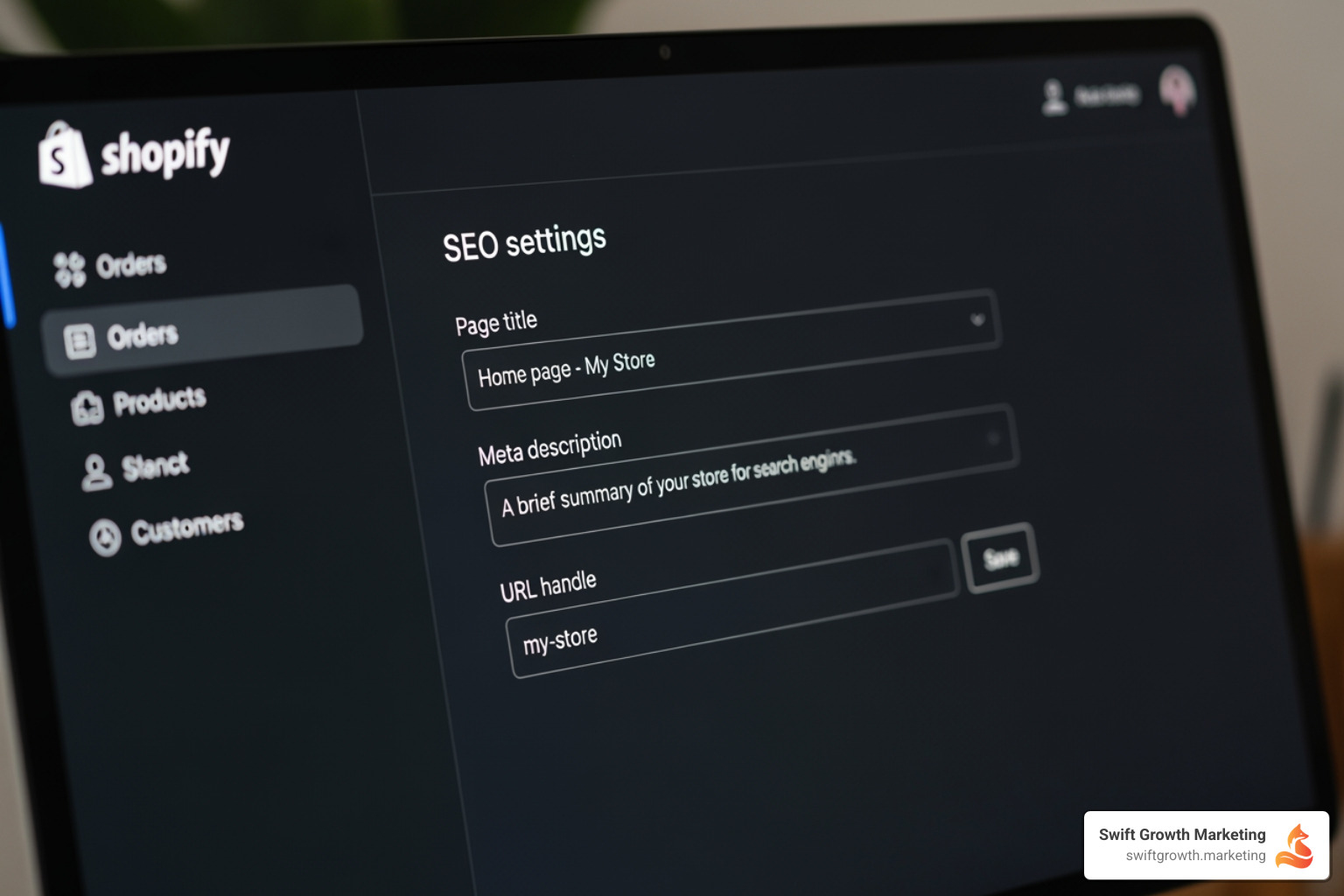
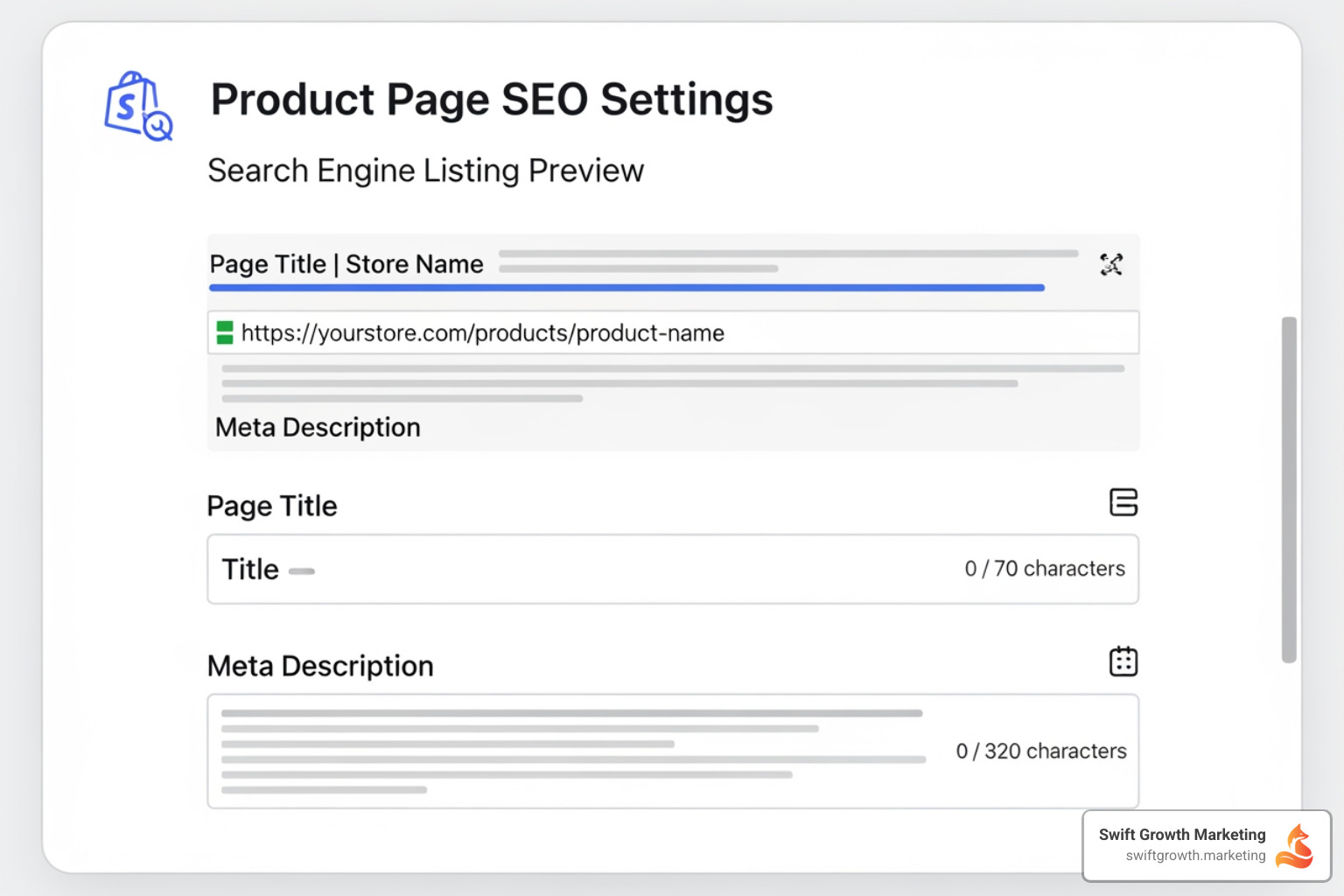
Editing Title Tags and Meta Descriptions
These elements are your ad in the search results.
Title tags are the clickable headlines. Keep them under 60 characters and place your main keyword near the beginning. Shopify page titles also become the page’s H1 tag.
Meta descriptions are the short summaries. Aim for 155-160 characters, include keywords, and write compelling copy to encourage clicks.
Optimizing URL Slugs
Your URL slug should be clean, readable, and include keywords. Use hyphens to separate words (e.g., /products/organic-cotton-tshirt). Clean URLs are better for SEO and are more trustworthy to users.
Image Optimization and Alt Text
Large images slow down your site. Shopify’s CDN automatically compresses and serves images in WebP format, but you can use apps from the Shopify App Store for further compression.
Alt text helps search engines understand images and improves accessibility. Write descriptive alternative text under 100 characters for every image, incorporating relevant keywords naturally.
Implementing Rich Snippets and Structured Data
Rich snippets add details like price, availability, and star ratings to your search listings, which can increase click-through rates. Shopify’s free themes include this automatically for products. For third-party themes, you may need an app from the Shopify App Store. Use Google’s Structured Data Testing Tool to verify your implementation.
For more on-page strategies, see our guide on How to Build a Strong SEO Foundation with On-Page SEO.
Pillar 2: Technical Shopify SEO Essentials
Technical SEO ensures your store’s foundation is solid, allowing search engines and customers to steer it easily. While Shopify handles much of this automatically, some areas require attention.
Site Architecture
A well-organized site helps customers and search engines. Aim for a clean, hierarchical structure where every page is reachable within a few clicks from the homepage. Your website’s navigation should be intuitive, guiding users from the homepage to collections to products. For larger stores, a hub and spoke model can organize content effectively and build topical authority.
Improving Site Speed
Page speed is a direct Google ranking factor. A slow site leads to higher bounce rates and lost sales. While Shopify stores are generally fast, use PageSpeed Insights to identify specific improvements. Small tweaks like compressing images or minimizing code can make a big difference.
Meeting Core Web Vitals
Google’s Core Web Vitals measure user experience. Optimizing for these is essential for modern Shopify SEO.
- Largest Contentful Paint (LCP): Measures loading performance. Aim for under 2.5 seconds.
- Interaction to Next Paint (INP): Measures responsiveness. Aim for under 200 milliseconds.
- Cumulative Layout Shift (CLS): Measures visual stability. Aim for a score below 0.1.
Mobile-First Indexing
Google now primarily uses the mobile version of your site for ranking. This is called mobile-first indexing. Your store must function perfectly on smartphones. Fortunately, all themes in the Shopify Theme Store are mobile-friendly. Always test your store on different devices to ensure a seamless experience.
Avoiding Duplicate Content
Duplicate content confuses search engines and can dilute your SEO authority. Shopify helps by automatically assigning canonical URLs, which tell Google the “official” version of a page. This is especially useful when a product appears in multiple collections. You should still write unique product descriptions to avoid this issue.
Setting up 301 Redirects
When a URL changes or a product is discontinued, use a 301 redirect to send users and search engines to a new, relevant page. This preserves the SEO value of the old page and prevents “404 Not Found” errors. You can redirect pages within Shopify to maintain a smooth user experience.
Applying Noindex Tags Where Needed
Not every page should be in search results. Use noindex tags to hide these pages from search engines, such as thank-you pages or internal search results. This focuses search engine crawlers on your most valuable content.
Shopify’s Built-in Features
Shopify handles about 80% of technical SEO for you. This includes automatic sitemaps, canonical tags, SSL certificates for secure HTTPS connections, and a pre-configured robots.txt file. This built-in foundation is a major advantage, letting you focus on content and strategy.
Pillar 3: Off-Page SEO and Link Building
Off-page SEO is about building your store’s reputation across the web. It tells search engines that your store is authoritative and trustworthy.
The foundation of off-page SEO is backlinks: links from other websites pointing to yours. Google views these as votes of confidence. The more high-quality, relevant backlinks you have, the more search engines will trust your store, leading to higher rankings. Quality matters more than quantity; a single link from a respected industry site is more valuable than dozens from low-quality directories.
Building Authority and Trust
Your overall domain authority is a useful barometer of your site’s ranking potential. Consistently building high-quality backlinks strengthens this authority. Other trust signals include brand mentions (even without a link), positive customer reviews, and an engaged social media following.
Active Link Building: Taking the Initiative
Active link building involves proactively acquiring backlinks. A robust link-building plan is essential.
- Guest posting: Write high-quality articles for relevant industry blogs and include contextual links back to your store. This builds backlinks and positions you as an expert.
- PR and Outreach: Distribute press releases or use platforms like Qwoted and Help a B2B Writer to connect with journalists seeking expert sources. This can generate media coverage and authoritative links.
- Reclaim Mentions: Use Google Alerts to find mentions of your brand that don’t include a link. A polite email can often turn that mention into a backlink.
Earning Passive Links: Building a Link Magnet
The most sustainable strategy is to create a brand that naturally attracts links.
This starts with an exceptional product and superior customer service. Happy customers become brand advocates. An active social media presence and participation in online communities can also increase visibility and lead to organic links and brand mentions.
Off-page SEO takes time and consistent effort, but the momentum you build compounds, creating a sustainable foundation for long-term growth. For more, explore our guide to developing an effective link-building strategy.
Common Shopify SEO Mistakes to Avoid
It’s easy to make Shopify SEO mistakes that undermine your hard work. Fortunately, most are preventable once you know what to look for.
Using default product titles: Shopify’s default titles are often generic. Customize them to include keywords customers are searching for.
Creating duplicate content with tags: Shopify’s tagging system can create multiple URLs with similar content. Ensure these pages are handled correctly with canonical tags or noindex directives to avoid confusing search engines.
Ignoring site speed: Slow loading times lead to high bounce rates. Heavy images and too many apps can drag down your site. Regularly monitor and optimize for speed.
Forgetting image alt text: Alt text helps search engines understand your images and improves accessibility. Always add descriptive alt text that incorporates relevant keywords.
Keyword stuffing: Cramming keywords unnaturally into your content makes it unreadable and can harm your rankings. Write for humans first, and let keywords flow naturally.
Neglecting backlink building: On-page SEO isn’t enough. Without quality backlinks, your store will struggle to build authority and rank for competitive terms.
Inconsistent NAP information: For local SEO, your Name, Address, and Phone number (NAP) must be identical across all online listings, including your Google Business Profile and website.
Our guide on the Biggest SEO Mistakes covers these issues in more detail.
Frequently Asked Questions about Shopify SEO
Here are answers to some of the most common questions we hear from Shopify store owners.
How long does it take to see results from Shopify SEO?
Shopify SEO is a long-term investment. Expect to see meaningful results in the 4-12 month range. Search engines need time to crawl, index, and trust your site. Factors like industry competition, budget, and consistency will influence your timeline. It’s a marathon, not a sprint, but the payoff is sustainable organic traffic.
Do I need an SEO app for my Shopify store?
Not necessarily. Shopify has excellent built-in SEO features that handle about 80% of the technical foundation, including sitemaps, canonical tags, and SSL certificates. However, apps from the Shopify App Store can be useful for specific tasks like bulk editing meta descriptions, implementing advanced schema, or advanced image compression. Be cautious, as too many apps can slow down your site.
Is blogging important for a Shopify store?
Yes, a blog is a powerful tool for Shopify SEO. It helps you:
- Target informational keywords: Attract potential customers early in their buying journey.
- Build topical authority: Establish your store as an expert in your niche, which helps with rankings.
- Create internal links: Guide search engines and users to important product and collection pages.
- Attract backlinks: High-quality articles are more likely to earn links from other sites than product pages are.
- Educate customers: Answer questions and build trust, leading to more confident buyers.
Conclusion
Your Shopify SEO journey is just beginning. We’ve covered the three pillars: on-page optimization, technical SEO, and off-page SEO. SEO is not a one-time task. The stores that win in the long run commit to continuous improvement by regularly updating content, monitoring performance, and adapting to changes.
Unlike paid ads, your SEO efforts compound over time, building a sustainable asset that drives qualified customers to your store month after month.
For businesses seeking expert guidance, Swift Growth Marketing provides custom strategies custom to your store’s unique challenges. We partner with you to build a powerful online presence that drives organic traffic and converts visitors into loyal customers.
Ready to transform your Shopify store into an organic traffic powerhouse? Contact our SEO Company to discuss how we can help you succeed with Shopify SEO.