
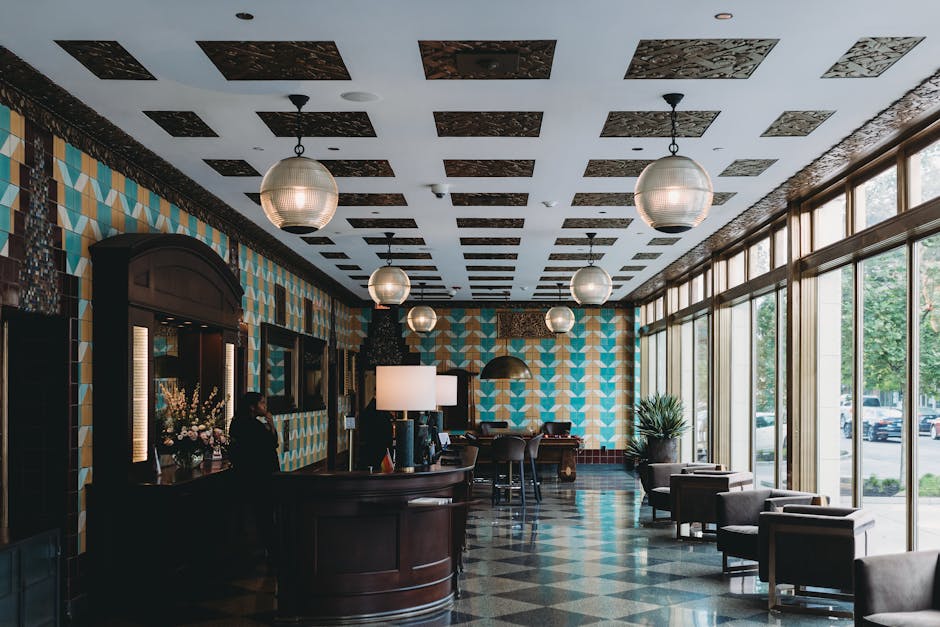
Why Boutique Hotel Marketing Requires a Different Playbook
Boutique hotel marketing is a unique discipline that requires a different playbook than large-scale hospitality marketing. Success hinges on these core principles:
- Storytelling over amenities: Sell the unique experience, not just room features.
- Direct bookings: Build guest relationships and avoid high OTA commission fees.
- Size as a strength: Offer personalization and local authenticity that chains can’t match.
- Niche audiences: Target specific traveler personas instead of a broad market.
- Community over customers: Turn guests into advocates through memorable experiences.
The data confirms this approach. The Global Boutique Hotels Market is projected to grow at a 6.51% CAGR through 2027, with properties outperforming chains in guest satisfaction. With 75% of travelers starting their search on Google and 60% trusting user-generated content, it’s clear that modern travelers seek authentic, story-rich destinations. Yet, many boutique hotels fail to convey their unique value online, losing guests to competitors who have mastered digital storytelling.
This guide provides a roadmap for every stage of boutique hotel marketing, from defining your brand to driving direct bookings and fostering loyalty. You’ll learn to transform your hotel’s character into a competitive advantage and create a digital presence that attracts modern travelers.
I’m Chris Hornak, Co-Founder of Swift Growth Marketing. We specialize in helping brands build authority through strategic positioning and search optimization. While our experience spans various industries, the core principles of brand storytelling and SEO translate perfectly to helping independent hotels thrive in crowded markets.
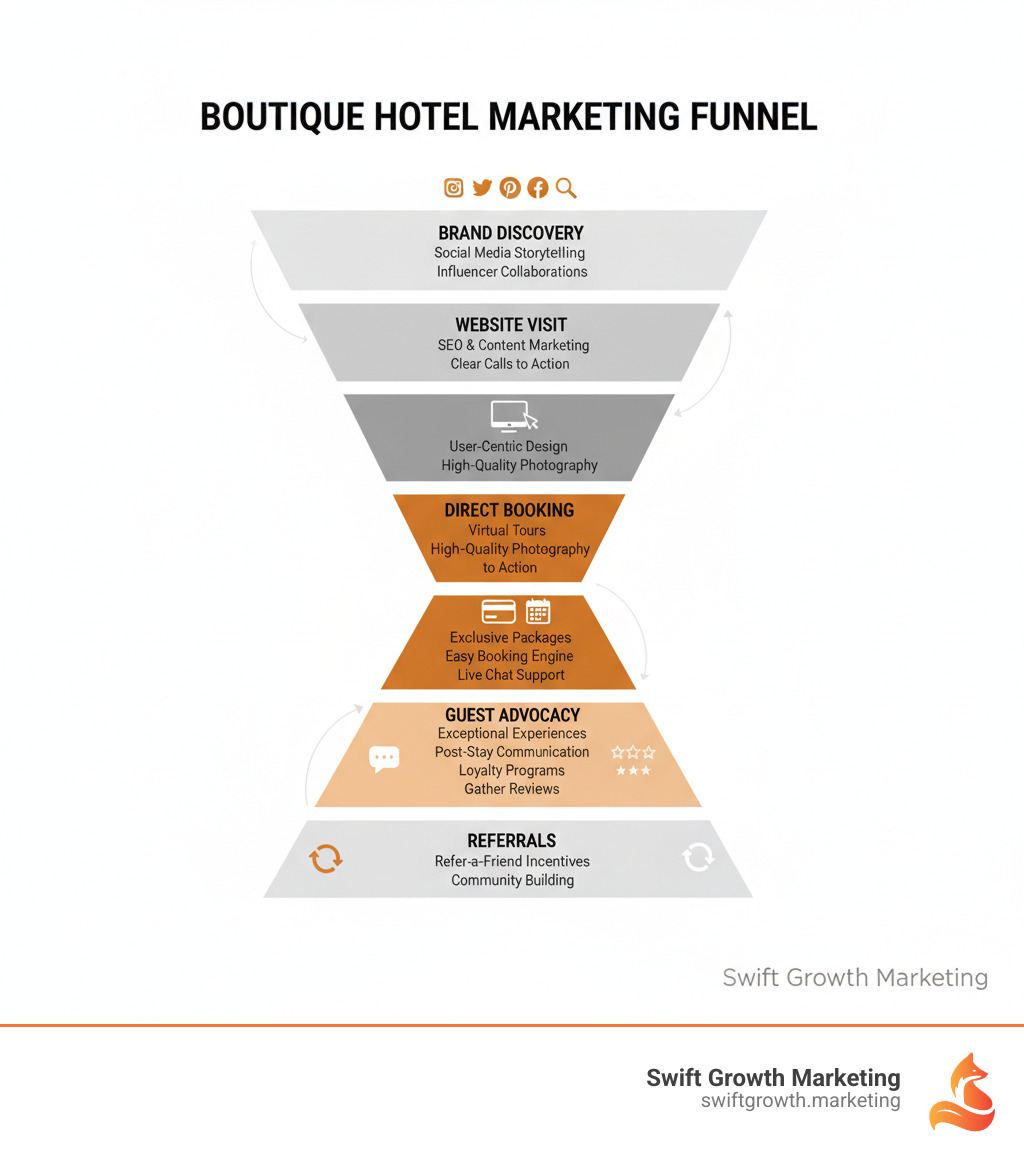
Defining Your Essence: Brand Storytelling and Unique Positioning
What makes a hotel truly memorable? It’s rarely the thread count; it’s the feeling. The scent of local lavender, the owner greeting you by name, the way light hits a vintage window—these moments are the result of a hotel that knows exactly who it is.
Boutique hotel marketing begins with defining this essence. Your unique selling proposition (USP) is what makes your property impossible to replicate. It might be your building’s history as a 1920s textile factory, your chef’s commitment to sourcing from local farms, or rooms furnished by local artisans. These details are the foundation of your marketing story.
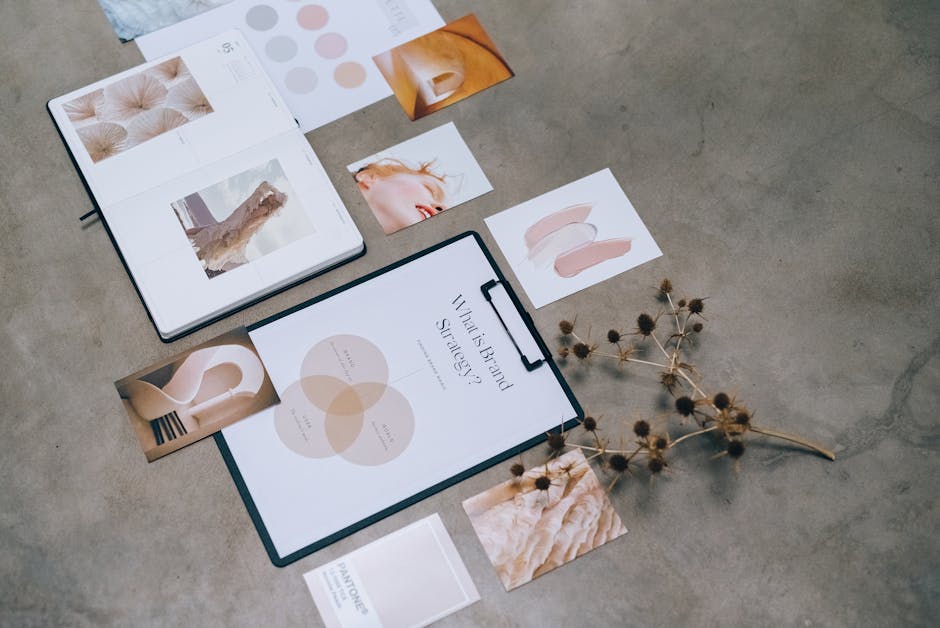
Knowing your essence is half the battle; you also need to know your audience. Go beyond demographics and understand what your ideal guest truly values. Are they design enthusiasts, adventure seekers, or remote workers? Understanding their desires and pain points allows you to craft messages that resonate deeply. Millennial and Gen Z travelers, a key demographic for unique experiences, are particularly drawn to brands that feel authentic and personalized.
This is where brand voice and tone become crucial. Developing a consistent brand voice ensures every touchpoint—from website copy to social media captions—feels cohesively you. If your hotel is relaxed coastal elegance, your communication shouldn’t be stiff and corporate. The goal is an emotional connection. As Maya Angelou said, people will forget what you said and did, but never forget how you made them feel. You’re not selling a room; you’re selling a feeling of findy, belonging, or escape.
The Role of Storytelling in Boutique Hotel Marketing
Storytelling brings your brand essence to life. Every boutique hotel has narratives worth sharing—your building’s history, your design inspiration, your connection to local culture.
For example, if your hotel was once an artist’s studio, tell that story. Show photos of the original space, interview the architect about the restoration, and explain how you’ve honored that creative spirit. If your connection to place is what sets you apart, showcase the local ceramicist whose work is in your rooms or the forager who supplies your kitchen. These stories root your hotel in an authentic culture that no chain can manufacture.
Crafting brand narratives that convert means painting a picture of the experience. Instead of “rooms with mountain views,” describe waking up to alpenglow on the peaks. This approach shifts the conversation from price to an exclusive experience, turning browsers into bookers and guests into advocates.
Your Digital Front Door: Optimizing Your Website and SEO for Direct Bookings
Your website is your 24/7 front desk and your most powerful sales tool. Yet, many boutique hotels have outdated, slow, or confusing sites that drive potential guests away. With the average hotel website losing over a third of its visitors immediately, a high-performing digital front door is non-negotiable.
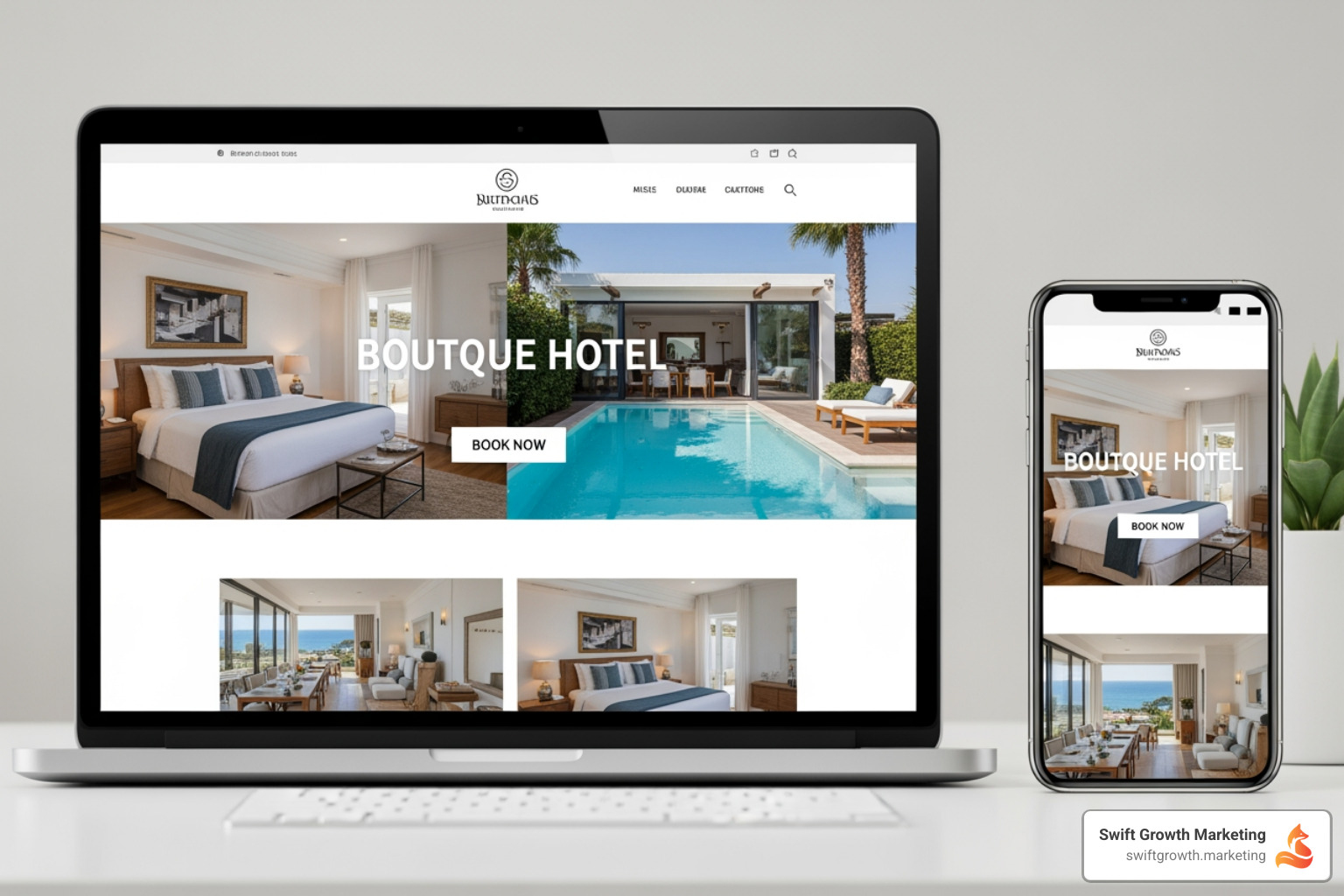
An effective website blends visual storytelling with seamless functionality. Use high-quality photos and videos to transport visitors into your space. Your “Book Now” button should be prominent and persistent, making the path to reservation effortless. With most travelers browsing and booking on their phones, a mobile-first design is essential, and an HTTPS connection is crucial for building trust.
Direct bookings are your secret weapon. Each direct booking saves you 15-30% in OTA commissions—revenue you can reinvest into the guest experience. It also gives you a direct line to your guests, allowing for personalization and relationship-building. Encourage direct bookings by offering exclusive perks like room upgrades, welcome drinks, or late checkout that OTAs can’t match.
Best Practices for SEO in Boutique Hotel Marketing
Since 75% of travelers start their hotel search on Google, SEO is critical for visibility. If you don’t show up in relevant searches, you’re invisible to most potential guests.
Keyword Research: Understand what your ideal guests search for. Go beyond “boutique hotel” to target long-tail keywords like “historic hotel Pittsburgh” or “pet-friendly boutique stays,” which capture high-intent travelers.
On-Page & Content SEO: Weave keywords naturally into your website copy, titles, and headings. A blog with local travel tips, guest stories, or sustainability updates not only boosts SEO but also positions you as a valuable local expert. This is key for Answer Engine Optimization as AI-powered search grows.
Local SEO: Optimize your Google Business Profile with accurate information, fresh photos, and prompt review responses. This helps you appear in “near me” searches, capturing travelers already in your area.
Technical SEO: Ensure your site is fast, mobile-friendly, and secure (HTTPS). Use schema markup to help search engines understand specific details about your property, like amenities and room types.
Link Building: Earn links from reputable sites like local tourism boards, travel blogs, and relevant directories. Each quality backlink acts as a vote of confidence, strengthening your website’s authority.
Building a strong SEO strategy takes time, but the result is a steady stream of qualified traffic. When travelers find you at the exact moment they’re searching for what you offer, you turn visibility into direct bookings.
Engaging Modern Travelers: A Guide to Boutique Hotel Marketing
While your website is the foundation, modern travelers are finded across a wide digital ecosystem. Effective boutique hotel marketing meets them on Instagram, in their email inbox, and on travel blogs with a consistent, compelling message that reinforces your unique brand.
Content Marketing: Provide value before a guest ever books. Create blog posts with local travel tips, video tours that showcase your property’s personality, or guides to hidden neighborhood gems. Positioning your hotel as a resource builds trust and connection.
Email Marketing: This remains a powerful tool for driving direct bookings. Segment your audience based on past stays or interests to send personalized, relevant messages. Automated emails for post-stay thank-yous or birthday offers can nurture relationships and encourage repeat business. Always highlight the exclusive perks of booking direct.
Paid Advertising: Strategically invest to amplify your reach. Google Ads can capture travelers actively searching for hotels in your area, while social media ads allow you to target specific demographics and interests, maximizing your marketing budget during peak seasons.
Influencer & User-Generated Content (UGC): Authentic storytelling from trusted voices is invaluable. Collaborate with micro-influencers whose aesthetic aligns with your brand. Since 60% of consumers trust UGC over brand photos, encourage guests to share their experiences by creating photo-worthy moments and using a branded hashtag. Resharing their content (with permission) provides powerful social proof, as 93% of consumers say online reviews influence their decisions.
Leveraging Social Media to Attract and Engage Guests
Social media is where your brand’s personality comes to life. It’s where potential guests fall in love with your aesthetic and share their own stories.
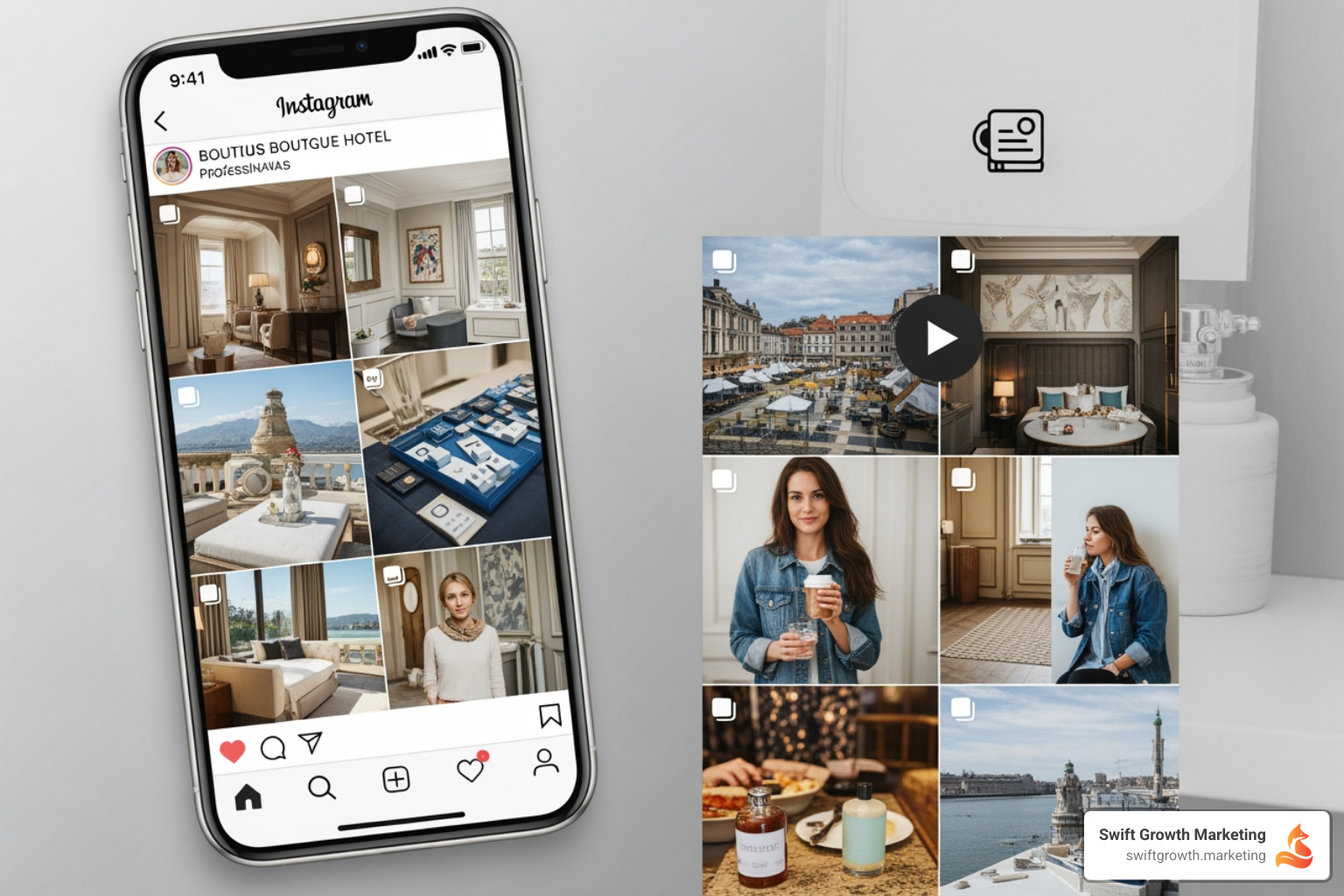
Focus on the right platforms, like the visually-driven Instagram and TikTok, and build your content around clear pillars: Inspiration (stunning visuals), Information (local guides, amenities), and Connection (behind-the-scenes, staff spotlights). Posting great content is only half the battle; community engagement is what transforms followers into advocates. Respond to comments and messages personally, and join conversations about your local area.
Finally, thoughtfully design “Instagrammable” moments—a perfectly styled reading nook, a unique tile wall, or a breathtaking rooftop view. These details encourage guests to naturally capture and share their experience, turning them into your most authentic marketers. The goal is to build a vibrant online presence that attracts the right guests and drives direct bookings.
Building Community and Advocacy: From Local Partnerships to Guest Loyalty
Your size is your greatest advantage. While chains standardize, you can create personal connections that turn first-time visitors into lifelong advocates. This is where boutique hotel marketing truly shines.
Personalized guest experiences are the foundation. Remembering a returning guest’s preferences or leaving a handwritten welcome note creates a disproportionate emotional impact and generates powerful word-of-mouth marketing. These are the stories people share.
Online reputation management is critical, as 93% of consumers report that online reviews influence their purchasing decisions. Monitor Google, TripAdvisor, and social media, responding promptly and professionally to all feedback. A thoughtful response to a negative review can build more trust than a dozen positive ones, as it shows you care and are committed to improvement.
Transform your property into a community hub by hosting events like intimate weddings, corporate retreats, or local art shows. Events introduce your space to new audiences and generate authentic social media content. Likewise, local business partnerships with restaurants, galleries, or tour guides enrich the guest experience and amplify your marketing reach. These collaborations weave your hotel into the fabric of the destination.
Encouraging Word-of-Mouth and Customer Loyalty
Turning satisfied guests into advocates requires a deliberate strategy:
- Exceptional Service: Consistency at every touchpoint matters more than grand gestures.
- Surprise and Delight: Unexpected perks, like a complimentary upgrade or a basket of local treats, create memorable stories.
- Loyalty & Referral Programs: Reward repeat guests to make them feel like insiders. Incentivize referrals to formalize the advocacy process.
- Create “Instagrammable” Moments: Design visually striking spaces that guests naturally want to photograph and share, turning them into organic content creators.
Strategic messaging that builds trust throughout these interactions ensures every touchpoint reinforces your brand’s authentic character.
Data-Driven Decisions: Measuring Success and Embracing Future Trends
Effective boutique hotel marketing is driven by data, not guesswork. Understanding what’s working allows you to invest your budget wisely and make confident decisions.
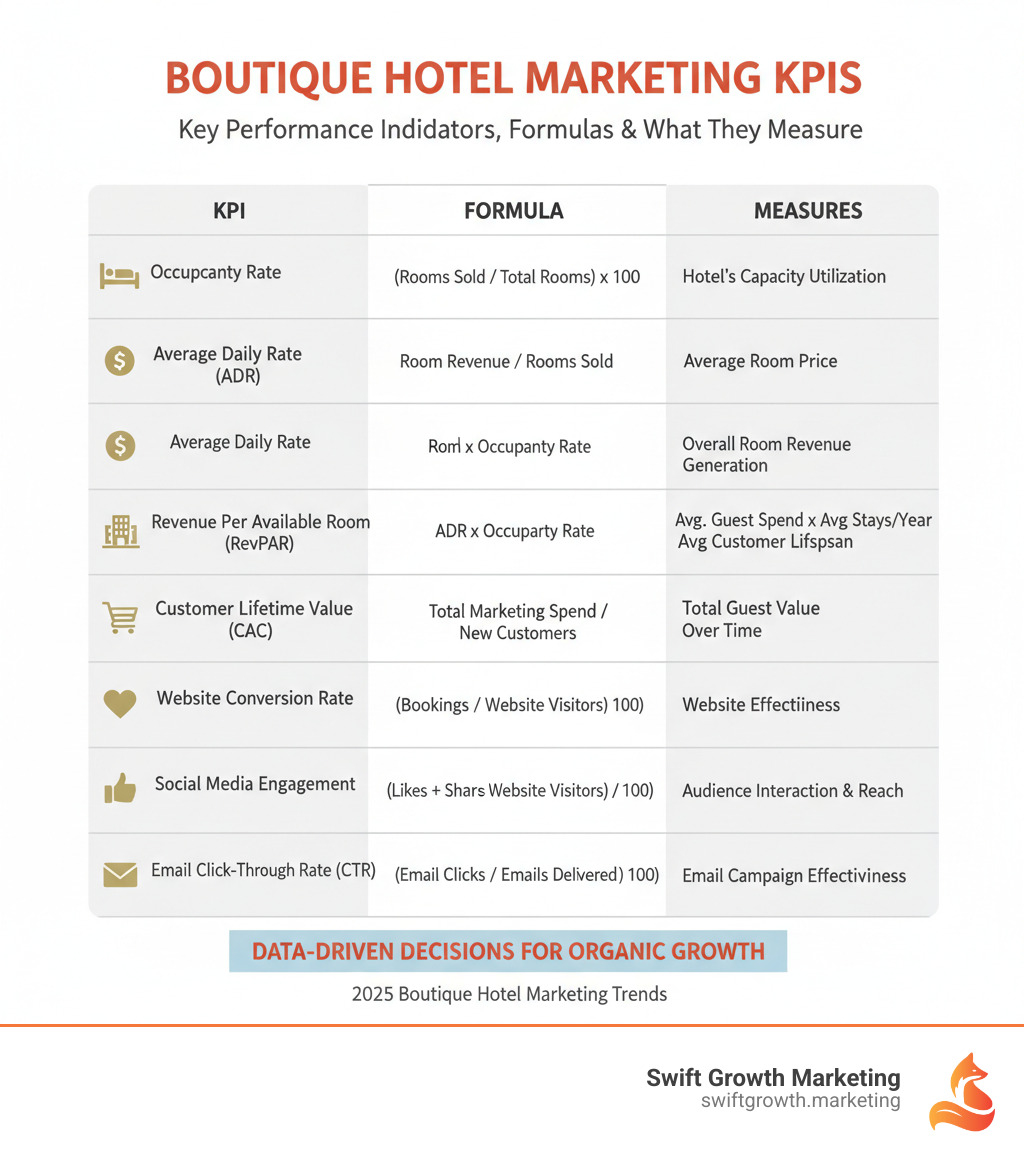
Key Performance Indicators (KPIs)
Track these vital signs to measure the health of your marketing and operations:
- Occupancy Rate: The percentage of available rooms that are filled.
- Average Daily Rate (ADR): The average rental income per occupied room.
- Revenue Per Available Room (RevPAR): A key metric combining occupancy and ADR to show overall revenue performance. US boutique hotel RevPAR increased by 7% in 2023, showing market strength.
- Customer Acquisition Cost (CAC): How much you spend to acquire a new guest.
- Customer Lifetime Value (CLV): The total revenue a guest generates over their entire relationship with you. A high CLV-to-CAC ratio indicates a sustainable business.
On the digital side, monitor website traffic and conversion rates, social media engagement, and email open/click-through rates. Analyzing these numbers reveals what resonates with your audience and what drives bookings.
Emerging Trends
Staying ahead of trends provides a competitive edge:
- AI Personalization: Use AI to analyze guest data and offer personalized recommendations or provide 24/7 customer service via chatbots. This improves the human touch, it doesn’t replace it.
- Sustainability Marketing: Modern travelers actively seek eco-friendly hotels. Be transparent about your real sustainability efforts—from renewable energy to waste reduction—as this builds trust and attracts a conscious clientele.
- Augmented Reality (AR): While still emerging, AR holds potential for virtual room tours or interactive historical guides within your property, positioning you as an innovator.
By embracing data and thoughtfully adopting new trends that align with your brand, you can ensure your hotel remains exciting and relevant to modern travelers.
Frequently Asked Questions about Boutique Hotel Marketing
How can a small boutique hotel stand out in the market?
Your size is your superpower. Stand out by focusing on what chains can’t replicate: hyper-personalized service, a distinctive brand story, and authentic local experiences. Use digital marketing to connect with niche travelers who value character over conformity. Strong SEO helps them find you, while engaging social media tells your story. The goal isn’t to appeal to everyone; it’s to be irresistible to the right guests who are actively seeking a unique stay. Crafting brand narratives that convert is key to attracting this audience.
What are the key elements of a successful boutique hotel website?
A successful website is a 24/7 direct booking engine. Key elements include:
- Stunning Visuals: High-quality photos and videos that evoke emotion and showcase your unique aesthetic.
- Mobile-First Design: A flawless experience on any device, especially smartphones where many travelers book.
- Simple & Secure Booking: A prominent “Book Now” button and a frictionless, secure reservation process.
- Compelling Storytelling: Copy that explains the why behind your amenities and experiences, not just the what.
- Strong SEO Foundations: Technical and local SEO to ensure your ideal guests can find you in search results.
How can boutique hotels effectively manage their online reputation?
With most consumers influenced by online reviews, reputation management is vital. Follow a simple, consistent process:
- Monitor Actively: Keep track of mentions on Google, TripAdvisor, and social media.
- Respond Promptly: Thank guests for positive reviews and address negative feedback with empathy and a commitment to improve. This shows potential guests you care.
- Encourage Feedback: Use a simple post-stay email to ask happy guests to share their experience.
Most importantly, use the feedback to make real operational improvements. This approach aligns with strategic messaging that builds trust and proves you are dedicated to the guest experience.
Conclusion
Marketing a boutique hotel is about telling a story that only you can tell. It’s about celebrating your unique character and building real connections with guests who seek more than just a place to sleep.
This guide has covered the essentials of boutique hotel marketing: defining your brand, optimizing your website for direct bookings, engaging travelers across digital channels, and building a loyal community. A holistic approach, where marketing is woven into every guest interaction and design choice, is what separates successful boutique hotels from the rest.
The hospitality landscape is always evolving with AI, sustainability, and new search behaviors. But through it all, the core principle remains: people remember how you made them feel. Your unique story and personalized service are your most durable competitive advantages.
At Swift Growth Marketing, we use strategic positioning and search optimization to help brands stand out. Whether your property is in Pittsburgh, PA, or Wheeling, WV, we understand how to translate your distinct charm into a powerful online presence.
If you’re ready to lift your boutique hotel marketing and connect with the travelers who will value your story, we invite you to get expert help with your growth marketing strategy. Let’s work together to turn your hotel’s character into bookings, loyalty, and lasting success.