

Attract Top Talent: Effective Ways to Promote Academic Programs
Why Academic Program Promotion Has Never Been More Critical
Academic program promotion is the strategic marketing of university degrees and courses to attract prospective students. With higher education facing unprecedented enrollment challenges and a shrinking student pool, effective promotion is essential for institutional survival. Traditional marketing no longer works in a world where people spend hours daily on digital media. Institutions that accept strategic digital marketing see dramatic enrollment increases, while those using outdated tactics risk becoming invisible.
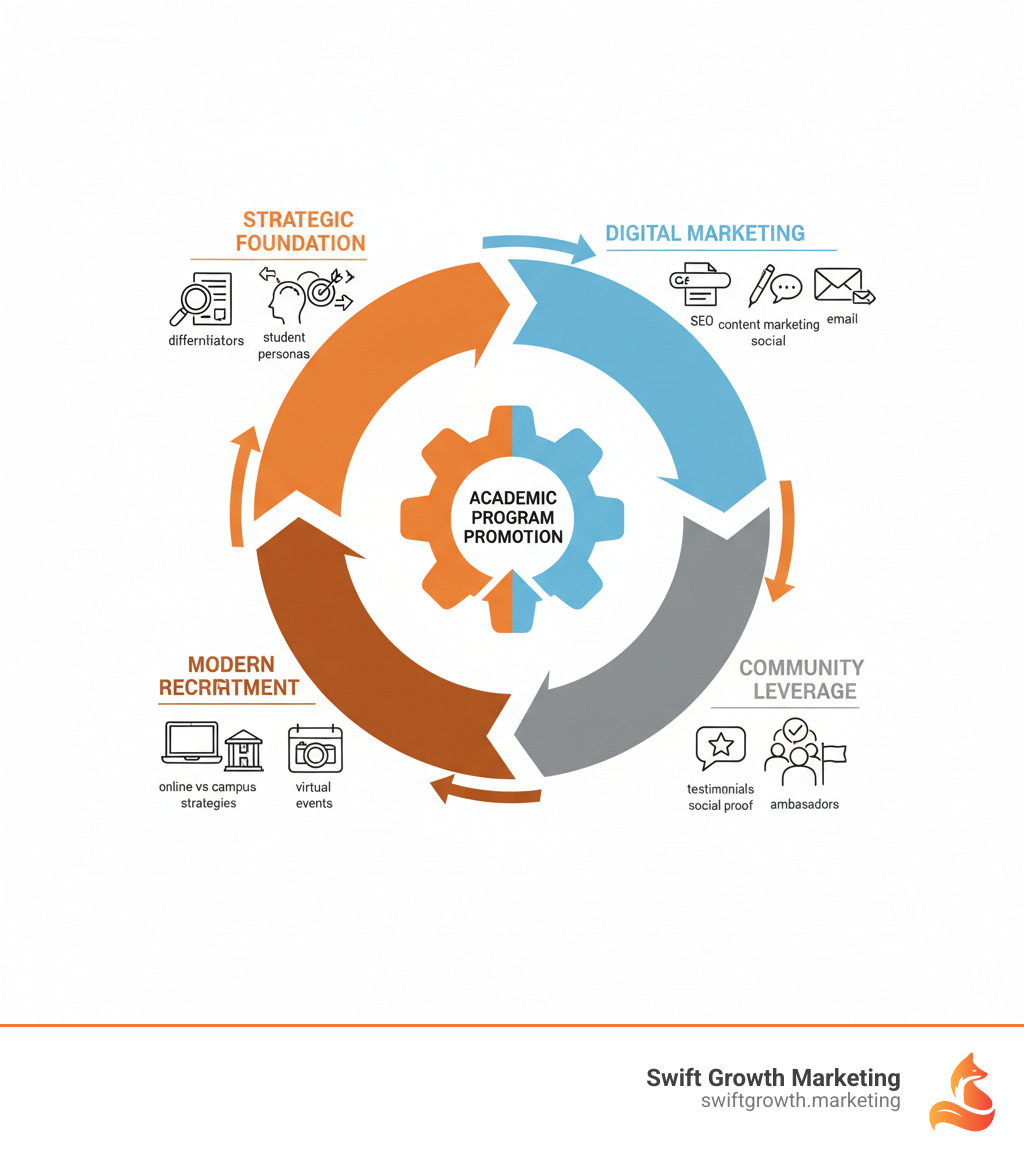
Key Academic Program Promotion Strategies:
- Build Your Foundation – Define program differentiators, create student personas, and analyze competitors
- Master Digital Marketing – Optimize for search engines, develop content marketing, and engage through social and email
- Leverage Community – Use testimonials, social proof, and create student ambassador programs
- Modernize Recruitment – Adapt strategies for online programs and accept virtual events
The stakes are clear: promote effectively or risk becoming invisible in an increasingly crowded marketplace.
I’m Chris Hornak, Co-Founder of Swift Growth Marketing, where we’ve helped education clients transform from invisible brands into category authorities through strategic academic program promotion that combines positioning, SEO, and content marketing. Over the past decade, we’ve worked with educational institutions to increase visibility, generate qualified leads, and build sustainable enrollment pipelines.
Step 1: Build Your Strategic Foundation
Before launching any marketing campaigns, you must build a strategic foundation. This means understanding what makes your program unique, who you’re trying to reach, and what your competition is doing. This foundational work separates effective marketing from wasted budget, ensuring your messages resonate with the right people. Your strategic messaging needs to build trust and drive action, making students confident in their choice.
Identify Your Program’s Key Differentiators
What makes your academic program genuinely different? This isn’t about marketing spin; it’s about finding authentic characteristics that only your program can claim. Successful institutions identify and communicate distinct qualities that prospective students value.
Consider these areas:
- Faculty Expertise: Do you have professors who are recognized leaders or exceptional teachers?
- Curriculum and Learning: Does your program offer specialized courses, cutting-edge technology, or unique interdisciplinary opportunities?
- Career Outcomes: Highlight undergraduate research, internship programs, and where your graduates work. Concrete outcomes like salary increases matter more than almost anything else.
- Alumni Network: A supportive alumni network that provides mentorship and career opportunities offers lasting value.
- Validation: Don’t overlook your campus environment, location, program rankings, or accreditation.
The key is to find what no other institution can honestly say and use that unique truth as the core of your message. Demonstrate your strengths with evidence, not just adjectives.
Create Your Ideal Student Persona
Now that you know what makes your program special, you need to define who needs to hear that message. Detailed student personas help you understand the motivations, fears, and decision-making processes of your ideal applicants. This focus prevents you from trying to appeal to everyone and connecting with no one, a key tenet of the Growth Marketing Mindset.
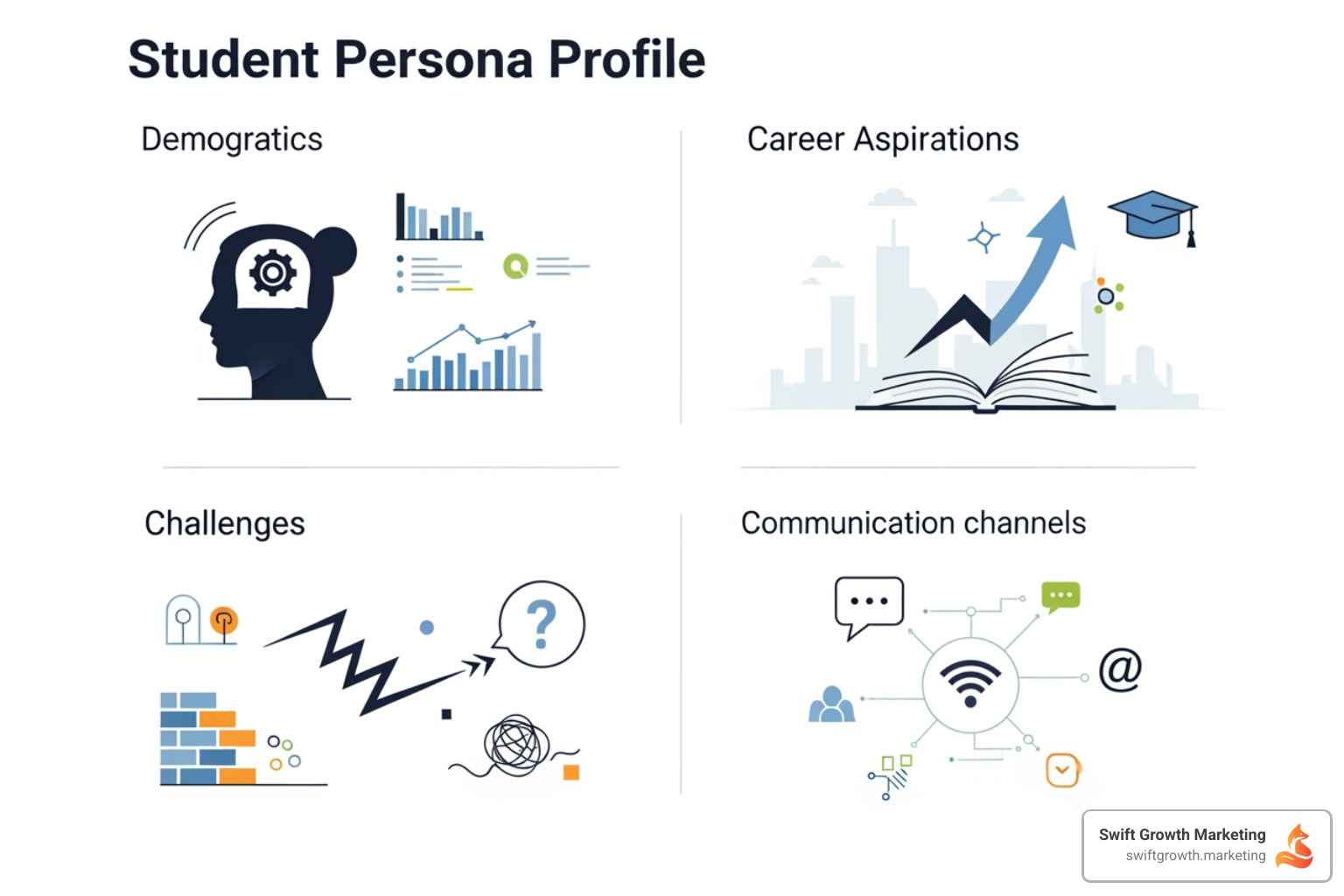
Go beyond demographics and dig into their:
- Career Aspirations: Are they changing fields or advancing in their current one?
- Challenges and Pain Points: Are they worried about cost, work-life balance, or academic gaps?
- Motivations: Is their goal career advancement, personal fulfillment, or higher earning potential?
- Influencers: Who else is involved in their decision (parents, employers, mentors)?
- Communication Preferences: Where do they spend their time online (LinkedIn, Instagram) and how do they prefer to be contacted (email, text)?
For example, a 28-year-old professional seeking a management role has different needs than a recent undergraduate. She’s motivated by earning potential, influenced by her employer’s tuition policy, and worried about balancing work and family. She prefers professional communication on LinkedIn or email. With this detail, you can craft messages that speak directly to her situation. Remember: you are not your audience. Base your personas on research and real data.
Step 2: Core Digital Marketing Strategies for Academic Program Promotion
With your foundation in place, it’s time for action. Today’s students live online, researching programs on their phones and social media. If you’re not present in these digital moments, you’re not part of the conversation. An integrated approach where admissions and marketing work together is crucial, and everything must be measurable. As the Key Elements of Growth Marketing emphasize, if you can’t measure it, you can’t improve it.
SEO Best Practices for Academic Program Promotion
Search engine optimization (SEO) is critical for academic program promotion because few people look past the first page of Google results. When a prospective student searches for “computer science degree near me” in Pittsburgh or “online nursing programs” in Wheeling, your program must appear.
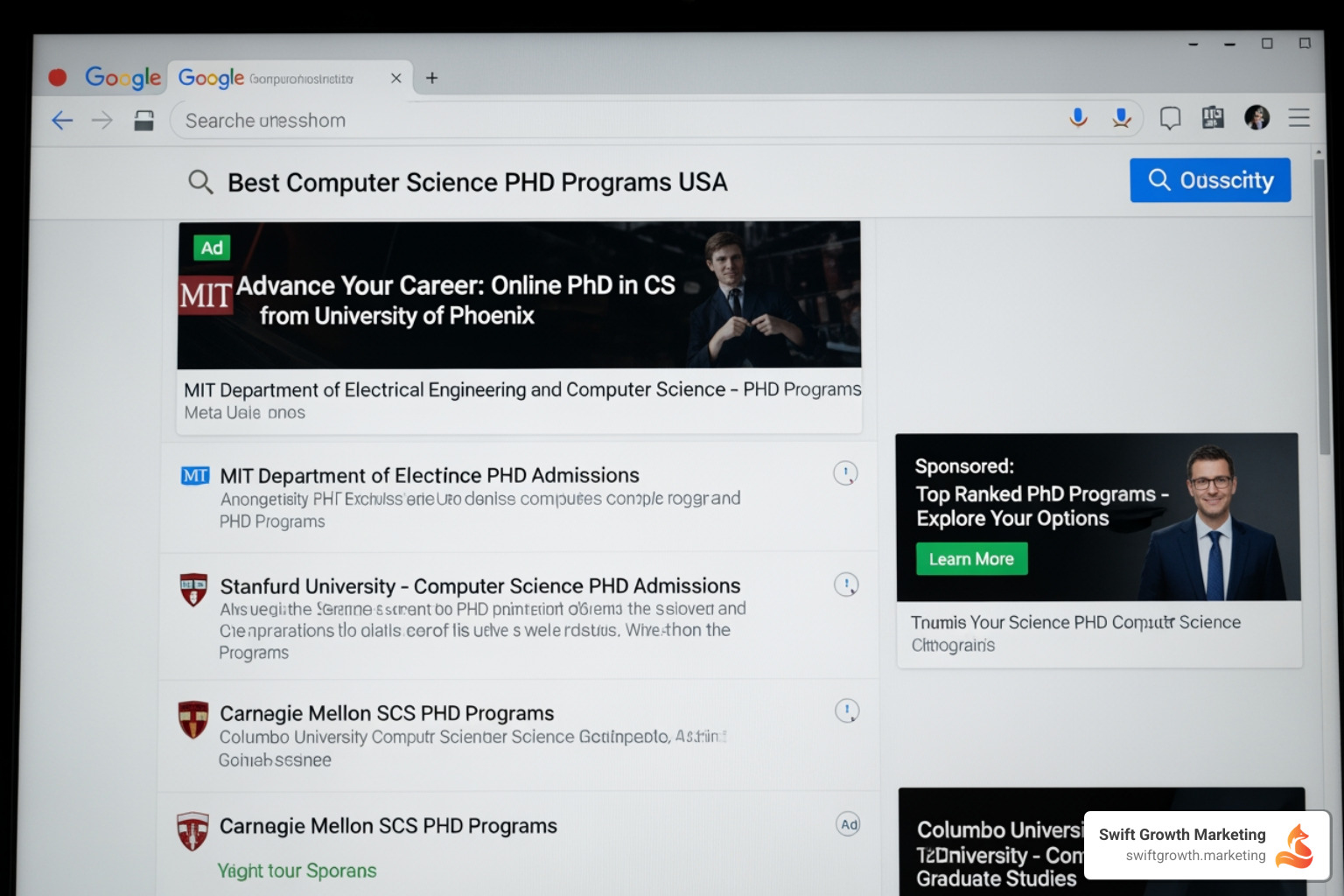
Understand the exact terms students use, including specializations, career outcomes, and location-specific queries. For local institutions, capturing searches like “best MBA programs Pittsburgh” is vital. Optimize each program page with compelling headings, descriptive image alt text, and current information. We use Content Hubs to organize content, signaling to Google that you’re an authority. As an SEO Company, we’ve seen this structured approach dramatically improve search visibility.
Develop a High-Impact Content Marketing Plan
Content marketing helps you become the obvious choice by being genuinely helpful. Answer the questions prospective students are asking: “What can I do with this degree?” or “Can I balance this with my job?”
- Program-specific blog posts can answer key questions while incorporating local relevance, like “Five Career Paths for Robotics Graduates in Pittsburgh’s Tech Scene.”
- Faculty interviews and research highlights showcase expertise and the human side of your program.
- Student success stories and alumni profiles provide powerful social proof that your program delivers on its promises.
- Guides and checklists (e.g., “Financial Aid Guide for West Virginia”) capture leads while providing value.
Repurpose content across multiple formats—a faculty interview can become a blog post, a podcast, and social media snippets. We use Content Clusters: Build Topical Authority with Pillar-Cluster Architecture to ensure every piece of content works harder. Incorporate Storytelling in Content Marketing to show students who they can become, creating an emotional connection that drives applications.
Engage Prospects with Social Media and Email
Social media and email allow for direct, personalized conversations. On social media, your content must be visually appealing to stop the scroll. User-generated content from current students offers authenticity that official marketing can’t match. Encourage students to share their experiences and amplify their posts (with permission).
Faculty and alumni takeovers provide a fresh, behind-the-scenes perspective. For graduate programs, targeted LinkedIn advertising can be highly effective. Our Social Media Marketing on LinkedIn strategies help connect with the right prospects.
Email marketing remains a high-ROI channel, but personalization is key. Segment your lists based on your student personas and use automated nurture workflows to deliver the right information at the right time. This guides prospects toward application without manual effort. We use AIDA Storytelling: Crafting Brand Narratives That Convert to structure messages that grab attention, build interest, and drive action. The beauty of digital is that it’s all measurable, allowing for continuous refinement—the Growth Marketing Mindset in action.
Step 3: Leverage Your Community for Authentic Promotion
Your program’s best promoters are your current students and successful alumni. Prospective students are skeptical of polished advertising and seek real voices and authentic experiences. When a student or alum shares their story, it carries weight no marketing budget can buy. This is word-of-mouth marketing at scale, a powerful tool for building brand trust and modern academic program promotion.
Leveraging Social Proof in Academic Program Promotion
People look to others’ experiences to guide their decisions, and students are no different. Social proof is essential when they choose where to invest their future.
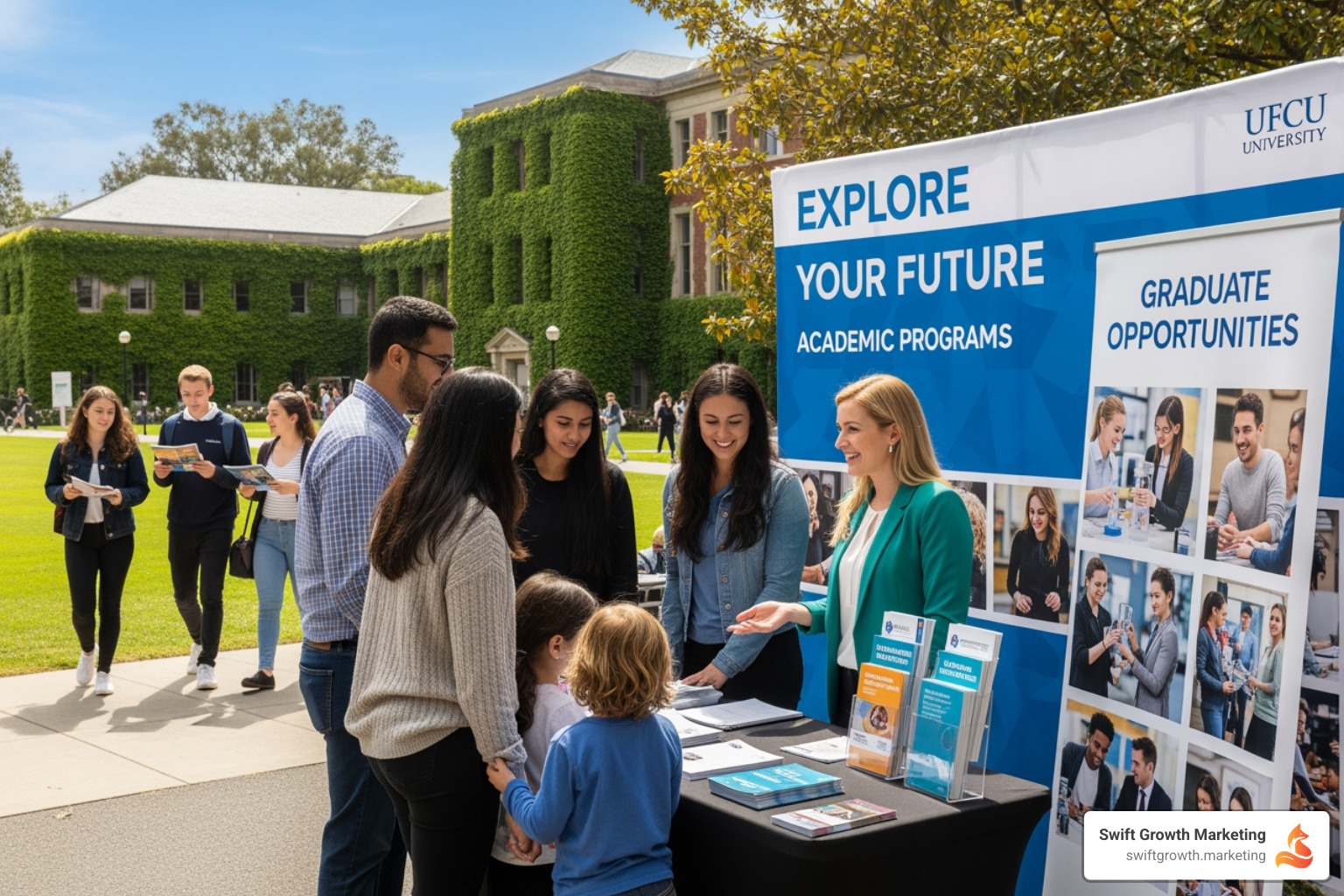
- Collect Authentic Testimonials: Make this an ongoing effort. Ask recent graduates specific questions like, “What moment in this program changed your career trajectory?” to elicit detailed, story-driven responses.
- Use Video: Video testimonials create an emotional connection that text alone can’t achieve. Authenticity often works better than high production values.
- Showcase Employer Feedback: When a hiring manager explains why they prefer your graduates, it validates your program’s career outcomes.
- Feature Rankings and Awards: External validation from reputable organizations provides objective proof of quality. Present these as part of your story, not the whole story.
Create a Student and Alumni Ambassador Program
Your students and alumni have the insider knowledge that prospective students crave. A formal ambassador program channels this authenticity into a structured promotional effort that benefits everyone. Ambassadors gain leadership experience, and your program gets genuine advocates.
Ambassadors can lead campus tours, create social media content showing daily life, or host virtual Q&A sessions. This peer-to-peer influence is powerful because it bypasses the skepticism of official marketing. When a current student says the faculty truly cares, prospects believe it.
Ambassador-led social media support creates a stream of organic, relatable user-generated content. For programs in Pittsburgh or Wheeling, they can also speak to the local experience, helping prospects envision themselves in the city. Virtual Q&A sessions with current students or alumni are invaluable for removing barriers and creating genuine connections. Leveraging your community is an effective and credible strategy for academic program promotion, especially for institutions with limited budgets.
Step 4: Modernize Recruitment for a Digital-First World
The way students choose their educational path has changed. Academic program promotion now requires a digital-first mindset that meets students where they are: online, on their phones, and expecting personalized interactions. Thriving institutions optimize every digital touchpoint to create seamless, engaging experiences. Our approach to UX Optimization ensures every interaction feels intuitive.
Marketing Online vs. On-Campus Programs
Marketing an online program requires a different strategy than an on-campus one. Online students are typically adult learners balancing careers and families. They aren’t looking for a traditional college experience; they’re seeking the “best fit” program that integrates with their life.
For these learners, flexibility and career relevance are paramount. Your materials must clearly answer questions about scheduling, job prospects, and financial aid. Research from the University of Minnesota’s Online Learning program confirms that adult learners prioritize these practical outcomes.
Digital-first lead generation is crucial. This means investing in SEO for terms like “online nursing degree West Virginia” and targeted digital ads on platforms like LinkedIn. Your program landing pages are your virtual front door and must be optimized for conversion, with a clear and easy next step. Our Conversion Rate Optimization Service helps ensure these pages perform. Finally, prompt lead management is critical; a quick, professional response to an inquiry signals that you value the prospect’s time.
Accept Virtual Recruitment and Events
Virtual recruitment is a powerful tool, not just a backup plan. It allows a program in Pittsburgh to connect with prospects globally without the cost of travel.
- Virtual open houses let you showcase your program to hundreds of people at once. Make them interactive to foster genuine connection.
- Online “Meet an Alum” chats create powerful peer connections and answer questions that official materials can’t.
- Video chatbots can provide instant answers on your program page 24/7, improving engagement and capturing leads.
- Interactive campus tours have evolved beyond static photos, allowing visitors to explore facilities and get a feel for the environment.
For these events, use personalized landing pages to track engagement and provide a custom experience. Our expertise in Psychology-Based Landing Page Optimization That Converts ensures these pages connect with visitors. The key is to offer both virtual and in-person options, meeting students where they are and making every interaction valuable.
Conclusion
Higher education has changed, and the institutions that understand this are the ones that will thrive. Academic program promotion isn’t just about posting on social media or sending out brochures anymore. It’s about building something real – a strategic, adaptable, and genuinely helpful approach that meets prospective students where they are and guides them toward their goals.
The future of higher education marketing isn’t about choosing between traditional and digital, or between marketing and admissions. It’s about bringing everything together into a holistic, measurable effort where everyone works toward the same goal. It’s about being human and helpful rather than pushy. It’s about understanding that prospective students in Pittsburgh, Wheeling, and beyond are looking for guidance, not just information.
This isn’t easy work. The enrollment challenges facing institutions today are real, and the competition is fierce. But here’s what we know: the programs that invest in strategic, authentic promotion are the ones attracting top-tier candidates and building sustainable enrollment pipelines.
At Swift Growth Marketing, we’ve spent years helping educational institutions steer exactly these challenges. We understand the unique pressures you’re facing because we’ve worked alongside education clients to transform their visibility, generate qualified leads, and build marketing systems that actually deliver results. We combine our expertise in digital marketing with a genuine understanding of what makes academic programs succeed in today’s landscape.
If you’re ready to move beyond outdated tactics and build an academic program promotion strategy that works for your institution, we’re here to help. Let’s talk about your specific challenges, your goals, and how we can partner to create something that makes a real difference for your program. Get a free consultation with a growth marketing expert and let’s start building your success story together.

chris
Insights on brand authority, positioning, and growth strategy from the Swift Growth Marketing team.