


From Zero to Hero: Your Guide to Building Content Authority

Why Building Content Authority Matters More Than Ever
Build content authority by following these proven steps:
- Create comprehensive content hubs – Cover topics in depth using pillar-cluster architecture
- Demonstrate genuine expertise – Use data, case studies, and original insights
- Build strategic internal links – Connect related content to show topical depth
- Earn quality backlinks – Get cited by authoritative sites in your niche
- Maintain consistency – Publish regularly and update existing content
- Show author credibility – Highlight expertise through bios and credentials
The digital landscape has shifted. Google’s algorithm now rewards authority, not just content. Since the Helpful Content System launched, search engines prioritize sites with genuine expertise over content mills churning out generic posts.
This isn’t just about rankings. It’s about trust.
64% of B2B buyers say thought leadership content is more trustworthy than marketing materials. 48% of companies awarded business to an organization after engaging with their thought leadership. When you establish authority, you’re not just visible—you’re credible and valuable.
Yet, most brands approach authority-building backwards. They chase high-volume keywords and publish disconnected posts, wondering why traffic plateaus. They’re creating content, but not building authority.
The difference is strategic depth. The most effective sites aren’t content mills; they’re structured knowledge hubs. When you cover a topic completely—like Healthline does with diabetes or HubSpot does with marketing—you prove your authority to algorithms and visitors.
Think of authority as compounding interest for your brand. Every comprehensive guide and interconnected content cluster builds on the last, making you more visible and credible across all types of search queries.
I’m Chris Hornak, Co-Founder of Swift Growth Marketing, where we’ve helped clients grow from 400 to 45,000 monthly visitors through strategic content authority-building and produced over 15,000 authoritative blog posts for 500+ businesses. In this guide, I’ll show you exactly how to build content authority that transforms your brand from invisible to indispensable.
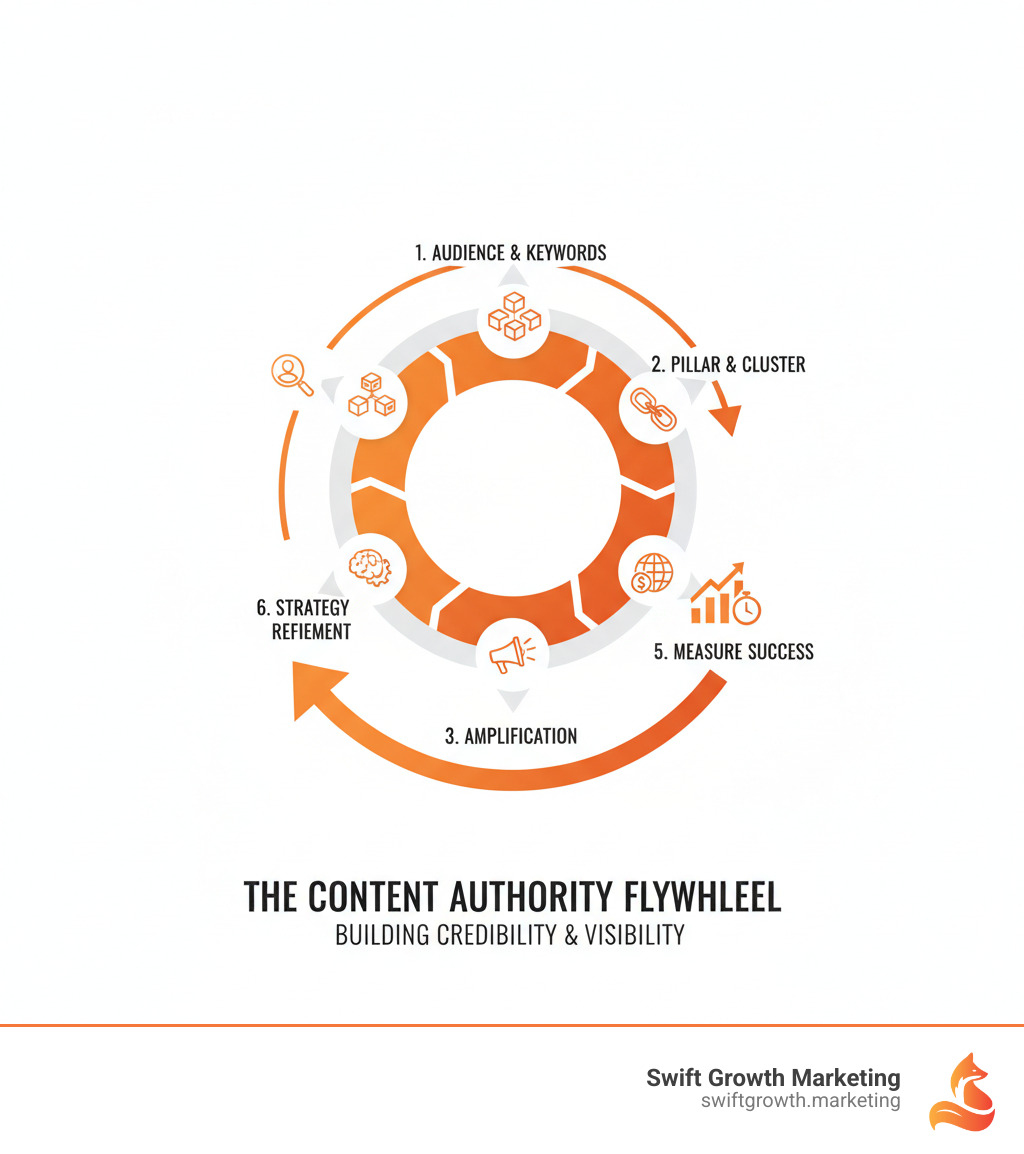
Understanding Topical Authority: The Foundation of Credibility
Creating content isn’t enough anymore. You need to build content authority and become the go-to resource in your niche.
Topical authority means demonstrating deep, organized expertise on a subject. It’s about showing users and search engines that your site thoroughly covers everything related to your focus area.
This ties into Google’s E-E-A-T guidelines—Experience, Expertise, Authoritativeness, and Trustworthiness. Google looks beyond keywords to evaluate the semantic relevance and comprehensiveness of your content.
Since Google launched the Helpful Content System, the algorithm explicitly rewards sites demonstrating genuine expertise. Thin, disconnected content no longer works. Search engines want to see depth and cohesion—content that helps people solve problems.
The benefits are significant: improved rankings across a wide range of queries, increased relevance for long-tail searches, and lasting credibility with your audience. You become a trusted resource people return to. As we’ve explored in our piece on the Evolution of Google’s Search Algorithm, every major update pushes toward rewarding sites that provide genuine value.
Why Topical Authority is Crucial for Modern SEO
The Helpful Content Update solidified Google’s commitment to prioritizing sites that truly help users. User trust and algorithm trust are now the same thing. When you consistently provide valuable, comprehensive content, you earn both.
Topical authority isn’t a quick hack—it’s a strategic advantage. Each piece of well-researched, interconnected content strengthens your overall position. This approach creates a compounding effect for your visibility. You don’t just rank for one or two high-volume keywords; you become visible across hundreds of long-tail queries.
Your goal is to become the “hub” that cures the whole rash, not just scratch an itch with a single blog post. When you comprehensively cover a topic, Google recognizes you as the authority and rewards you with visibility across related searches.

This strategic approach makes you more visible, trustworthy, and useful to both users and search engines.
The Benefits of Being a Niche Authority
Becoming a niche authority transforms how your brand is perceived. Instead of being just another website, you become an indispensable resource.
The engagement difference is real. Expert-led and research-based articles generate 2.7x more engagement than standard blog posts. When people recognize your content as authoritative, they spend more time with it.
Authority drives conversions. In fact, reports show that 54% of companies made a purchase after engaging with an organization’s thought leadership content. When you provide valuable information, you’re not just attracting visitors—you’re attracting qualified leads.
Trust builds loyalty. When your content reliably helps people, they remember, bookmark, and recommend your brand, building a loyal audience.
Social proof happens naturally, attracting backlinks and shares. Research shows 63% of consumers trust experts more than the brand says about itself. When you’re seen as an expert, your content becomes citation-worthy.
You stand out in crowded markets. True authority cuts through the noise of generic content, distinguishing you from competitors.
The Strategic Blueprint: How to Build Content Authority
Random blog posts don’t build authority. You need a system.
The most effective approach is the pillar-cluster model. At the center is a comprehensive pillar page covering a broad topic. Radiating outward are cluster posts—detailed articles on specific subtopics. Everything connects through strategic internal links.
This structure proves your expertise to Google and your audience by creating a complete knowledge ecosystem. Think of it this way: a single blog post scratches an itch, but a content hub cures the whole rash.
That’s exactly what we’re building—complete solutions, not quick fixes.

This structure guides visitors through a logical learning journey and signals to search engines that you’ve covered a topic thoroughly. The results speak for themselves: sites using this architecture see improved rankings across hundreds of related keywords. For a complete walkthrough, check out our guide on Content Clusters Build Topical Authority With Pillar-Cluster Architecture.
Step 1: Develop a Content Strategy to Build Content Authority
Before you write, you need a roadmap. Businesses with documented content strategies achieve 60% higher engagement rates and generate 3x more leads. Strategy is the foundation.
Deep audience research and buyer personas help you understand your audience’s motivations, frustrations, and goals. You’re solving specific problems for specific people.
Next, competitive analysis reveals gaps in your niche. Find the questions your competitors aren’t answering to provide unique value.
Then move into keyword research and topic mapping. You’re not chasing individual keywords; you’re identifying entire topic clusters. Your goal is to answer all related questions, creating a comprehensive resource.
Finally, use a content calendar for consistent publishing. Consistency builds trust and signals to search engines that your site is active. It can even increase brand recall by up to 33%. For more on building a solid foundation, explore our guide on Strong SEO Strategy.
Step 2: Structure Your Content with Pillar Pages and Topic Clusters
Now let’s talk structure. This is where strategy becomes reality.
Your pillar pages are comprehensive, long-form guides (typically 3,000+ words) that cover broad topics in depth. They provide a complete overview while linking to more detailed explorations.
Your cluster content digs into the specifics. These are individual posts that explore particular aspects of your pillar topic. Each cluster piece links back to the pillar page, and the pillar links out to relevant clusters, creating an interconnected web of expertise.
Strategic internal linking is key. It improves user navigation and shows Google the relationship between your pages, strengthening the pillar’s authority.
Take Healthline’s diabetes content as an example. They built a complete ecosystem covering everything from causes to diet plans. This comprehensive approach helped them dominate search results for thousands of related queries. They became the definitive resource.
Your goal is the same: answer the complete set of user questions within your niche. When someone searches for anything related to your core topic, your content should appear. That’s how you build content authority that lasts. For deeper insights, check out our piece on Hub and Spoke SEO.
Creating Authoritative Content: Formats and Best Practices
The format you choose matters as much as what you say. To build content authority, we must consider how our audience consumes information and what search engines see as helpful.
Authoritative brands use a mix of formats—from blog posts and case studies to video and podcasts. This variety meets diverse audience preferences and signals comprehensive coverage to Google.
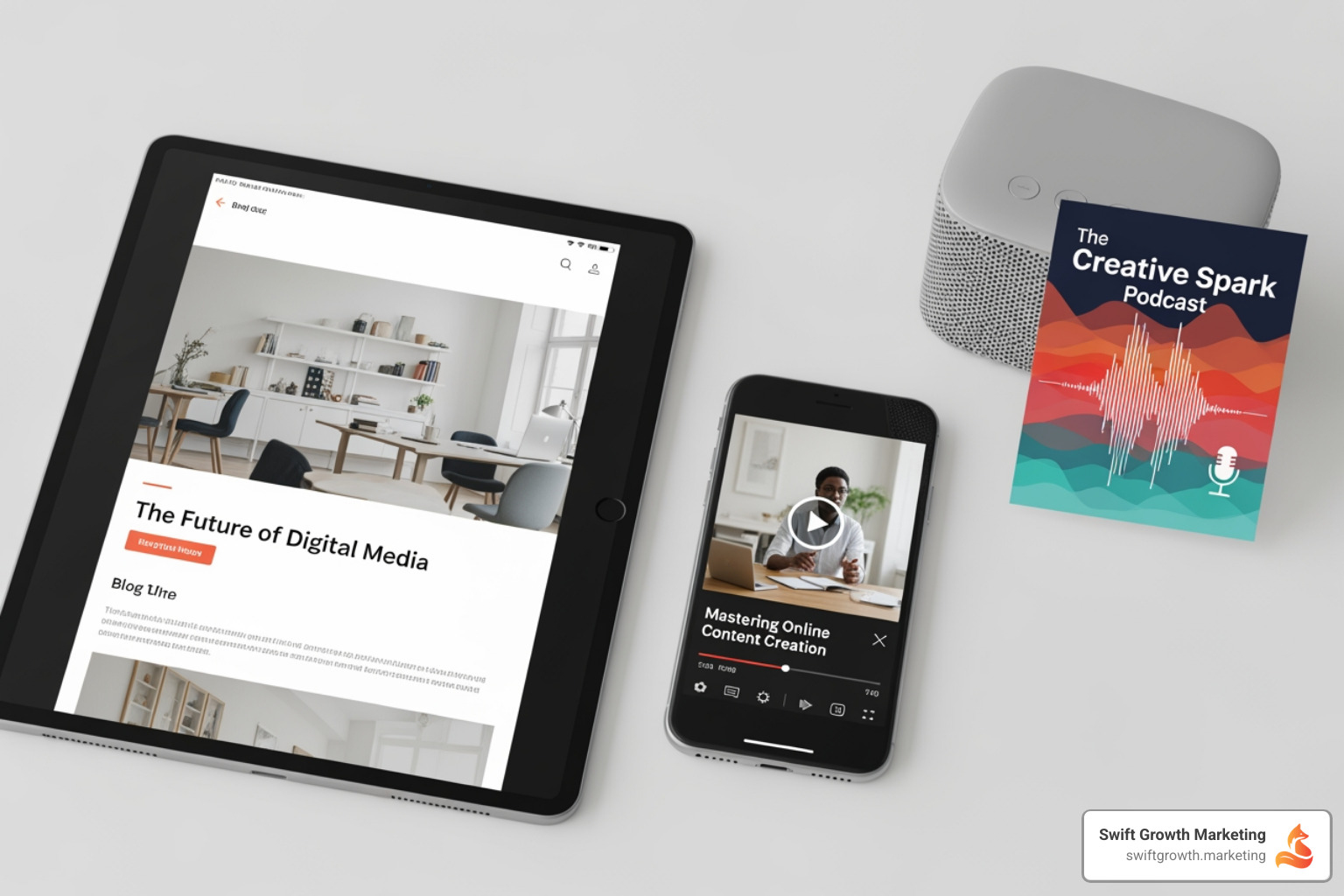
Our goal is to provide content that genuinely solves problems. This is what The Helpful Content Formula is all about—creating resources people want to consume.
The Most Effective Content Formats
“How-to” guides and tutorials are workhorses. They provide step-by-step solutions, proving your expertise. Comprehensive guides over 3,000 words earn 77.2% more backlinks than shorter posts.
Evergreen content is your long-term investment. This content stays relevant for years, driving long-term value. Research shows 38% of organic traffic comes from evergreen posts like ultimate guides and foundational explainers.
Case studies are powerful in B2B. They prove you deliver results. A 2024 Demand Gen Report found 79% of B2B buyers review case studies during their purchasing journey, making them powerful conversion tools.
Original research and data-driven reports are authority accelerators. Creating original studies or surveys positions you as a thought leader. This content gets quoted and linked to, accelerating authority.
Video and podcasts build trust faster than text. With 91% of businesses using video for marketing and podcast listenership at 504 million in 2024, these formats are essential for reaching modern audiences. For more on leveraging video, check our guide on Short-Form Video Marketing.
How to Build Content Authority by Leveraging Existing Assets
You don’t always need to create from scratch. Your existing content is a goldmine. Smart brands know that refreshing and repurposing what you have is often highly effective.
Start with a content audit. Look at what you’ve already published to identify high-performing pieces, content gaps, and update opportunities.
Refreshing and updating old posts is a high-leverage activity. Update stats, add new sections, and republish. This tells users and search engines that your information is current and accurate.
Repurposing content amplifies your message. One blog post can become a video, podcast, social media carousel, and more. Brands doing this see up to 2.5X higher engagement and a 300% higher return on content investment. Each format reaches a different audience segment and reinforces your expertise. This is about crafting narratives that convert, a concept we explore in AIDA Storytelling: Crafting Brand Narratives That Convert.
The Role of Authorship and Credibility
Who’s behind your content matters. Google’s E-E-A-T guidelines weigh author qualifications heavily. This is a trust issue: people want to know a real expert is behind the information.
Author bios should explain why the person is qualified, detailing their background and experience. For complex subjects, adding a “Reviewed by” section with a recognized expert can significantly boost credibility.
Expert quotes and collaboration add external validation. Integrating insights from recognized authorities shows your content is part of a broader expert conversation.
Building personal brands within your company amplifies your authority. When team members share authentic insights, audiences perceive the business as more credible. People don’t just trust a brand—they trust the people behind it. This ties into on-page SEO, which we cover in How to Build a Strong SEO Foundation With On-Page SEO.
Amplifying and Measuring Your Authority
Creating authoritative content is the first step. Next, you must amplify it to the right audience and measure the results to refine your strategy.
Social media is vital here. While topical authority is about deep expertise, thought leadership is about sharing original, insight-driven perspectives. The two work together. Your thought leadership should express originality and passion for your subject.
The best thought leadership sparks conversation. Sharing bold insights on social media and forums builds relationships and creates new entry points to your content.

But amplification without measurement is guesswork. You need to know what’s moving the needle.
How to Measure Topical Authority Progress
Google doesn’t provide a “topical authority score,” but tracking several key indicators together will paint a clear picture of your progress.
Google Search Console impressions are an early signal. An upward trend means Google is showing your content for more queries, indicating growing authority. Pair this with keyword ranking improvements for your pillar and cluster pages. Our Google Search Console 101 guide shows you how to track these. If you see a dip, this article can help diagnose the issue.
Branded search volume is another powerful signal. As authority grows, more people search directly for your brand because they remember and trust you.
Backlink acquisition matters. When other authoritative sites link to you, they’re vouching for your expertise. Monitor the quality of these links, not just the quantity.
Social shares and engagement are a direct reflection of your content’s perceived value. Research shows 83% of marketers report social media has increased their exposure.
Finally, look at lead quality. Attracting the right decision-makers is a strong indicator that your authority is resonating with your target audience.
Common Mistakes to Avoid
Building authority takes time, and certain missteps can derail your progress. Here’s what to avoid.
- Thin, superficial content: Go deep or go home. Search engines look for depth and clarity.
- Inconsistent publishing: A sporadic schedule loses momentum with your audience and search engines.
- Self-promotion over insight: Provide valuable perspectives that help your audience, even if they never buy from you.
- Ignoring internal linking: Connect related content to show the depth of your expertise.
- Neglecting content updates: Refreshing existing content keeps it relevant and requires less effort than creating new pieces.
- Focusing only on high-volume keywords: Cover your entire topic, including long-tail queries that collectively drive significant traffic.
Frequently Asked Questions about Content Authority
What’s the difference between topical authority and domain authority?
Topical authority and domain authority are not the same thing.
Topical authority is about proving your expertise in a specific subject, like HubSpot has for marketing. You become the trusted resource for that topic.
Domain Authority (DA) is a third-party metric (from companies like Moz) that predicts a site’s overall ranking potential based on its backlink profile. It’s a general indicator, not a factor Google uses directly.
When you build content authority, you naturally attract quality backlinks, which can indirectly improve your DA. However, your focus should be on demonstrating genuine expertise, as that’s what Google truly values.
How long does it take to build content authority?
Building content authority is a long-term investment, not a quick hack. Expect to see significant results in 6-12 months with consistent effort, including publishing high-quality content, internal linking, and promotion. In competitive niches, it may take longer.
The benefits compound over time. Your first pillar page might take months to gain traction, but subsequent ones will perform faster as you establish credibility. The wait is worth it for the lasting visibility and trust you’ll earn.
Can a small business compete with large brands on authority?
Yes—and they often have an advantage.
Large brands often cover many topics broadly. Small businesses can win by going deep instead of wide.
The strategy is to become a big fish in a small pond. Choose a narrow niche and own it completely. For example, instead of “marketing tips,” focus on “email marketing for dental practices.”
When you focus on a specialized area, you can provide depth and practical expertise that large competitors can’t match. You understand the specific pain points and speak the language of your audience.
Deep knowledge in a focused niche outperforms shallow content from bigger brands. You don’t need the biggest budget, just the most helpful voice for your specific audience. That’s how small businesses build content authority that beats the big players.
Conclusion: Your Journey to Authority Starts Now
Building content authority is a strategic journey that transforms your brand from another voice in the crowd to a trusted expert.
We’ve covered why authority matters, how Google evaluates it, and the benefits of becoming a recognized expert, from higher rankings to better conversions.
The path is clear: develop a strategic blueprint using pillar pages and topic clusters, create genuinely helpful content, and then amplify and measure your results.
Consistency is your secret weapon. You don’t need to publish ten articles a day. Start small, focus on providing genuine value, and build momentum over time.
This journey is a marathon, not a sprint, but every step compounds. Authoritative content works for you long after you hit publish, attracting visitors, earning trust, and building lasting credibility.
At Swift Growth Marketing, we’ve walked this path with hundreds of businesses, helping them grow from obscurity to authority. We know what works and how to steer the challenges.
Your authority-building journey starts with the decision to be genuinely helpful and strategically focused. Ready to build your brand’s authority and transform your digital presence? Explore our growth marketing consultancy services and let’s make it happen together.

chris
Insights on brand authority, positioning, and growth strategy from the Swift Growth Marketing team.