


The Great Rebrand: Unpacking the Whys and Hows of Corporate Identity Shifts

Why Business Rebrand Matters for Your Company’s Future
A business rebrand is the strategic process of reshaping your company’s identity—including its name, logo, messaging, and market positioning—to better align with your current vision and audience. It’s a fundamental shift in how your organization presents itself to the market, going far beyond a simple logo refresh.
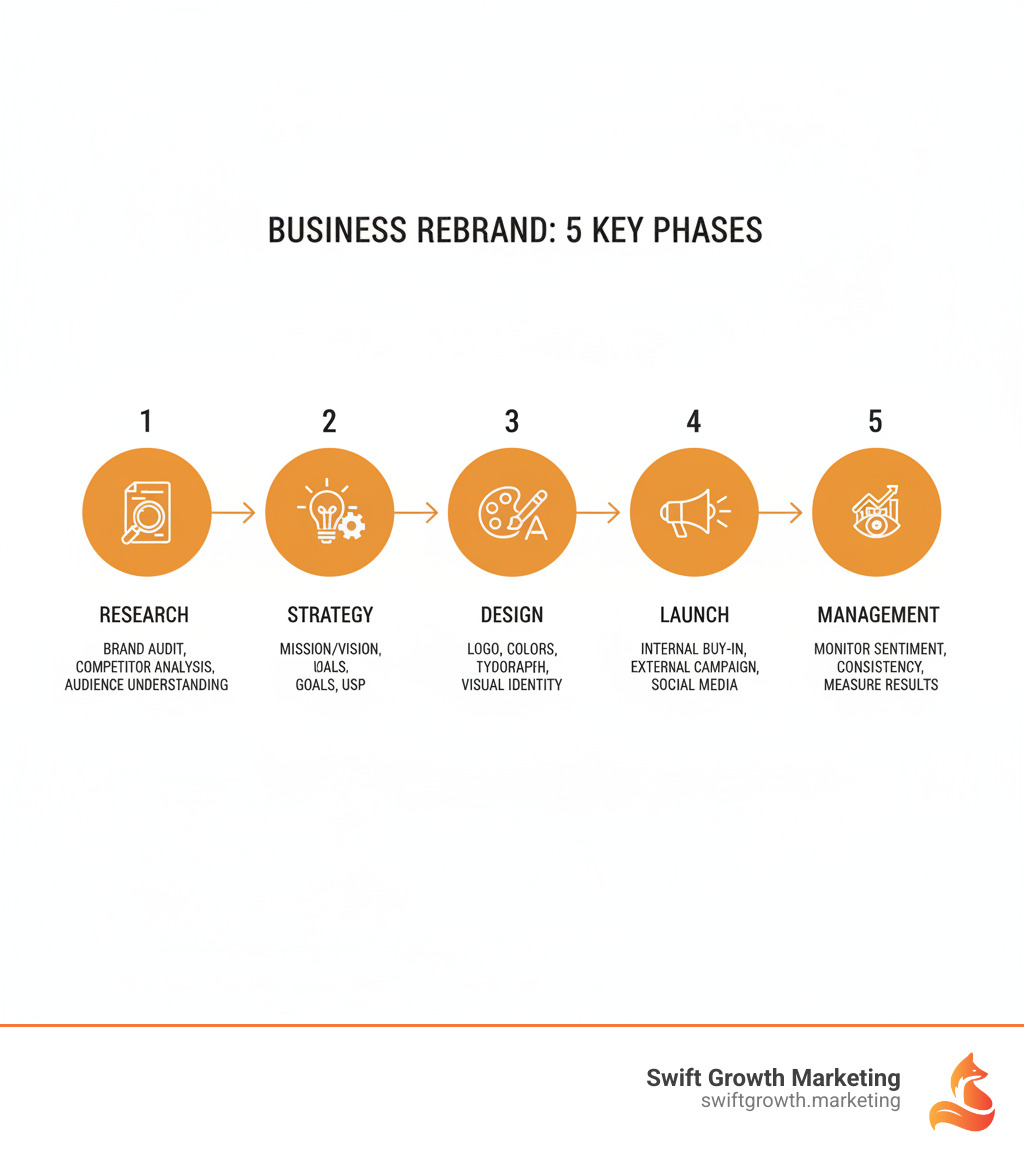
Key phases of a business rebrand:
- Research – Audit current brand perception and analyze competitors.
- Strategy – Define new vision, mission, and positioning.
- Design – Create a new visual identity (logo, colors, typography).
- Launch – Roll out internally to employees, then externally to the market.
- Management – Monitor sentiment, ensure consistency, and measure results.
Rebranding becomes necessary when your current identity no longer reflects who you are. Triggers include mergers, outdated visuals, expansion into new markets, or the need to distance your brand from reputation issues. According to research, 88% of CMOs say investing in brand-building is key to building a resilient brand, yet even strong brands have a shelf life of just five to ten years due to shifting market dynamics.
A successful rebrand can increase brand awareness, strengthen competitive positioning, and drive growth. Done poorly, it risks alienating your base and confusing your market. The difference lies in strategic execution, starting with deep research and ending with a unified launch that brings everyone along for the journey.
I’m Chris Hornak, Co-Founder of Swift Growth Marketing, where we’ve helped brands steer business rebrand initiatives that transform market positioning and drive measurable growth.
Decoding the Rebrand: What It Is and Why It Matters
A business rebrand is a comprehensive strategic shift, not just a new logo. It touches everything from your name and visual identity to your messaging and market positioning. The scope can range from a simple visual update to a complete overhaul of your company’s identity.
So why do businesses take on something this significant? The triggers are rooted in real business challenges and opportunities:
- Mergers and acquisitions require a unified identity to communicate combined strengths.
- An outdated brand image can make you seem out of touch. Brands typically need a reevaluation every five to ten years.
- Expanding into new markets may require a new identity that connects with different audiences.
- Reputation management can necessitate a rebrand to signal a fresh start and demonstrate real change.
- Other triggers include a loss of relevance, a change in leadership, or struggling to stand out from competitors.
The benefits of getting this right are substantial. According to research, 88% of CMOs say investing in brand-building is key to building a resilient brand during economic uncertainty, as noted in recent brand investment studies. A modernized brand helps you stand out and strengthens your competitive position. A strong brand also fosters trust, which is vital in the digital age, especially with the rise of new technologies. Understanding topics like Building Brand Trust: Generative AI’s Impact on Credibility is essential for navigating these dynamics.
The Different Types of Rebranding
Not all rebrands are created equal. Understanding the difference between a partial and a full rebrand helps you make smarter decisions.
| Aspect | Partial Rebrand (Refresh) | Full Rebrand (Overhaul) |
|---|---|---|
| Scope | Cosmetic updates, visual elements | Core identity, mission, vision, values, name, messaging |
| Triggers | Modernization, minor shifts, keeping up with trends | Foundational changes, M&A, new markets, reputation crisis |
| Risk Level | Lower, less disruptive | Higher, significant disruption and cost |
| Key Changes | Logo, color palette, typography, refreshed tagline | Name, logo, mission statement, brand voice, strategy |
A brand refresh focuses on polishing your existing identity without changing its core. You’re making visual adjustments to feel more modern while retaining brand loyalty. The Pringles mascot redesign in 2021 is a perfect example: it felt fresh without alienating longtime fans.
A full rebrand is a complete overhaul of your company name, logo, mission, and strategy. This is necessary for foundational shifts like mergers or major pivots. Consider how Wise rebranded from TransferWise to reflect its diversified product offering, signaling a complete identity shift that matched its new direction.
Key Benefits of a Successful Rebrand
When executed thoughtfully, a business rebrand can transform your business trajectory.
- Increased market share: A relevant brand acts like a magnet, drawing in new customers more efficiently.
- Higher customer loyalty: A rebrand that aligns with customer values deepens connections and builds a resilient customer base.
- Attracting top talent: A compelling brand with a clear mission positions you as an employer of choice.
- Justifying price increases: A rebrand can shift perception, giving you the pricing power that weaker brands lack.
All of these benefits converge to drive sustainable business growth. When your messaging is strategic and builds trust—as we explore in Strategic Messaging That Builds Trust and Drives Action—every aspect of your brand contributes to this growth.
The Strategic Blueprint for a Business Rebrand
Starting a business rebrand without a solid plan is a recipe for failure. The most successful rebrands are built on a strategic foundation before any visible changes are made.

Before thinking about new logos, you need to get your house in order. This starts with understanding your audience—not just their demographics, but their motivations and frustrations. Your employees are just as critical; if they aren’t convinced, your customers won’t be either. You also need to be realistic about resources, as a rebrand is a significant investment of time and money. Creating a detailed timeline keeps everyone accountable and prevents chaos.
This groundwork separates strategic growth from expensive mistakes. Approaching your rebrand with a Growth Marketing Mindset means treating it as a deliberate investment in your future.
Developing Your Business Rebrand Strategy
With your foundation solid, you can build the strategic core of your rebrand.
- Brand Audit: Examine your current brand’s strengths and weaknesses across all touchpoints to see what’s working and what’s not.
- Competitor Analysis: Study your rivals to find the white space where your brand can own something meaningful and differentiate itself.
- Mission, Vision, and Values: Redefine these core statements to act as a compass for every decision you make. They should be clear, authentic, and guide your brand’s purpose.
- Set Clear Goals: Transform your rebrand from a creative exercise into a business initiative with specific, measurable goals (e.g., increase brand awareness by 40%).
- Unique Selling Proposition (USP): At the heart of your strategy is the clear, compelling reason customers should choose you. This is the honest answer to “why us?” and the foundation of your new messaging.
Assembling Your Rebrand Toolkit
Now comes the creative work of translating your strategy into tangible elements.
- Logo: As the face of your company, your logo should be simple, memorable, and flexible enough to work across all platforms.
- Color Palette: Colors trigger emotional responses. Your palette should reflect your brand’s new personality and be used consistently.
- Typography: The fonts you select convey personality before a single word is read. They must be readable and align with your brand’s character.
- Messaging: This is your brand’s verbal identity. It should be clear, compelling, and authentic. Developing distinct Brand Voice Elements ensures you sound like yourself everywhere.
- Visual Identity: This includes your photography style, graphic elements, and the overall mood your visuals create, ensuring a cohesive aesthetic.
- Brand Guidelines: These essential documents establish the rules for how your brand appears in the world, ensuring consistency across all teams and touchpoints. Centralized, cloud-based guidelines make consistency effortless.
Execution and Launch: Bringing Your New Brand to Life
You’ve done the research and designed the elements, but none of it matters if the launch falls flat. The execution phase is about precision, coordination, and getting everyone excited about the change.
Think of your business rebrand launch like opening night. Before the curtain rises for the public, your internal team needs to know their parts inside and out.
Internal Launch: Igniting the Spark Within
Your employees are your most valuable brand ambassadors. Before any customer sees the new brand, your team must understand, believe in, and champion the change. Build genuine employee buy-in by sharing the story and the why behind the rebrand. Provide training and resources that go beyond a simple email, helping them understand the new messaging and what it means for their roles. Identify brand champions within departments to help maintain momentum and enthusiasm.
External Launch Plan: Telling Your Story to the World
Once your team is aligned, it’s time to share your new brand with the world through a carefully orchestrated, multi-channel campaign.
- Marketing Campaign: Use a mix of digital and traditional channels to create excitement and reach your audience where they are.
- Press Release: Distribute a well-crafted press release to media outlets to control the narrative and position your company as forward-thinking.
- Social Media Rollout: Build anticipation with a teaser campaign, then update all profiles simultaneously on launch day. Share behind-the-scenes content to engage your audience.
- Storytelling: A rebrand is a story of growth. Use compelling narratives to explain where you’ve been and where you’re going. The principles in AIDA Storytelling: Crafting Brand Narratives That Convert can help you craft a message that resonates.
Announcing and Managing the Transition
The big reveal is just the beginning. The weeks following your launch are critical for cementing your new identity.
- Customer Communication: Be proactive and transparent. Use email and social media to explain the change and reassure customers that the quality and service they love remain.
- Update All Brand Assets: Create a comprehensive checklist and methodically update every touchpoint—website, social media, packaging, signage, presentations—to reflect the new identity.
- Monitor Brand Sentiment: Use social listening tools and surveys to track what people are saying. Modern tools for AI Brand Reputation Management can help you analyze sentiment and identify issues early.
- Ensure Consistency: Inconsistent branding erodes trust. Use your brand guidelines to ensure every brand interaction reinforces your new identity.
Risks, Pitfalls, and Real-World Lessons
A business rebrand promises change, but it carries real risks. Understanding these potential pitfalls isn’t about avoiding change—it’s about steering it wisely.
Key risks include loss of brand recognition, which can confuse customers, and alienating loyal customers who feel an emotional connection to your old brand. Negative feedback can spread quickly on social media, and technical missteps can lead to website traffic setbacks from broken links or SEO penalties. Perhaps the biggest risk is not addressing core issues; a new logo won’t fix bad customer service. As we explore in Is Your Website Hurting Brand Credibility? Get an Audit, your online presence is critical, and mistakes can have lasting consequences.
Common Mistakes in a Business Rebrand
Learning from common missteps can save you significant heartache and expense.
- Rebranding for superficial reasons: Changing your look out of boredom or to cover up deeper problems rarely works.
- Lack of research: This leads to generic brands that fail to stand out.
- Ignoring customer feedback: You risk creating something that misses the mark with the people who pay your bills.
- Poor communication: If employees are confused, customers will be too. Transparency is key.
- Inauthentic rebrand: If your new brand persona doesn’t match your actual business practices, customers will see through it.
Learning from the Best (and the Rest)
Real-world examples illuminate the potential and pitfalls of rebranding.
Success Stories:
- Wise (formerly TransferWise) rebranded to reflect its evolution beyond just money transfers, as the company recognized its expanded services.
- Pepsi’s 2023 rebrand modernized its look while honoring its 125-year heritage, ensuring brand recognition.
- LG successfully targeted younger audiences with an animated, expressive 2D logo and new, people-centric values.
- Reddit brought its mascot to life with a 3D look and repositioned itself as “the heart of the internet.”
Cautionary Tales:
- Gap’s 2010 logo failure caused widespread customer outrage, forcing the company to revert to its original logo in just six days.
- Weight Watchers’ transition to WW left consumers confused, as many didn’t know what the new name stood for, erasing significant brand recognition.
- Comcast’s rebrand to Xfinity felt hollow because it didn’t address its reputation for poor customer service.
- Twitter’s change to X alienated a large user base by abruptly abandoning a globally recognized brand, demonstrating the risk of ignoring established brand equity.
Frequently Asked Questions about Business Rebranding
How do you know if it’s the right time to rebrand?
It’s time for a business rebrand when your brand no longer tells your real story. Key signs include your identity feeling outdated, failing to stand out from competitors, or no longer reflecting your company’s growth and new offerings. Other triggers are major business changes like mergers, expansion into new markets, or the need to overcome reputation challenges. If you’re struggling to attract top talent or justify prices, it may be time for a change. A thorough brand audit is the best first step.
What role do employees play in a rebrand?
Employees are your most important brand ambassadors. Their buy-in and enthusiasm are critical for a successful business rebrand. They live your brand daily and their interactions shape customer perceptions more than any marketing campaign. Involving them early, communicating the why behind the change, and providing proper training creates a sense of ownership. When your team is excited and can confidently represent the new identity, that authenticity becomes contagious and brings the brand to life for your customers.
How do you measure the success of a rebrand?
Success is measured against the specific goals you set at the beginning. Key metrics to track for a business rebrand include:
- Brand Awareness: Monitor brand mentions, search volume, and direct website traffic.
- Customer Perception: Use surveys and sentiment analysis to gauge how customers view your new identity.
- Competitive Position: Analyze your market share and ability to differentiate from competitors.
- Business Impact: Track revenue growth, customer acquisition cost, and lead quality.
- Internal Impact: Measure employee engagement, satisfaction, and recruitment success.
Consistently monitoring these metrics will tell you if the rebrand delivered a real return on investment and achieved its strategic objectives.
Conclusion
A business rebrand is a strategic growth tool that can reshape your company’s future. It’s your chance to tell a new story that reflects where you’re headed. For businesses in Pittsburgh, PA, Wheeling, WV, and beyond, a thoughtful rebrand can be the difference between blending in and standing out as a market leader.
The path involves deep research, a clear strategy, creative design, and an intentional launch. While there are risks, approaching a rebrand with authenticity and consistency yields substantial rewards: increased awareness, stronger competitive positioning, and sustainable growth.
The most important lesson is that a rebrand only works if it’s rooted in truth. Your brand promise must match your brand reality. When what you say aligns with what you do, you build trust and create lasting value.
At Swift Growth Marketing, we guide businesses through these pivotal moments. We know rebranding is about strategic clarity and the courage to build something that resonates. If you’re ready to explore how a strategic rebrand could accelerate your growth, we’re here to help. Our Growth Marketing Consultancy services are designed to partner with you through every phase, because your brand is the promise you make and keep, day after day.

chris
Insights on brand authority, positioning, and growth strategy from the Swift Growth Marketing team.