


From Oreo to Redbull: Brands That Mastered Content Marketing

Why Content Marketing for Brands Matters More Than Ever
Content marketing for brands is a strategic approach using valuable content to attract and retain an audience, delivering value before asking for a sale. It’s essential because it:
- Builds Trust: Establishes your brand as a go-to source of information.
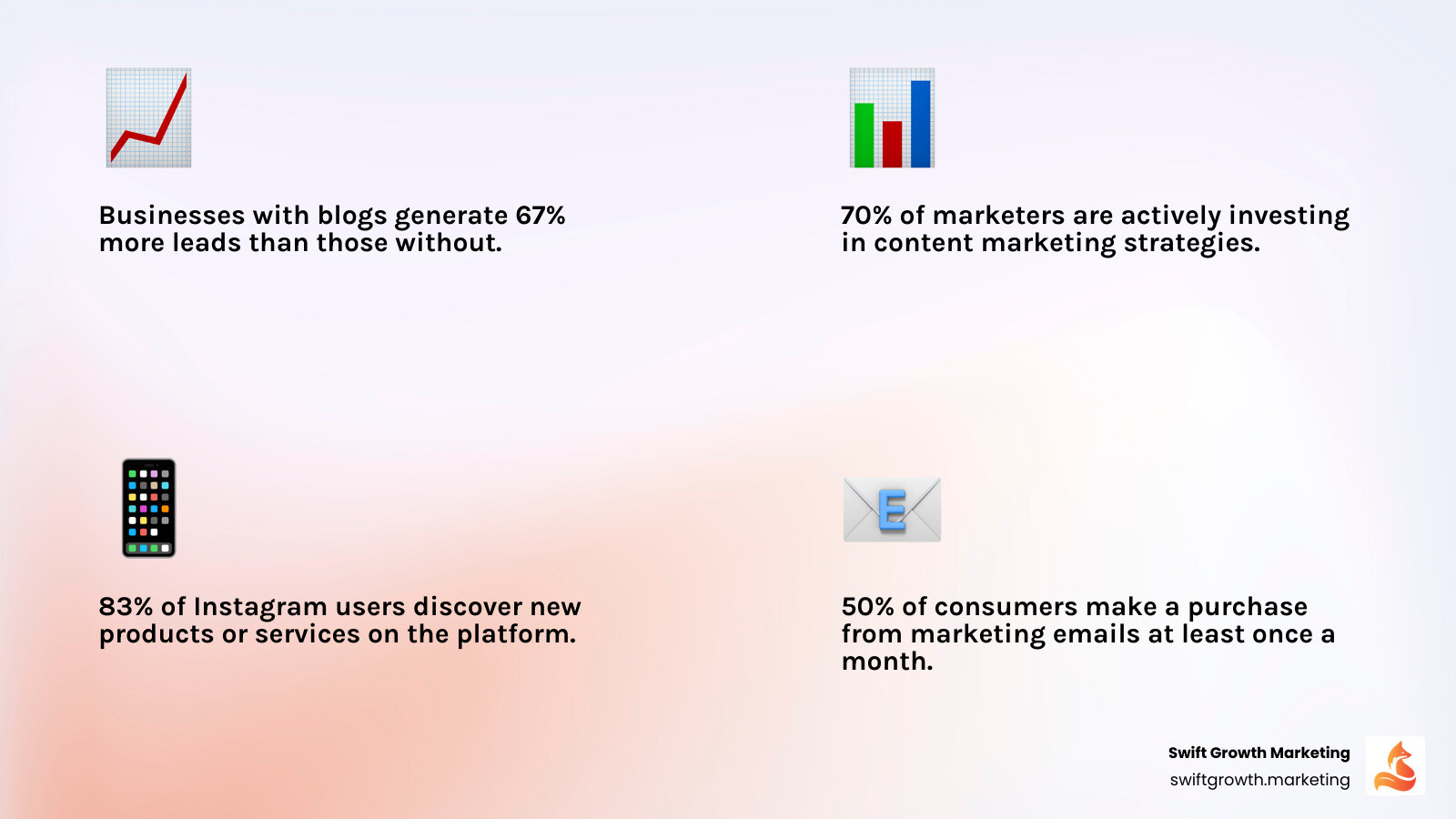
- Drives Results: Businesses with blogs get 67% more leads, and 70% of marketers are actively investing in it.
- Supports the Customer Journey: Guides prospects from awareness to loyalty.
- Creates Long-Term Value: Quality content performs over time with no recurring cost.
- Reduces Acquisition Costs: Retaining a customer is far cheaper than acquiring a new one.
When 51% of marketers find it harder to capture attention, content marketing offers a solution. It’s not about interruption; it’s about invitation. Brands like Red Bull sell a lifestyle, not just a drink, by creating content their audience loves. The best strategies are audience-centric, tell compelling stories, and provide genuine value.
However, success requires a documented strategy. Research shows 65% of the most successful content teams have a documented plan, versus just 14% of the least successful.
I’m Chris Hornak, Co-Founder of Swift Growth Marketing. We’ve helped over 500 businesses become industry authorities through strategic content marketing for brands. This article will show you how leading brands do it and how you can apply their strategies.
The Anatomy of a Winning Strategy: What Makes Great Content?
Great content marketing for brands isn’t about volume; it’s about creating something that matters to your audience. When you succeed, ideal customers gravitate toward you because they feel understood, not sold to. The content that gets results shares these core principles:
- Audience-Centric: It must address your audience’s specific problems, questions, and goals.
- Originality: Incorporate your unique expertise, data, and fresh perspectives to cut through the noise.
- Storytelling: Use narratives to create emotional connections. Storytelling in Content Marketing transforms dry information into something memorable.
- Quality Production: Well-researched writing, clean design, and crisp video production build credibility and trust.
- Action-Driven CTAs: Inspire people to take the next step, whether it’s downloading a guide or booking a demo.
- Channel Optimization: Customize and publish content where your audience actually spends their time.
Why is a strategy for content marketing for brands so crucial?
Content marketing without a strategy is like driving without a map. A documented plan acts as your roadmap, and the data proves it: 65% of the most successful content marketing teams have their content plan documented, compared to only 14% of the least successful, according to the Content Marketing Institute.
A strategy ensures goal alignment, connecting content directly to business objectives like brand awareness, lead generation, or sales. The foundation is deep audience research to understand their pain points and preferences.
This leads to funnel mapping, where content is custom to the buyer’s journey:
- Top of Funnel (TOFU): Focus on awareness with blog posts, social media, and infographics.
- Middle of Funnel (MOFU): Nurture leads with ebooks, webinars, and detailed guides like our resource on Pillar Page vs. Landing Page.
- Bottom of Funnel (BOFU): Drive decisions with case studies, demos, and comparison guides.
Mapping content to each stage creates a system that consistently guides your audience toward becoming customers.
What are the best types of content marketing for brands?

The right content mix depends on your goals and audience. Here are some of the most effective formats:
- Blogs and Articles: The foundation for SEO, generating 67% more leads for businesses that blog regularly.
- Video Content: A dominant format for engagement, used by 91% of marketers to tell visual stories and create emotional connections.
- Podcasts: Ideal for building trust with niche audiences, with nearly 505 million listeners projected for 2024.
- Social Media Content: Non-negotiable for brand awareness, with 76.1% of users researching brands on these platforms.
- Infographics: Make complex data visual and shareable, increasing engagement significantly.
- Email Marketing: Delivers an average ROI of $36 for every dollar spent, making it perfect for nurturing leads and retaining customers.
- White Papers and Ebooks: Establish thought leadership and generate high-quality B2B leads.
- Interactive Content: Quizzes and calculators encourage active participation, making your content more memorable.
The key is to combine these formats into comprehensive Content Hubs that serve your audience effectively.
5 Brands That Mastered Content Marketing (And What You Can Learn)
Let’s dive into some real-world examples of brands that have truly liftd their content marketing game. These aren’t just big names; they’re masters of strategy, showing us how to connect with audiences in meaningful ways.
1. Red Bull: Selling a Lifestyle, Not Just a Drink

When you think of Red Bull, you see extreme sports and adventure, not just an energy drink. This is the power of brilliant content marketing for brands. Red Bull has become a media company, building a content empire around pushing human limits.
The genius of their approach is selling a feeling, not a product. Every video, documentary, and event tells a story of courage and excitement. The drink is rarely the focus, but the brand association is clear: Red Bull is for those who push boundaries.
This strategy works because Red Bull deeply understands its audience of adventure seekers and extreme sports enthusiasts. They want inspiration, not a sales pitch. By creating content that gets their adrenaline pumping, Red Bull has built a loyal community around shared values. They were also early adopters of Short-Form Video Marketing, using high-impact clips perfect for social sharing.
What your brand can learn: Stop focusing on product features and start thinking about the lifestyle or values your product enables. What do your customers aspire to? Create content that celebrates that connection, and you’ll win their loyalty before you ask for the sale.
2. Swift Growth Marketing: Building a Knowledge Hub for Growth
At Swift Growth Marketing, we practice what we preach. Our own content marketing for brands strategy demonstrates how educational resources can build a brand into a trusted authority. We’ve created an extensive library of blogs and guides on our Swift Growth Marketing Blog to help marketers and business owners solve real-world problems.
Our principle is simple: address professional pain points with actionable insights. We know decision-makers are searching for information to be more effective. By providing value first, we establish credibility and position ourselves as trusted advisors.
Our audience includes business leaders in the Pittsburgh, PA, and Wheeling, WV, areas and beyond who need guidance on effective digital marketing. Our B2B Growth Marketing Case Study shows how this educational approach converts leads by meeting their needs directly.
The lesson for your brand: Become the go-to resource in your industry. Consistently publishing valuable, problem-solving content builds immense credibility and puts your brand in front of decision-makers when they’re looking for solutions.
3. Knorr (Yummy K’s): Winning Gen Z with Influencer Co-Creation
How does a legacy brand like Knorr, known for soup mixes, become relevant to Gen Z? Their approach to content marketing for brands was to meet this generation where they are: social media.
Knorr launched “Yummy K’s,” a pop-up takeout joint, in partnership with chef and internet personality Matty Matheson. This wasn’t a typical celebrity endorsement. Matty co-created the experience, developing recipes and producing energetic, unfiltered TikTok videos in his signature style. You can see his authentic TikTok content to understand its raw, fun appeal.
The strategy was based on a key insight: 81% of Gen Z consumers make recipes they find on social media. Knorr leaned into this trend, creating shareable content that felt organic. Because the content came from a creator his audience already trusted, it didn’t feel like an ad. The brand became part of the story, not the whole story.
The lesson for your brand: The best content marketing often doesn’t look like marketing. If your audience is on platforms like TikTok, create content that fits naturally into their feeds. Co-creating with authentic influencers can provide a connection that traditional campaigns can’t match, a strategy that aligns with modern approaches like those discussed in How SMBs Can Use AI to Win on Social Media in 2025.
4. Swift Growth Marketing Client Success Story: The Power of Inbound and Educational Content
We helped a client become a thought leader in their industry, competing against established players with bigger budgets. Our approach centered on content marketing for brands that educates rather than sells.
We built a content ecosystem of blogs, guides, and free tools that genuinely helped their audience. The foundation was practical, problem-solving content, like detailed how-to guides similar to learning how to write a blog post. These were useful resources that answered real customer questions.
The principle was pure inbound marketing: attract people by being helpful. We mapped content to the buyer’s journey, from awareness pieces at the top of the funnel to case studies at the bottom. A crucial element was building Content Clusters: Build Topical Authority with Pillar-Cluster Architecture to signal their expertise to search engines and users.
Our target audience was business owners and professionals actively searching for solutions. By consistently publishing helpful content, our client attracted visitors with an existing need. We then converted these visitors into leads by offering valuable resources in exchange for their contact information.
The real win? This approach built a sustainable organic lead pipeline, reducing their reliance on paid advertising. They became a destination people actively sought out, effectively building an audience instead of renting one.
5. Visit Myrtle Beach (Traveling the Spectrum): Connecting Through Empathy

Powerful content marketing for brands can come from simply listening to an audience’s needs. Visit Myrtle Beach recognized that families with members on the autism spectrum face unique travel challenges, from sensory overload to unpredictable schedules.
They created “Traveling the Spectrum,” a heartfelt video series following real families as they explored autism-friendly attractions in Myrtle Beach. They also developed a comprehensive autism-friendly travel guide with practical information, like quiet spaces and sensory-friendly shows. This wasn’t just clever marketing; it was genuine cause marketing that addressed a specific audience’s concerns.
By creating personalized content that provided concrete solutions, Visit Myrtle Beach built trust and loyalty. This aligns with research showing that nearly 7 in 10 adults buy from brands reflecting their personal values. You can see their work at Traveling the Spectrum.
The lesson: Identify a specific, overlooked need within your audience and create content that provides a real solution. This is how you transform casual visitors into devoted advocates.
The Future of Content Marketing for Brands
The world of content marketing for brands is constantly evolving, bringing new tools, platforms, and consumer expectations. Here’s how your brand can stay ahead.
-
AI as a Creative Partner: AI can help with ideation and drafting, but it can’t replace human creativity. Google penalizes unoriginal, purely AI-generated content. The future is about marketers becoming AI-augmented creators who refine and humanize AI outputs, as explored in From Bots to Brand: Crafting Unmistakably Human Messaging with AI.
-
Hyper-Personalization: Consumers now expect experiences custom to their individual needs and behaviors. Personalization will be crucial for delivering relevant content that adapts dynamically based on user actions.
-
The Rise of Social Search: Platforms like TikTok and Instagram are now primary findy engines, especially for younger audiences. Brands must think like platform-native creators, optimizing visual, algorithm-driven content. This shift is part of a larger change in search, detailed in our guide GEO Explained: How Brands Can Win With AI Search Results.
-
Interactive and Voice Content: Optimizing for conversational queries for voice search is increasingly important. At the same time, interactive content like quizzes and polls captures attention and provides valuable user data.
-
The B2B and B2C Divide is Blurring: B2B audiences now expect a more B2C-like experience with good storytelling and engaging content. As they conduct more independent research, B2B brands must inject more personality into their strategies. You can Continue reading about B2B vs B2C to see how these lines are blurring.
The future of content marketing requires adaptation, a commitment to quality, and a focus on delivering human, empathetic, and helpful value.
Frequently Asked Questions about Content Marketing
How do you measure the ROI of content marketing?
Measuring the ROI of content marketing for brands requires looking at a broad picture, but it is absolutely measurable. The key is tracking the right metrics for each goal:
- Awareness: Track website traffic, unique visitors, and content reach to see if people are finding your content.
- Lead Generation: Monitor form submissions, content downloads, and new contacts to measure how many anonymous visitors become identifiable prospects.
- Sales Impact: Use attribution models to track conversion rates and revenue influenced by your content, even if it wasn’t the final click before a purchase.
- Customer Lifetime Value: Content builds loyalty and reduces churn. Since acquiring a new customer can cost 5-25 times more than retaining one, this is a critical, often overlooked metric.
We also track engagement signals like time on site and social shares to ensure content resonates. A blog post published today can generate returns for years. Our guide on 5 Tips to Getting a Better ROI from Your Growth Marketing Budget offers more on maximizing returns.
What’s the difference between B2B and B2C content marketing?
While the approaches for B2B and B2C content marketing have traditionally differed, the lines are blurring.
- Traditionally, B2B content was professional and data-driven, focused on solving business challenges and demonstrating ROI for a long sales cycle with multiple decision-makers.
- B2C content was more emotional and lifestyle-focused, aimed at individual consumers with a shorter sales cycle.
Today, B2B buyers are tired of dry, corporate content. They are humans who want engaging stories and prefer to do their own research online. This means B2B brands must inject more personality and narrative into their strategies. While the B2B sales cycle remains longer and more complex, the core principle is the same for both: provide genuine value. You can continue reading about B2B vs B2C to see how these approaches are converging.
How can brands overcome common content creation challenges?
Creating consistent, high-quality content is hard, but most challenges have practical solutions.
- The Attention Problem: With attention spans shrinking, the solution isn’t more content—it’s better, more valuable content.
- Inconsistency: Use a content calendar to create a simple roadmap for what you’re publishing and when. This keeps you accountable.
- Budget Constraints: Repurpose content to maximize your investment. A single blog post can become an infographic, social posts, a video script, or a newsletter.
- Writer’s Block: Turn to your audience. Customer questions, support tickets, and social media comments are goldmines for content ideas. AI tools can also help with brainstorming.
- Inefficiencies: Streamline your tech stack and create clear workflows for content creation, approval, and distribution to save time.
Overcoming these challenges is possible with the right strategies and systems. Using frameworks like The Universal Headline Framework That Works can also help ensure your content grabs attention from the start.
Start Building Your Brand’s Legacy with Content
We’ve seen how content marketing for brands has become an essential strategy for success. From Red Bull’s lifestyle content to Visit Myrtle Beach’s empathetic approach, the most successful brands build relationships before transactions.
The path forward is clear: start with a documented strategy aligned with your business goals. Understand your audience deeply and combine that insight with compelling storytelling. This creates a powerful, long-term asset that generates leads and builds authority long after it’s published.
At Swift Growth Marketing, we’ve seen this approach deliver sustainable results that advertising can’t match. Every piece of content is an opportunity for someone to find your brand and choose to work with you.
Whether you’re in Pittsburgh, PA, Wheeling, WV, or beyond, the principles are the same: focus on strategy, audience, and consistency. The brands that win are those that provide genuine value.
If you’re ready to build meaningful connections with your audience, we can help. At Swift Growth Marketing, we develop comprehensive content strategies that attract qualified leads, establish your authority, and drive measurable growth.
Partner with an expert SEO company to build your content strategy

chris
Insights on brand authority, positioning, and growth strategy from the Swift Growth Marketing team.