


Digital PR for SEO: Proven Ways to Boost Search Rankings
Why Digital PR for SEO Is Changing Modern Search Rankings
Digital PR for SEO is a strategic approach that combines public relations with search engine optimization to earn high-quality backlinks, increase brand visibility, and build online authority through media coverage.
Key benefits include:
- High-Authority Backlinks: Media coverage from trusted publications creates valuable links that boost domain authority.
- Brand Credibility: Third-party validation from journalists establishes trust with audiences and search engines.
- Referral Traffic: Featured stories send qualified visitors directly to your site.
- Improved E-E-A-T Signals: It demonstrates the Experience, Expertise, Authoritativeness, and Trustworthiness that Google prioritizes.
The relationship between PR and SEO has evolved. Traditional link building is less effective, as Google’s algorithms now evaluate online reputation holistically, making earned media more valuable than ever.
Digital PR is about building genuine authority through newsworthy content, strategic journalist relationships, and data-driven storytelling. The challenge is that most organizations operate in silos, with PR and SEO teams working separately. This disconnect leaves massive opportunities on the table.
When these disciplines work together, results compound. A single well-executed campaign can generate dozens of high-authority backlinks and drive sustained organic traffic growth.
I’m Chris Hornak, and through Swift Growth Marketing, I’ve helped companies transform their visibility by integrating Digital PR for SEO strategies. Our approach combines strategic content creation with systematic outreach to earn coverage that drives measurable business results.
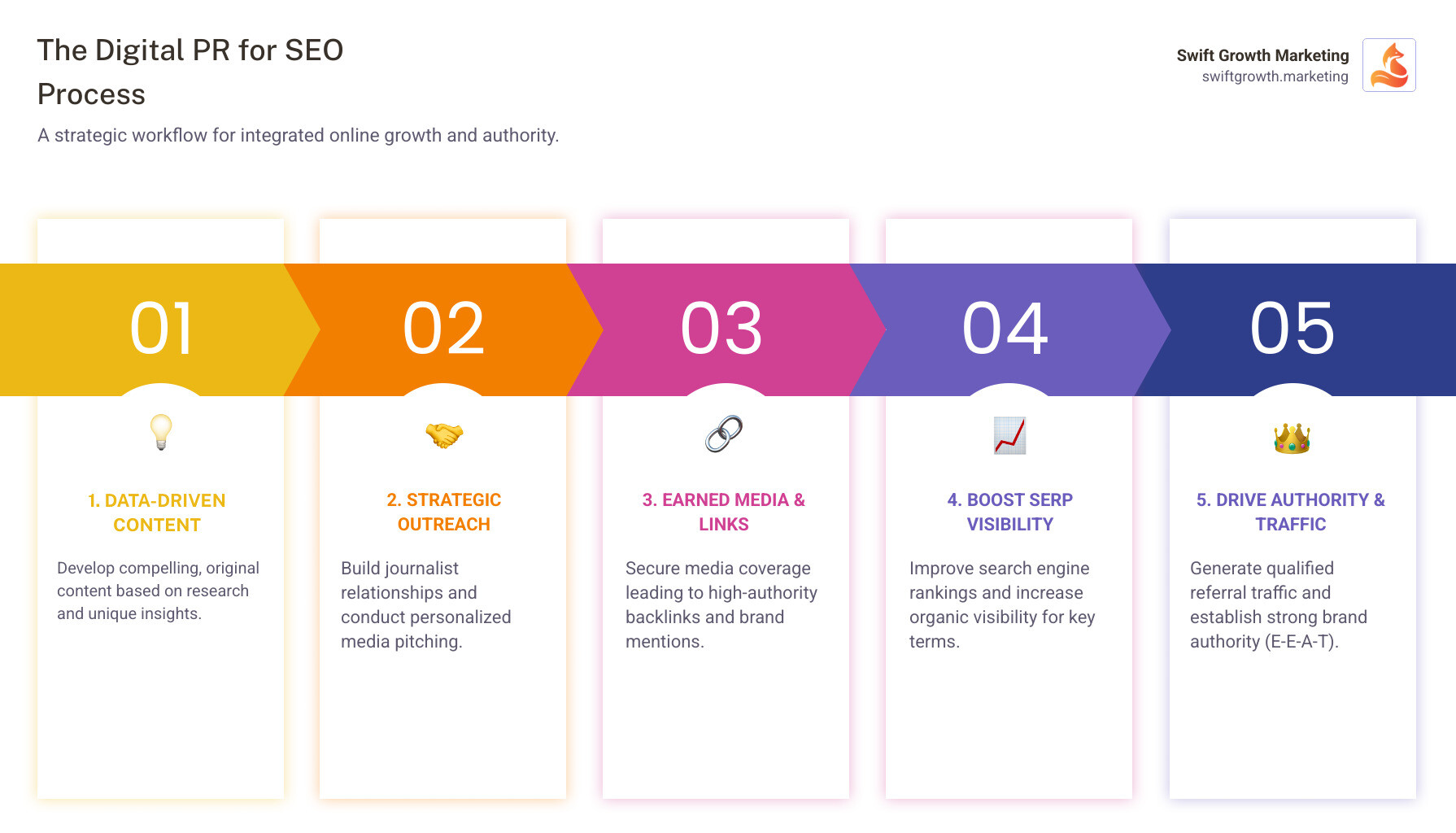
The Symbiotic Relationship: How PR and SEO Fuel Each Other
PR and SEO share the same fundamental goal: connecting your brand with the right people through trust and credibility. When they collaborate, your brand authority grows in ways neither discipline could achieve alone. PR tells compelling stories that shape brand perception, and SEO ensures those stories get found.
Modern search engines like Google evaluate your entire online reputation, not just links. They consider where you’re mentioned and whether trusted sources see you as an authority. This is where PR becomes essential for SEO. Backlinks from earned media are SEO gold, signaling to search engines that your site is respectable. Even unlinked brand mentions on high-authority sites act as signals of legitimacy.
This relationship is a two-way street. PR builds the credibility that Google’s E-E-A-T framework (Experience, Expertise, Authoritativeness, and Trustworthiness) prioritizes. In return, SEO provides the data and optimization to ensure PR wins translate into greater visibility.
Why PR Needs SEO
A brilliant PR story is useless if no one can find it. Without SEO, press releases may not be indexed properly, and earned media coverage can disappear into the digital void. SEO brings findability to PR’s storytelling.
Keyword optimization helps PR teams create campaigns that are both newsworthy and search-friendly. By using data to understand what your audience is searching for, you can craft content that meets their needs. For businesses in Pittsburgh, PA, or Wheeling, WV, this means incorporating local search trends to connect with the people who matter most.
SEO analytics also reveal trending topics and audience behavior, helping PR professionals time their campaigns and choose the right angles. This data-driven approach is crucial for managing your online reputation and ensuring positive, authoritative results appear when someone searches for your brand. Learn more about leveraging SEO Marketing to amplify your brand presence.
How SEO Benefits from PR
While PR needs SEO for visibility, SEO desperately needs PR for credibility. The single biggest gift PR gives to SEO is earned media and high-authority backlinks from trusted publications. A single PR campaign can generate dozens of these valuable links, boosting your domain authority.
Brand mentions, even without links, signal to Google that your company is legitimate and relevant. Earned media also drives high-quality referral traffic. Visitors arriving from a trusted news source are already primed to engage with your brand.
PR is how you build E-E-A-T at scale. When industry publications quote your executives or news outlets cover your research, you demonstrate the four pillars Google prioritizes. This is how Digital PR for SEO works: creating valuable content and relationships that SEO can amplify while building the authority signals that search engines reward. For a deeper dive, explore our guide on building a Strong SEO Strategy.
The Core Components of Digital PR for SEO
Building a successful Digital PR for SEO strategy involves a blend of creative content, relationship building, and reputation management. It’s about proving your expertise, crafting compelling stories, and earning recognition that both journalists and search engines reward.
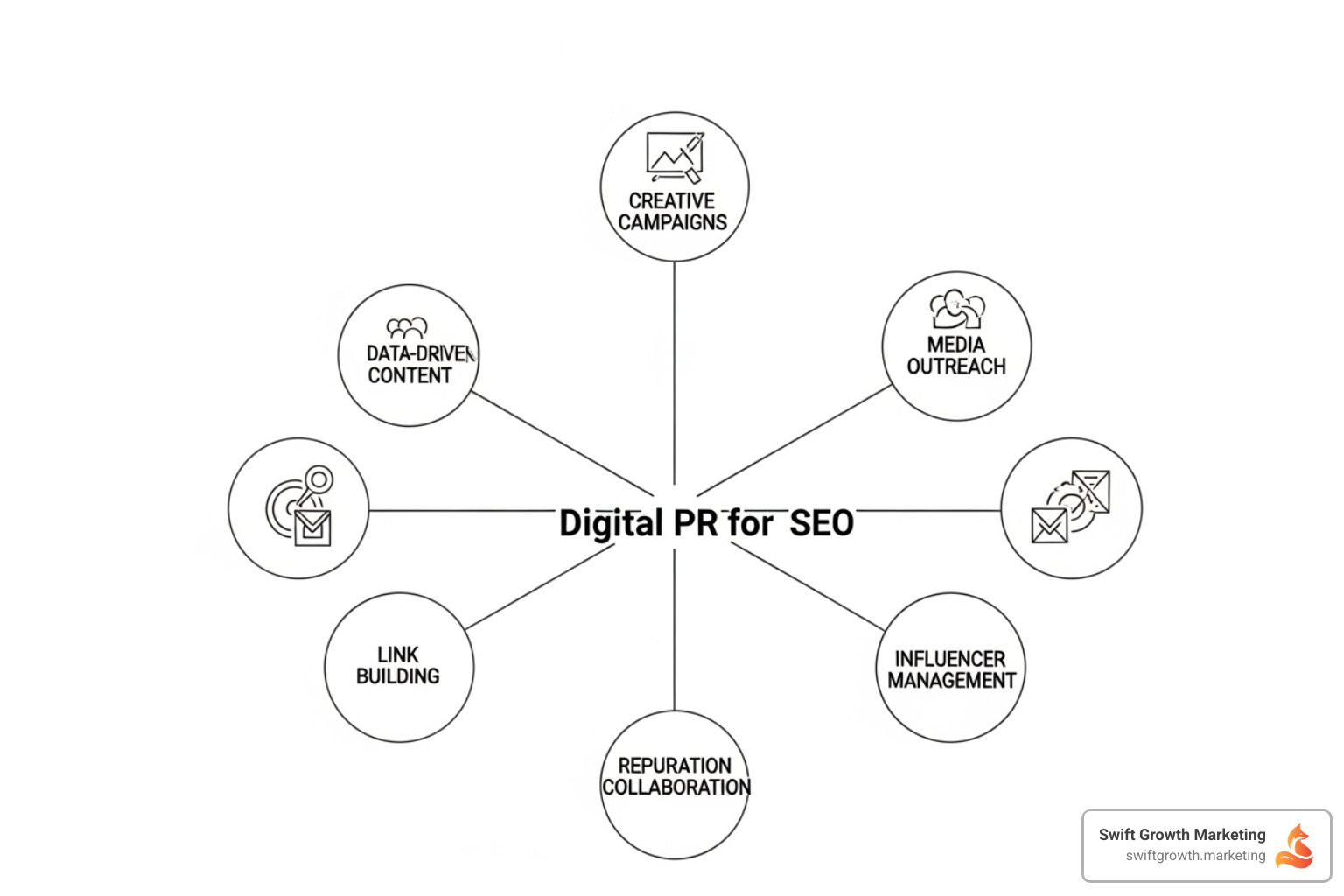
This isn’t just about collecting backlinks. It’s about building a holistic online reputation that encompasses your products, services, and the people behind your brand.
Crafting Newsworthy Content
To earn media coverage, give journalists something worth writing about. Reporters are always looking for unique stories, fresh data, and expert insights.
Data-driven stories are highly effective, as 61% of journalists actively seek original research from PR professionals. By conducting unique studies or surveys relevant to your industry, you provide valuable content they need. For a business in Pittsburgh, PA, this might mean analyzing local economic trends.
Original research establishes your brand as a thought leader. However, data alone isn’t enough; you need to wrap it in a compelling narrative. Visual assets like infographics and videos make your content more digestible and shareable. Finally, offering expert commentary from your team positions them as authorities, building E-E-A-T signals. The goal is to create content so valuable that media outlets want to cover it. Explore our approach to Storytelling in Content Marketing for more insights.
Strategic Outreach and Relationship Building
Great content needs strategic outreach to reach the right people. This starts with identifying relevant journalists who cover your industry. Platforms like HARO, Qwoted, and SourceBottle are excellent for finding reporters actively seeking expert input.
Instead of mass emails, we build targeted media lists and craft personalized pitches. A good pitch is short, direct, and highlights key insights upfront. The easier you make a journalist’s job, the more likely they are to cover your story. This includes providing all necessary resources, like images and data, in an accessible format.
After coverage goes live, a polite follow-up to request a link can secure a valuable SEO boost. We also work to convert unlinked brand mentions into linked ones. Effective outreach is about building long-term relationships based on trust and mutual value. For more strategies, see our guide on Social Media Marketing on LinkedIn.
The Power of Backlinks and Brand Mentions
High-quality backlinks and brand mentions are critical signals that tell search engines your brand is credible and authoritative. Every backlink from a reputable website acts as a vote of confidence, directly influencing your search rankings and boosting your domain authority.
Even unlinked mentions from prominent publications contribute to brand awareness and signal relevance to Google. We actively work to convert these mentions into valuable backlinks whenever possible.
Referral traffic from these placements brings immediate, tangible results. Visitors arriving from a trusted source are highly qualified and more likely to engage. Widespread media coverage also acts as a powerful brand signal, telling Google your entity is well-regarded in its industry. For more on acquiring these links, read our 10 Proven Link Building Tips to Boost Your SEO in 2023.
Executing an Integrated Campaign
An integrated Digital PR for SEO campaign requires careful planning and seamless execution. The magic happens when PR and SEO teams collaborate from day one, aligning goals and contributing to each other’s objectives.
This integrated approach ensures your PR efforts are optimized for search from the start, while your SEO gains the authority-boosting benefits of earned media. The results are far greater than the sum of their parts.
Optimizing Press Releases for Search and Journalists
Press releases must appeal to both journalists and search engines. Here’s how to optimize them:
- Keyword Integration: Strategically weave primary keywords into your press release, but ensure the content is genuinely newsworthy. Content created solely for SEO can harm your reputation.
- Compelling Headline: Your headline should be concise, informative, and keyword-rich to grab attention.
- Internal Links: Embed 2-4 links to relevant landing pages or blog posts to guide readers and help search engines understand your site structure.
- Optimized Boilerplate: Your company description at the end of the release is often copied verbatim. Optimize it with primary keywords and a link to your root domain. Refer to these Tips for an Optimized Boilerplate for guidance.
- Multimedia: Include high-resolution images, videos, or infographics with optimized file names and alt tags. Visuals make your release more engaging and likely to be picked up.
Following these practices turns your press releases into powerful tools for both PR and SEO. Learn more with our guide on how to write a press release.
Using Landing Pages to Measure Impact
Dedicated landing pages are essential for tracking the impact of your Digital PR for SEO campaigns. They provide clear visibility into what’s working.
Campaign-specific landing pages allow you to monitor traffic spikes from media placements and see which publications drive the most value. By tracking user behavior on these pages—such as time on site and next clicks—you can assess the quality of your referral traffic.
The goal is conversion, whether it’s a sale, sign-up, or download. Landing pages let you measure these conversions and calculate the ROI of each media placement. They also provide an ideal environment for A/B testing headlines and calls to action to optimize performance.
Using unique URLs for each campaign allows for precise attribution. By integrating robust analytics with dedicated landing pages, you get a clear picture of how your efforts translate into tangible business results. Dive deeper with our insights on Psychology-Based Landing Page Optimization That Converts.
The Modern Landscape: AI, E-E-A-T, and Overcoming Silos
In today’s fast-changing digital world, AI is reshaping search, and Google’s E-E-A-T framework is altering what it takes to rank. Keeping PR and SEO in separate silos is no longer just inefficient—it’s detrimental to your results.

Google now uses AI to assess your brand’s reputation across the web, meaning your SEO performance and PR success are two sides of the same coin. A unified approach is necessary to build an optimized reputation that people can find.
How AI and E-E-A-T Reshape Strategy
AI has changed how search engines evaluate websites. Google’s algorithms now understand reputation, context, and credibility, making authentic, human-generated content more valuable than ever. This is where Digital PR for SEO becomes essential, as the qualities of good PR directly influence search rankings.
Experience, Expertise, Authoritativeness, and Trustworthiness (E-E-A-T) are the pillars Google uses to evaluate content quality. PR helps build each one:
- Experience: Securing coverage on relevant external sites or sharing brand-owned data demonstrates first-hand experience.
- Expertise: Positioning team leaders for interviews or bylined articles in trade publications showcases expertise. It’s crucial to comment only on topics where your team is genuinely knowledgeable.
- Authoritativeness: This grows through links and mentions in credible media. For local businesses in Pittsburgh, PA, or Wheeling, WV, links from niche publications can be highly impactful.
- Trustworthiness: This requires backlinks from established publications and verifiable evidence, such as proprietary data with a sound methodology.
Google’s Search Quality Rater Guidelines confirm that reputation research is a core part of their evaluation process. Your online reputation is a direct ranking factor that must be actively built. For more on creating content that aligns with Google’s values, check out The Helpful Content Formula.
Bridging the Gap Between PR and SEO Teams
Despite the clear benefits of integration, many organizations keep PR and SEO separated. This leads to missed opportunities. At Swift Growth Marketing, we see these disciplines as inherently connected. The challenge is creating a collaborative environment where they can thrive together.
Often, the barriers are cultural. PR and SEO teams traditionally use different metrics and may not communicate effectively. However, both share the fundamental goals of increasing visibility, driving traffic, and building authority.
A unified strategy starts with shared objectives, collaborative campaign planning, and regular communication. Integrated workflows bring together SEO’s data-driven insights with PR’s storytelling expertise. This isn’t about making everyone an expert in both fields, but about fostering mutual understanding for effective collaboration. Explore our insights on the Growth Marketing Mindset to learn more.
Traditional PR vs. Digital PR
Both traditional and Digital PR aim to build brand awareness, but their approaches and impacts differ, especially for SEO.
| Feature | Traditional PR | Digital PR |
|---|---|---|
| Channels | Print, TV, Radio | Online publications, Blogs, Social Media |
| Primary Goal | Brand Awareness, Reputation | Backlinks, SEO, Brand Awareness |
| Measurement | Media Impressions, AVE | Referral Traffic, Backlinks, SERP Rank, Conversions |
| Longevity | Short-term (event-based) | Long-term (evergreen online content) |
Traditional PR uses offline channels with success measured by impressions. Its impact is often short-lived. Digital PR leverages online platforms to acquire high-quality backlinks and improve SEO. Its content continues to drive traffic and value long-term. Measurement is also more precise, allowing you to track referral traffic, rankings, and conversions. This evolution reflects how modern consumers find information, making Digital PR for SEO powerful for business growth.
Best Practices, Tools, and Measurement for Success
Executing a successful Digital PR for SEO strategy requires proven practices, the right tools, and meaningful measurement. The difference between a minor campaign and one that transforms your online presence often comes down to execution and consistent analysis.
Best Practices for an Integrated Digital PR for SEO Strategy
Successful campaigns happen when PR and SEO teams work together. Here are some best practices:
- Incorporate SEO into PR: Make proactive link requests a standard part of your follow-up. Use keyword research to inform your pitches and create stories that resonate with both journalists and their audiences. Optimize all press release elements, including headlines, internal links, boilerplates, and image file names.
- Incorporate PR into SEO: Recognize journalists as key influencers for high-authority backlinks. Share search trends and audience insights with the PR team to inform their campaigns. Align on messaging and timing to ensure a cohesive strategy.
- Maintain an Optimized Press Page: Ensure your website’s media or press page is easy for journalists to use, with contact information, company background, and recent news readily available.
- Focus on Data-Driven Storytelling: Lead with unique data and compelling visuals. Journalists are 61% more likely to cover stories backed by original research. For more on this, explore our insights on a Data-Driven Path to Beating Goliaths in Your Industry.
Essential Tools for Integration
The right tools make integrated campaigns efficient. Here are some essentials:
- Media Monitoring: Use Google Alerts to track mentions of your brand, executives, and key industry terms.
- Journalist Sourcing: Platforms like HARO (Help A Reporter Out), Qwoted, and SourceBottle connect you with journalists actively seeking expert sources.
- Outreach & Research: Tools like BuzzSumo, Prowly, and MuckRack help you identify trending topics, find influential journalists, and manage outreach.
- SEO Analytics: Semrush and Ahrefs are non-negotiable for tracking backlinks, monitoring keyword rankings, and analyzing the overall SEO impact of your PR efforts.
How to Measure the Success of Your Campaigns
Focus on metrics that directly impact your business, not vanity numbers. Key indicators of success include:
- Backlink Quality: Track the number and, more importantly, the authority and relevance of new backlinks.
- Referral Traffic: Monitor which media placements drive visitors to your site and analyze their on-site behavior.
- Organic Traffic Growth: An increase in overall organic traffic demonstrates that your authority-building efforts are working.
- Brand Search Volume: A rise in people searching directly for your brand name indicates growing awareness.
- SERP Visibility: Track improvements in your rankings for target keywords.
- Conversions: The ultimate measure of success is how many visitors from earned media become leads or customers.
We use tools like Google Search Console to deliver detailed reports on these KPIs. For a deeper understanding, explore our guide on Google Search Console 101.
Conclusion
Digital PR for SEO is no longer optional—it’s essential for any business serious about online visibility. The old way of thinking about PR and SEO as separate departments is holding you back.
When PR and SEO work together, your brand builds real authority. You earn high-quality backlinks, create content journalists want to share, and build trust signals that Google’s AI recognizes and rewards. This integration delivers measurable results: stronger E-E-A-T signals, increased referral traffic, better search rankings, and a solid online reputation. For businesses in Pittsburgh, PA, and Wheeling, WV, this means standing out in competitive markets.
Google’s evolving algorithms make this integration even more critical. You can’t fake authority—you have to earn it through strategic content and credible media coverage.
The biggest obstacle is often the organizational silos that prevent collaboration. Breaking down these barriers opens up exponential growth opportunities. At Swift Growth Marketing, we’ve built our approach around this integration, viewing PR and SEO as interconnected strategies that amplify each other.
The future of digital marketing belongs to brands that accept this unified approach. Those operating in silos will be outranked by competitors who understand how Digital PR for SEO creates compounding advantages.
Ready to transform your online presence? Let’s build a strategy that earns attention, builds authority, and drives real growth for your business.

chris
Insights on brand authority, positioning, and growth strategy from the Swift Growth Marketing team.