


From Zero to SEO Hero: The Best Foundation Training Options

Why SEO Foundation Training is the Starting Line for Organic Growth
SEO foundation training equips you with the core skills to make your business visible where customers are already searching. It covers:
- On-Page SEO: Optimizing content, keywords, and site structure.
- Technical SEO: Ensuring search engines can crawl and index your site.
- Off-Page SEO: Building authority through backlinks and reputation.
- Keyword Research: Understanding what your audience searches for.
- Analytics: Measuring performance and proving ROI.
Search is no longer optional. Since 7 out of 10 online experiences start with a search, businesses that don’t appear in search results are invisible to most potential customers. With 75% of users never scrolling past the first page, ranking well is essential for competition.
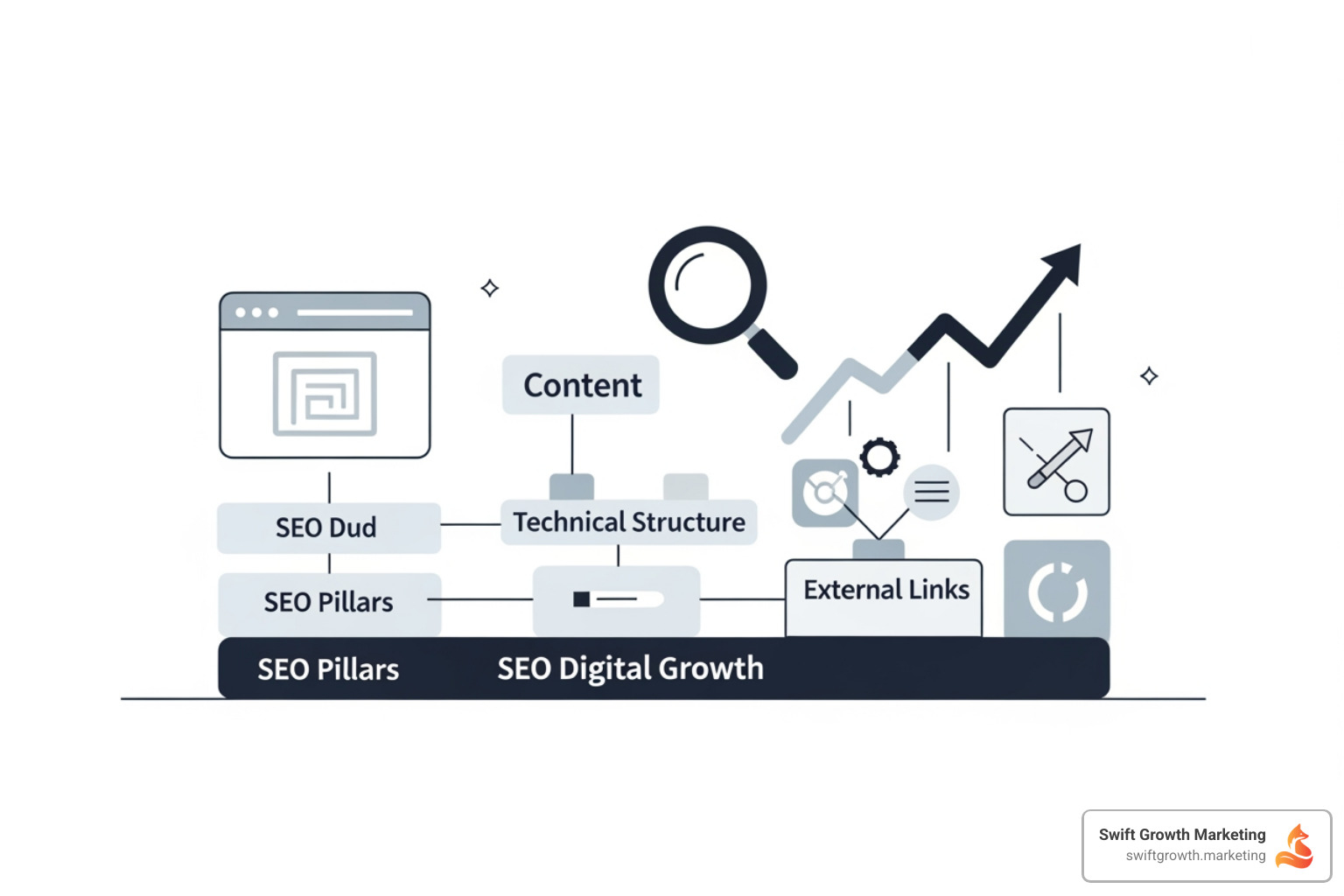
SEO consists of three main pillars: on-page (what you control on your site), technical (how your site works behind the scenes), and off-page (your reputation across the web). Mastering these builds a foundation that delivers continuous returns.
Unlike paid ads that stop when you stop paying, SEO compounds over time. Content optimized today can drive traffic for years, making SEO a long-term infrastructure investment, not a short-term campaign.
SEO is also dynamic. AI is changing search with longer, conversational queries, and answer engines now provide direct answers. With nearly 60% of all Google searches happening on mobile, a flawless mobile experience is critical.
I’m Chris Hornak, and I’ve spent years helping brands build authority through SEO foundation training, growing one company from 400 to 45,000 monthly visitors. At Swift Growth Marketing, we’ve seen how a strong SEO foundation transforms invisible brands into category leaders.
Why SEO is the Unskippable Foundation for Business Growth
If your business isn’t visible online, it might as well not exist. Every day, potential customers in Pittsburgh, PA, and Wheeling, WV, are searching for services like yours. At Swift Growth Marketing, our goal is to ensure they find you.
Search Engine Optimization (SEO) involves using fundamental strategies to make your website appear prominently in search results. This attracts qualified traffic to your site and boosts your bottom line.
Here’s why SEO is critical for business growth:
- Visibility and Awareness: Most online experiences begin with a search. SEO ensures your brand is seen, building essential awareness and connecting you with your audience.
- Trust and Credibility: High rankings on Google act as a powerful trust signal. Users trust search engines, and a top ranking implies your business is authoritative and legitimate.
- Cost-Effective Growth: Unlike paid ads, SEO is like compound interest. The work done today continues to pay off, driving long-term value and lowering customer acquisition costs.
- Long-Term Value: SEO builds equity. Improvements to your site’s structure, content, and authority create lasting assets that attract traffic and leads long after the initial effort.
- Compounding Results vs. Paid Ads: Paid ads offer fleeting, immediate results. SEO creates a compounding effect, where each optimization contributes to a stronger online presence that grows in value.
Consider that 75% of users never scroll past the first page of search results. If you’re not on that first page, you’re invisible to most searchers. For businesses in Pittsburgh or Wheeling, local SEO is also vital, as 76% of people who search for something nearby visit a business within a day. A weak local SEO presence means leaving customers on the table.
Skipping SEO hands your visibility and customers to competitors. For a deeper dive, explore our guide on Business SEO.
The Three Pillars of a Strong SEO Foundation
To build a website that can withstand algorithm updates, you need three robust pillars: On-Page, Technical, and Off-Page SEO. Mastering these core components is fundamental to any effective SEO foundation training. These pillars work together to create a powerful online presence. Learn more in our SEO Pillars guide.
On-Page SEO: Optimizing Your Content and Structure
On-page SEO includes all optimizations made directly on your website to make it clear to both users and search engines.
- Keywords and Search Intent: We research what your customers in Pittsburgh or Wheeling are searching for and, more importantly, the intent behind those searches (e.g., to buy, learn, or compare). Aligning content with intent attracts the right traffic.
- Content Quality: Google prioritizes helpful, unique, and comprehensive content. We focus on creating content that answers user questions and provides real value.
- Title Tags and Meta Descriptions: A compelling title tag and an enticing meta description act as your storefront in search results, encouraging users to click.
- Header Tags (H1, H2, H3, etc.): These tags structure your content, making it easier for users and search engine crawlers to read and understand.
- URL Structure: Clean, descriptive URLs help users and give search engines clues about your page’s content.
- User Experience (UX): A fast, easy-to-steer, and mobile-friendly site is rewarded by Google because it provides a better experience for visitors.
For more strategies, see How to Build a Strong SEO Foundation with On-Page SEO and our guide to Topical Cluster SEO.
Technical SEO: Helping Search Engines Understand Your Site
Technical SEO is the behind-the-scenes work ensuring search engines can access, crawl, and index your website efficiently.
- Crawlability and Indexing: We ensure there are no roadblocks preventing search engines from finding and storing your pages. This includes allowing access to resources like CSS and JavaScript.
- Site Speed: Fast-loading pages are critical for user experience and rankings. Nobody waits for a slow website.
- Mobile-Friendliness: With most searches happening on mobile, a responsive design that works on any screen is non-negotiable.
- Core Web Vitals: These metrics measure real-world user experience, including loading performance and interactivity. We optimize for them as part of modern technical SEO. Learn more in our guide on Core Web Vitals SEO.
- Sitemaps: An XML sitemap acts as a map for search engines, guiding them to all your important pages.
- Robots.txt: This file tells search engines which parts of your site to avoid, helping manage crawl budget.
- Structured Data: Also known as Schema Markup, this code helps search engines understand your content’s context, which can lead to appealing rich snippets in search results.
Off-Page SEO: Building Authority and Trust
Off-page SEO includes all activities outside your website that build its authority and trust.
- Backlinks: Links from other reputable websites are like votes of confidence, signaling to search engines that your content is valuable.
- Link Building: This is the strategic process of acquiring backlinks through ethical methods, as outlined in our 10 Proven Link Building Tips to Boost Your SEO in 2023.
- Online Reputation: Positive reviews and brand mentions across the web contribute to your authority and trustworthiness.
- Brand Mentions: Even unlinked mentions of your brand show that it is relevant and being discussed in your industry.
- Social Signals: While not a direct ranking factor, social media engagement can increase visibility and drive traffic.
- Word-of-Mouth Promotion: Genuine word of mouth is an invaluable result of providing great content and service.
- Digital PR: Securing mentions from high-authority publications builds brand awareness and powerful backlinks. Learn more in our guide to Digital PR for SEO.
Building Your Foundational Strategy: A Step-by-Step Guide
Starting your SEO journey is manageable with a clear roadmap. At Swift Growth Marketing, we use a methodical approach to build a Strong SEO Strategy from the ground up.
Step 1: Understand How Search Engines Find and Rank Content
First, understand how search engines work. Google uses automated crawlers to explore the web, find pages, and add them to its massive index. The process involves:
- Crawling: Bots follow links to find new and updated content.
- Indexing: Content is analyzed and stored in Google’s index.
- Ranking: Algorithms find the most relevant results for a user’s search.
Changes can take time to appear in search results. You can check if your site is indexed using the site:yourwebsite.com search operator. Understanding the Evolution of Google’s Search Algorithm helps in adapting to changes.
Step 2: Create Helpful, People-First Content
Great SEO starts with great content that is helpful, reliable, and people-first.
- Answering User Questions: The best content directly addresses the needs of your target audience, providing comprehensive and useful information.
- E-E-A-T (Experience, Expertise, Authoritativeness, Trust): Create content that demonstrates these qualities to show Google you are a knowledgeable and trustworthy source.
- Readability and Organization: Use clear language, headings, and bullet points to make content easy to consume for both users and search engines.
- Unique and Up-to-Date Content: Strive for unique, fresh content that provides new insights. Keeping content updated ensures its continued relevance.
This approach is key to our Helpful Content Formula and helps you Build Content Authority.
Step 3: Optimize Your Appearance in Search Results
How your site appears in search results influences click-through rates. We can optimize these elements to be more appealing.
- Influencing Title Links: Write unique, clear, and concise title links that accurately reflect the page’s content.
- Writing Compelling Snippets (Meta Descriptions): A well-crafted meta description acts as a mini-advertisement, summarizing the page’s value and encouraging clicks.
- Image and Video Optimization: Use high-quality images and videos with descriptive alt text and titles. This helps search engines understand the content and makes it findable in image or video searches.
- Using Descriptive URLs: Clear URLs help users and search engines understand a page’s content at a glance.
This is integral to how we approach How Pillar Pages Play a Role in Your Growth Marketing Strategy.
Step 4: Promote Your Website Ethically
Creating great content is only half the battle; you also need to promote it.
- Community Engagement: Participate in relevant online communities and social media to build brand awareness and drive traffic.
- Social Media Sharing: Sharing content on social media increases its reach and can lead to more mentions and backlinks.
- Building Relationships: Network with others in your niche to find opportunities for collaboration and valuable backlinks.
- Encouraging Word of Mouth: Providing excellent service and valuable content naturally encourages genuine word of mouth promotion.
- Offline Promotion: List your website on business cards and brochures to drive offline interest to your online presence.
The Future of Search and Essential SEO Foundation Training
The digital landscape is constantly evolving, and understanding these shifts is a core part of any comprehensive SEO foundation training.
The Rise of AI and Answer Engine Optimization (AEO)
AI tools and their integration into search engines are reshaping how people find information. We are moving from a list of links to a world of direct answers.
- AI Tools: AI can assist with keyword research and content generation, but human oversight remains crucial for quality and ethical use.
- AI Overviews: Google’s AI Overviews synthesize information directly in search results. Over 1.5 billion users see an AI Overview monthly.
- Zero-Click Searches: A growing number of searches, 58.5% in the US, end without a click. This shifts the focus from clicks to becoming the cited source. Our Zero Click Search Strategy: Build Brand Authority Now explains this further.
- Conversational Prompts: Users are adopting longer, conversational queries, requiring content that provides comprehensive answers to complex questions.
- H-E-E-A-T Signals: Helpfulness, Experience, Expertise, Authoritativeness, and Trustworthiness (H-E-E-A-T) signals are vital for AI models to deem your content reliable.
This evolution is leading to Answer Engine Optimization (AEO), where the goal is to be the definitive source AI chooses to cite. Learn more about how Answer Engine Optimization Makes You Unmissable.
Where to Find Reliable SEO Foundation Training
Continuous learning is essential for mastering SEO. Fortunately, many excellent resources are available for SEO foundation training:
- Free Certification Courses: HubSpot Academy offers a comprehensive SEO Certification Course covering keyword research, link building, and reporting.
- University-Led Programs: Reputable institutions provide in-depth training. For instance, Coursera hosts the Google SEO Fundamentals course from the University of California, Davis. Locally, Wheeling University offers Professional Certificates that may include relevant digital marketing topics.
- Self-Paced Video Courses: Platforms like LinkedIn Learning offer flexible, on-demand video training on SEO foundations and other digital marketing skills.
- Official Resources: Always refer to the source. Google provides invaluable, free resources, including the Google Search Central YouTube Channel, their official blog, and help forums.
Key Topics in a Quality SEO Foundation Training Course
A robust SEO foundation training program will equip you with practical skills across several key areas:
- Keyword Research: Learning to identify what your audience is searching for, analyze keyword attributes, and evaluate performance.
- On-Page Optimization: Optimizing content, site structure, title tags, meta descriptions, and user experience.
- Technical SEO Fundamentals: Understanding crawling, indexing, canonicals, redirects, structured data, and Google Search Console.
- Link Building Strategies: Learning the importance of links, how to build them ethically, and how to measure their impact.
- SEO Analytics and Reporting: Measuring performance by analyzing keywords and links, tracking successes, and reporting on progress.
- AI in SEO: Understanding how AI is impacting content creation and search results.
For a thorough overview, our SEO Foundation Complete Guide covers these topics in detail.
Your Next Steps: Tools and Common Pitfalls
Once you have the foundational knowledge, it’s time to put it into practice and avoid common missteps.
Getting Started with Google Search Console
Google Search Console (GSC) is a free, indispensable tool that shows you how Google sees your site.
- Performance Monitoring: GSC reveals your site’s performance in Google Search, including impressions, clicks, and average keyword positions.
- Index Coverage Reports: This report shows which pages are indexed and identifies any issues preventing them from appearing in search results.
- URL Inspection Tool: Use the URL Inspection Tool to check how Google sees a specific page, troubleshoot problems, and request re-indexing.
- Core Web Vitals Report: GSC provides insights into your site’s performance on loading speed, interactivity, and visual stability.
Getting started with GSC is a critical step. Our guide, Google Search Console 101: What Every Marketer Needs to Know, can help.
Common SEO Mistakes to Avoid
It’s easy to fall into common traps that can harm your SEO efforts. Here are some mistakes to avoid:
- Keyword Stuffing: Excessively repeating keywords is an outdated tactic that harms readability and violates Google’s spam policies. Use natural language.
- Buying Links: Purchasing links from low-quality sites can lead to penalties. Focus on earning natural links through valuable content.
- Ignoring Mobile Users: A mobile-unfriendly site is a major ranking deterrent, as most searches happen on mobile devices. Ensure your site is responsive.
- Duplicate Content Issues: Duplicate content can dilute ranking power and create a poor user experience. Ensure every page is unique or properly canonicalized.
- Using Outdated Tactics: Focusing on obsolete practices like the meta keywords tag wastes time that could be spent on effective strategies.
- Ignoring User Experience: A slow or clunky site signals to Google that it isn’t helpful. Prioritize a smooth, enjoyable user experience.
For a more comprehensive list, check out our guide on the Biggest SEO Mistakes.
Conclusion
Mastering SEO foundation training is about building a sustainable, visible, and trustworthy online presence. We’ve explored the three pillars of SEO—on-page, technical, and off-page—and how each contributes to a robust digital foundation. From optimizing content to building authority, every step is crucial.
SEO is a long-term journey of continuous learning. As search evolves with AI and answer engines, staying informed is key to maintaining a competitive edge. The work you do today compounds over time, delivering lasting value.
At Swift Growth Marketing, we help businesses in Pittsburgh, PA, and Wheeling, WV, steer this complex landscape. We act as your partner for digital success, translating SEO concepts into actionable strategies that drive real growth.
Ready to master your online presence? Let us help you build a comprehensive SEO marketing strategy that turns your website into a powerful growth engine.

wadeo
Insights on brand authority, positioning, and growth strategy from the Swift Growth Marketing team.