


From Zero to Hero: A Complete Playbook for SaaS Marketing Success
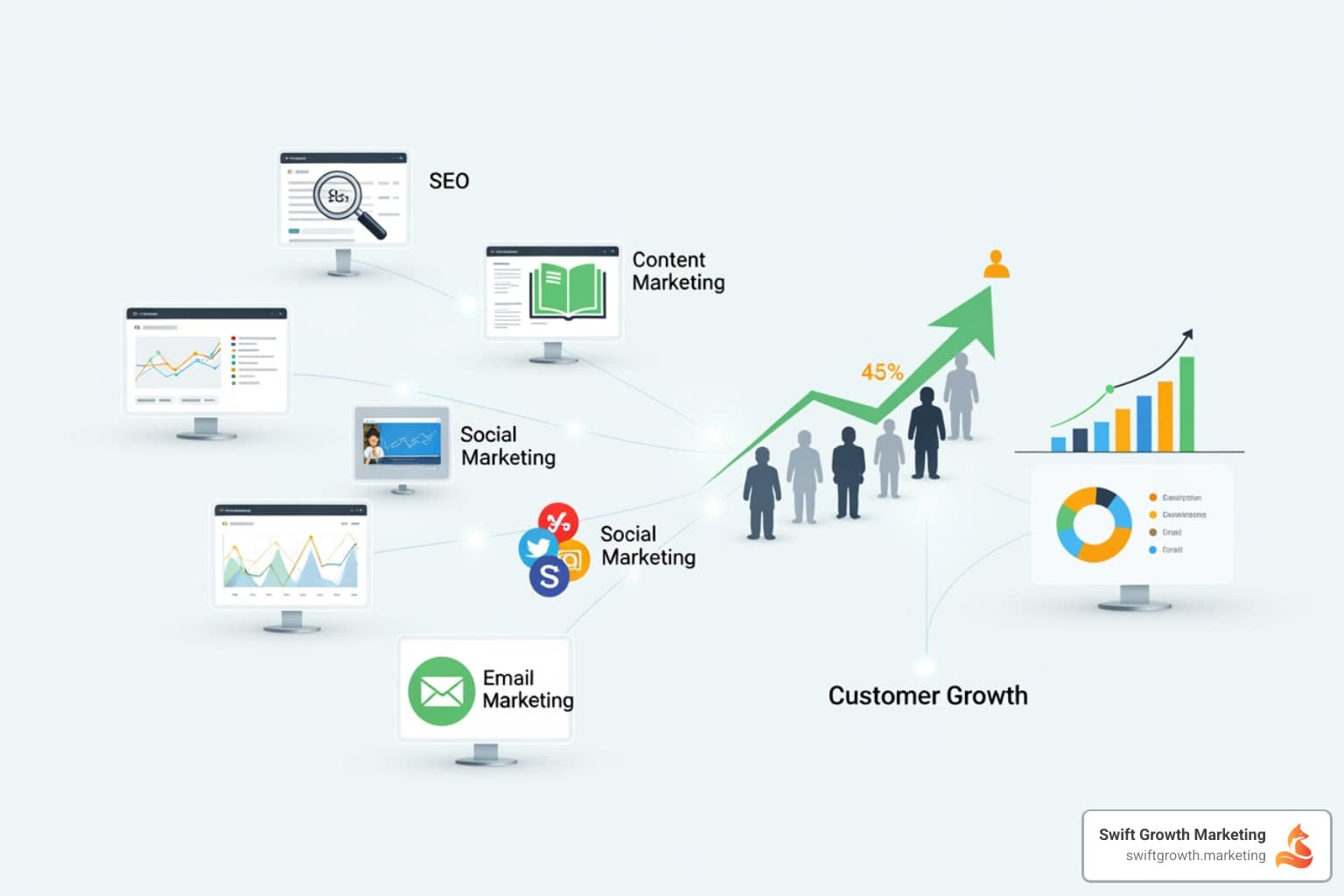
Why SaaS Marketing Strategy Demands a Different Playbook
A saas marketing strategy is a plan to attract, convert, and retain subscription customers through digital channels, focusing on long-term relationships over one-time sales.
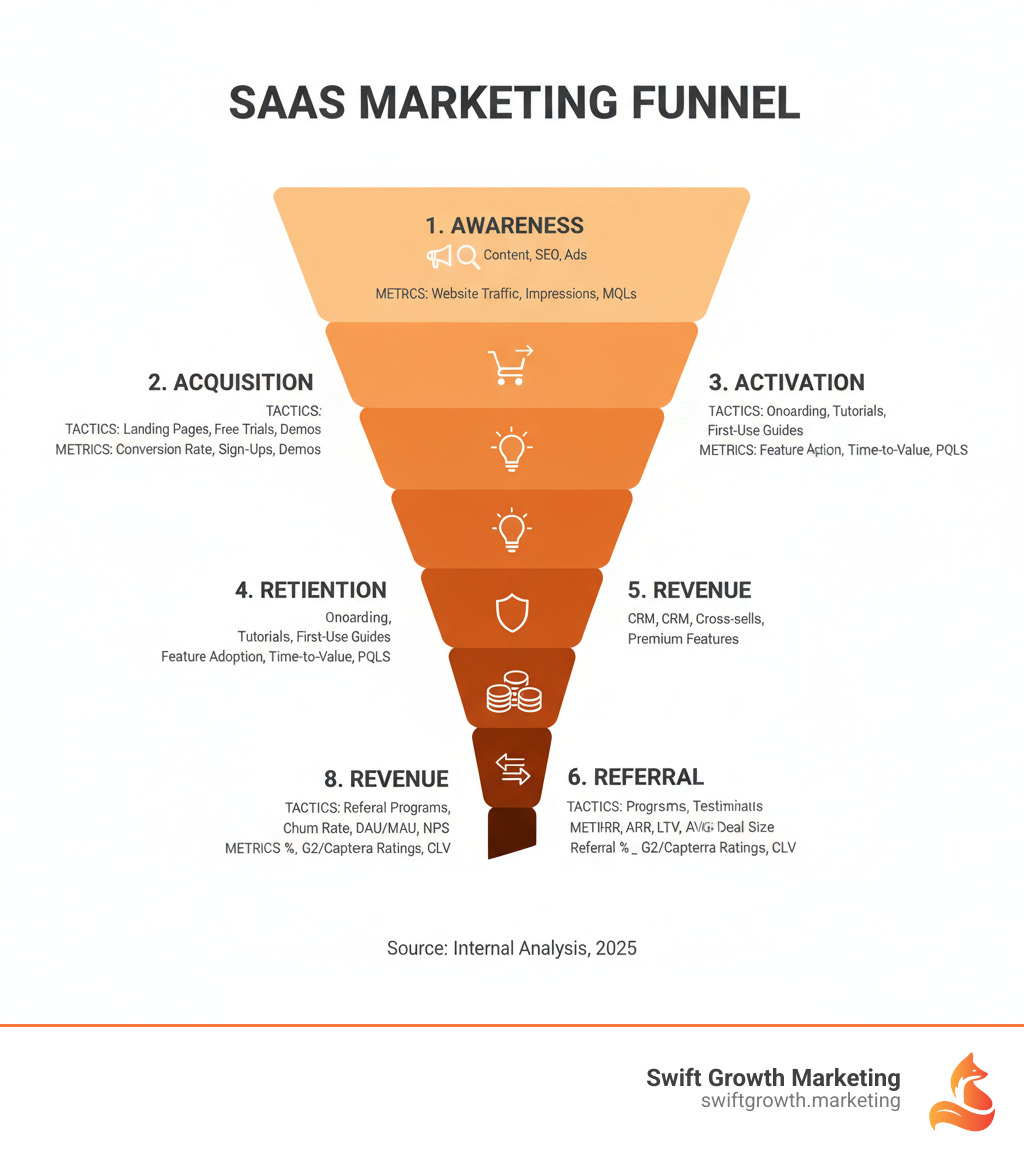
Core Components of an Effective SaaS Marketing Strategy:
- Customer Acquisition – Using content, SEO, paid ads, and product-led growth to attract leads.
- Product Trials & Demos – Offering free trials or freemium models to showcase value.
- Onboarding & Activation – Guiding users to realize product value quickly.
- Retention & Expansion – Using email, customer success, and usage triggers to reduce churn.
- Measurement & Optimization – Tracking key metrics like CAC, LTV, and churn to refine the approach.
The SaaS market is projected to reach $716.52 billion by 2028. This explosive growth creates a competitive landscape where customer retention is everything, as acquiring a new customer costs 5 to 25 times more than keeping an existing one.
SaaS marketing is different because you’re not just making a sale—you’re starting a relationship. The subscription model means marketing must work across the entire customer lifecycle. Winning companies demonstrate value through free trials, build authority with content, and obsess over metrics like churn rate and lifetime value. They know retention is a marketing imperative.
Traditional marketing playbooks often fail because they don’t account for the unique dynamics of SaaS, where product marketing, demand generation, and sales cycles differ, and key metrics like MRR, CAC, and LTV require unique optimization strategies.
I’m Chris Hornak, Co-Founder of Swift Growth Marketing. We help SaaS companies become category authorities through strategic positioning and modern saas marketing strategy frameworks, guiding them from startup to scale.
Laying the Groundwork: Core Components of Your SaaS Marketing Plan

Before launching any campaigns, a solid foundation for your saas marketing strategy is essential. This blueprint ensures your efforts are targeted and effective.
First, develop detailed buyer personas based on real customer data. Go beyond demographics to understand their pain points, goals, and decision-making processes. Next, conduct competitor analysis to understand the market landscape, identify messaging gaps, and find your unique angle. With this clarity, set SMART goals and OKRs (Objectives and Key Results) that are specific and measurable, like increasing organic traffic by a set amount in a specific timeframe. Your budgeting will shape what’s possible; most companies allocate 12-20% of revenue to marketing, with early-stage startups often investing more. Finally, craft a compelling value proposition that clearly states the specific value you deliver and why customers should choose you.
More info about our Growth Strategy Framework
Why SaaS Marketing is a Different Beast
SaaS marketing operates under different rules. You’re selling an intangible product, so marketing must work harder to showcase value through demos, case studies, and testimonials. It’s about relationships, not transactions; the subscription model means marketing extends through onboarding, adoption, and renewal. You’ll also face longer sales cycles in B2B, where deals can take months and require dozens of touchpoints. The B2B buying journey is complex, involving multiple stakeholders. Finally, retention is everything. Since acquiring a new customer is far more expensive than keeping one, a successful strategy invests heavily in keeping customers happy and engaged.
Aligning Sales and Marketing for SaaS Success
In SaaS, sales and marketing must function as a unified growth engine. This alignment is built on several key pillars:
- Shared Goals: Both teams should be measured on revenue, customer acquisition, and retention to ensure they are working together.
- Service Level Agreement (SLA): A formal document defining marketing’s lead delivery promises and sales’ follow-up commitments.
- Lead Scoring: A system to prioritize leads based on demographic fit and engagement, allowing sales to focus on the hottest prospects.
- Communication Loops: Regular meetings and shared channels ensure sales can provide real-world feedback to make marketing more effective.
- Integrated Tech Stack: A connected CRM and marketing automation platform gives both teams a complete view of the customer journey.
Tailoring Your SaaS Marketing Strategy for B2B vs. B2C
Your approach must shift depending on your audience.
B2B SaaS typically involves longer sales cycles, higher prices, and multiple decision-makers. Messaging must address the needs of different stakeholders, from the end user to the executive focused on ROI. Channels like LinkedIn and content marketing are crucial for building trust over the extended buying journey.
B2C SaaS moves faster, with shorter sales cycles and lower prices. Decisions are often emotional and driven by convenience. Messaging focuses on personal benefits and immediate value. Social media and influencer marketing play a larger role, and the path to purchase can be much quicker.
Understanding these channel differences and messaging nuances is critical. B2B messaging is professional and data-driven, while B2C can be more casual and lifestyle-focused. Your model shapes every marketing decision.
Crafting a Winning SaaS Marketing Strategy for Acquisition

Acquisition is where you get your product in front of the right people. A balanced saas marketing strategy for acquisition combines different methods to reach customers effectively.
Inbound marketing draws people in naturally by creating valuable content and optimizing for search. You provide answers when potential customers are actively looking for solutions. Outbound marketing is more proactive, using targeted email and advertising to reach out directly. The key is to offer value before asking for a commitment. Product-led growth (PLG) uses the product itself as the primary driver of acquisition. Through self-service trials and frictionless onboarding, the product sells itself. These approaches work together to create a steady stream of qualified prospects.
Explore our Growth Marketing Channels
Leveraging Content Marketing for Authority and Leads
Content marketing is the backbone of SaaS acquisition, with over half of SaaS companies making it a top priority. It’s how you prove you understand customer challenges.
- Blogging builds organic visibility and trust by consistently addressing your audience’s pain points.
- Video marketing is a game-changer, as viewers retain information far better from video than text. Use it for product demos, quick tips, and FAQs to make complex ideas click.
- Webinars allow for direct engagement with prospects, offering deep dives into industry topics while capturing valuable leads.
- Case studies and ebooks build credibility with prospects who are further along in their journey, giving them the confidence to choose your solution.
Learn about Storytelling in Content Marketing
The Role of SEO in a Modern SaaS Marketing Strategy
Modern SEO is about helping people find solutions, and it’s a top priority for a majority of marketers. A strong saas marketing strategy treats SEO as a long-term investment.
It starts with keyword research to understand what your audience is searching for. On-page SEO involves optimizing individual pages with target keywords and clear structure, writing for people first. Technical SEO ensures your site is fast, crawlable, and mobile-friendly—a necessity, as nearly 73% of internet users will access the internet solely via mobile by 2025. Finally, link building and off-page SEO establish your authority. Quality backlinks signal to search engines that you’re a trusted source, helping you rank in the top results where most traffic goes.
Content Clusters Build Topical Authority with Pillar-Cluster Architecture
Utilizing Social Media and Paid Advertising
With billions using social media, these platforms are a non-negotiable part of your acquisition strategy.
For B2B SaaS, LinkedIn is invaluable. Use it to share educational content, build brand awareness, and establish trust. Genuine engagement is more important than post frequency. Paid search (PPC) on platforms like Google Ads can generate a strong ROI by targeting high-intent keywords, ensuring you appear when customers are actively searching. PPC and SEO work best together, with paid ads driving initial traffic while you build long-term organic rankings. Social ads and retargeting use sophisticated targeting to promote resources and re-engage visitors. Retargeting is especially powerful, as it keeps you top-of-mind and can make customers up to 70% more likely to convert.
Discover our approach to Maximizing ROI of Paid Media
From Trial to Triumph: Nailing Conversion and Retention
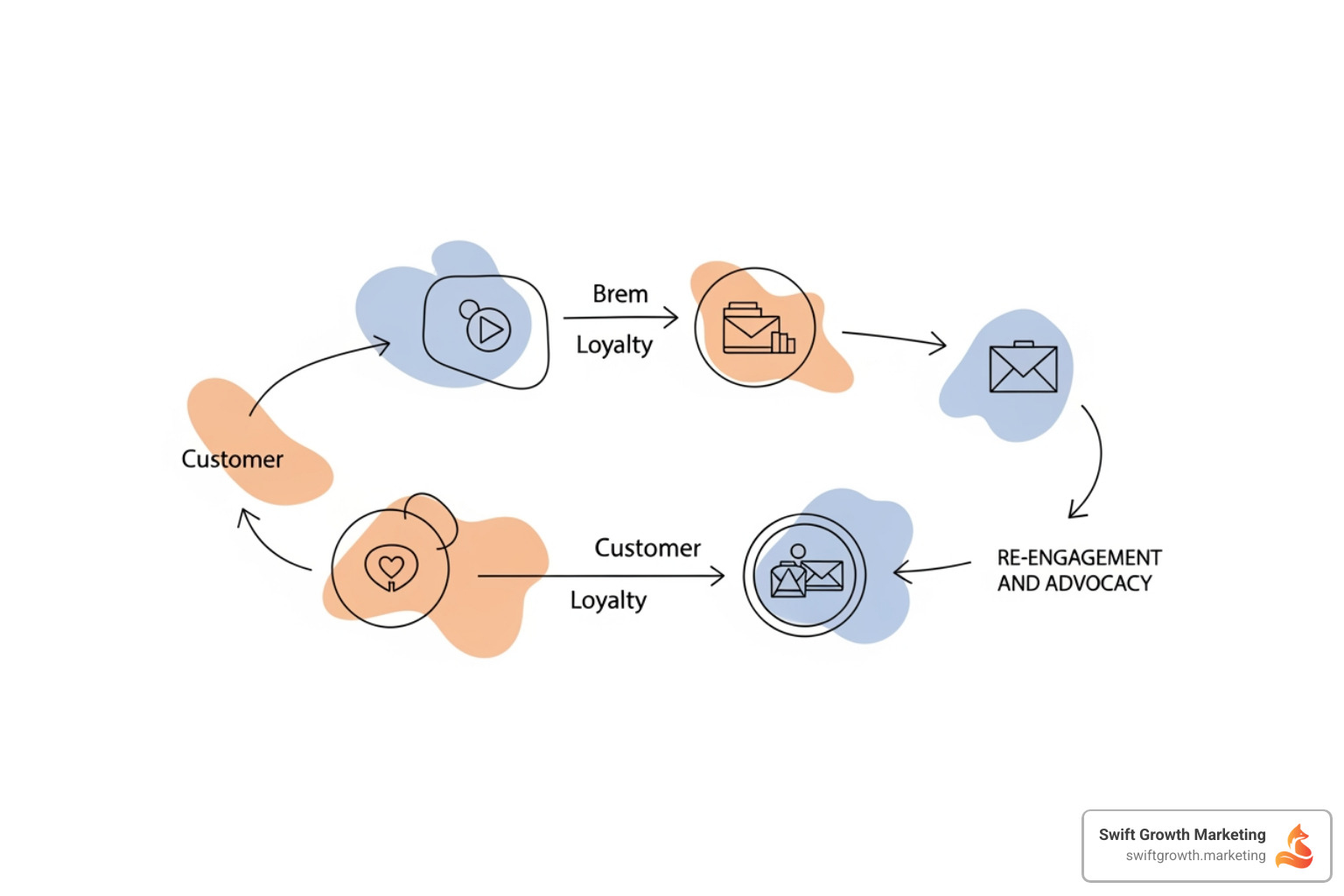
The real work in SaaS begins after sign-up. Many companies focus on acquisition only to lose customers, which is costly since acquiring a new customer is 5 to 25 times more expensive than retention. A winning saas marketing strategy treats conversion and retention as two halves of the same coin.
Customer success is the secret sauce. The “service” in “software-as-a-service” is everything. Delighting existing customers is the foundation of sustainable growth. Your onboarding process is where retention begins; frictionless experiences with guided tours help users find their “aha!” moment quickly. A positive user experience (UX) throughout the journey is also critical, as even small friction points can cause abandonment. Finally, churn reduction should be an obsession, involving proactive engagement, continuous product updates, and exceptional support to foster loyalty.
The Art of the Free Trial, Freemium, and Demo
Letting customers “try before they buy” is a smart move in your saas marketing strategy.
- Free trials give users temporary access to your product’s full functionality. Best practices include easy sign-up (ideally no credit card) and clear guidance to help users succeed. A significant portion of SaaS companies generate over 10% of their business from free trials.
- Freemium models, used by giants like Dropbox and HubSpot, offer a basic version for free, allowing users to grow into a paid plan over time.
- Interactive demos are great for complex products, showcasing features while capturing high-quality leads.
Maximizing these offerings requires conversion optimization—constantly testing CTAs, landing pages, and onboarding flows to improve performance.
Get our Psychology-Based Landing Page Optimization That Converts
Best Practices for SaaS Email Marketing
Email marketing is a powerhouse for building relationships, boasting an incredible ROI. For a saas marketing strategy, it’s about guiding users through their journey.
- Onboarding sequences welcome new users and guide them through setup to become confident users.
- Nurture campaigns deliver valuable content to leads who aren’t ready to convert, building trust over time.
- Re-engagement emails use behavior-based triggers to bring back inactive users.
- Newsletters keep your audience informed and position you as a thought leader.
Personalization is key. Segmenting your list based on user data allows for highly relevant messages that boost open and click-through rates. Marketing automation makes this possible at scale.
Building Brand Authority and Trust
In a crowded market, your brand is a valuable asset. Building it authentically is crucial.
Customer reviews and testimonials carry immense weight, as most consumers trust online reviews as much as personal referrals. Feature compelling testimonials on your site and marketing materials. User-generated content provides authentic social proof when users share their success stories. Community building through forums or Slack channels fosters loyalty and turns customers into advocates. Finally, employee advocacy is an overlooked goldmine. When your team shares company news and insights on social media, their trusted networks listen, transferring that credibility to your brand.
Learn about Building Brand Trust
Measuring, Analyzing, and Refining for Sustainable Growth

A saas marketing strategy is a living plan that needs constant refinement. Winning SaaS companies are data-obsessed, tracking everything, testing relentlessly, and pivoting when the numbers demand it. This requires a commitment to data analytics, A/B testing, and marketing automation.
We constantly monitor key metrics, making decisions based on data, not assumptions. This means A/B testing everything from headlines to email subjects to optimize conversion funnels. Marketing automation streamlines tasks and provides insights that inform our strategy.
Growth frameworks have also evolved. While the traditional AARRR model focused on acquisition, many now accept the RARRA framework, which puts Retention first. This reflects a core SaaS truth: keeping customers is as important as finding new ones.
| Framework | Focus Order | Best For |
|---|---|---|
| AARRR | Acquisition → Activation → Retention → Revenue → Referral | Early-stage companies building initial user base |
| RARRA | Retention → Acquisition → Retention → Revenue → Acquisition | Mature SaaS companies prioritizing sustainable growth |
Key Metrics Every SaaS Marketer Must Track
You can’t improve what you don’t measure. A successful saas marketing strategy relies on tracking the numbers that truly indicate business health.
- Customer Acquisition Cost (CAC): The total cost to acquire a new customer.
- Customer Lifetime Value (LTV): The total revenue expected from a single customer.
- LTV:CAC Ratio: A key indicator of sustainability. An ideal LTV should be at least 3x the CAC.
- Monthly Recurring Revenue (MRR): The predictable revenue received each month, the heartbeat of a SaaS business.
- Churn Rate: The percentage of customers who cancel their subscriptions. A critical metric for sustainable growth.
- Activation Rate: The percentage of users who complete key actions, indicating they’ve found value.
We also track unique visitors, lead generation, and conversion rates at each stage of the funnel.
Using Data and Analytics to Sharpen Your Strategy
Data tells the story of how users interact with your product and marketing. A smart saas marketing strategy uses this story to make better decisions.
Website analytics show how visitors steer your site, revealing what’s working and what isn’t. Heatmaps and session recordings provide a deeper visual understanding of user behavior, showing where they click, move, and get confused. User behavior analysis within your product helps identify friction points and popular features, guiding both product development and marketing. Cohort analysis is especially powerful for SaaS, allowing you to track groups of users over time to see if changes improved long-term retention.
The goal is to continuously identify trends, run A/B tests, and iterate based on what you learn for constant, incremental improvement.
See how Fast Marketing Wins Happen When You Listen to Customer Data
Emerging Trends and Common Pitfalls in SaaS Marketing
The SaaS landscape is always changing, and so must your saas marketing strategy.
Key emerging trends include Artificial Intelligence for content creation and personalization, the rise of video marketing as an essential channel, and community-led growth to build loyalty. Podcasts also offer an intimate way to reach business audiences.
However, be wary of common pitfalls. Avoid over-reliance on a single channel, ignoring retention while chasing new customers, and jumping into tactics without a strategy. Over-discounting can attract the wrong customers and devalue your product. Finally, ignoring feedback loops from customer data means you’re flying blind.
Read about AI and Growth Marketing
Frequently Asked Questions about SaaS Marketing Strategy
How much should a SaaS company budget for marketing?
There’s no single answer, but there are helpful benchmarks. Many companies spend between 12 and 20 percent of their revenue on marketing. For a saas marketing strategy, this often depends on your growth stage. Early-stage startups may need to invest a higher percentage to gain traction and build brand awareness quickly.
As a company matures and establishes strong organic channels like SEO, that percentage may stabilize or decrease as marketing becomes more efficient. The key is to allocate enough budget to make an impact on a few high-priority channels rather than spreading it too thin.
What are the most effective marketing channels for a new SaaS product?
For a new product, focus your saas marketing strategy on channels where your target customers spend their time.
- Content Marketing & SEO: Create high-quality blog posts and guides to help prospects find you organically when they’re searching for solutions.
- Niche Communities: Engage authentically in relevant Reddit, Slack, or forum communities to build early awareness and trust. Focus on being helpful, not salesy.
- Targeted Paid Ads: Use platforms like LinkedIn to efficiently reach specific professional demographics and get an initial boost of visibility.
- Partnership Marketing: Collaborate with complementary businesses or influencers to tap into their established audiences.
Start by focusing on two or three channels, test what works, and then scale your efforts.
How do you differentiate a SaaS product in a crowded market?
In a crowded SaaS market, differentiation is key. It’s not always about having the most features.
- Niche Focus: Instead of serving everyone, target a specific industry or solve one problem exceptionally well for a defined audience.
- Superior User Experience: A product that is more intuitive, easier to use, or more delightful can win over customers, even against feature-rich competitors.
- Unique Brand Voice: A distinct personality—whether playful, authoritative, or supportive—helps you stand out from generic corporate-speak.
- Exceptional Customer Support: In a subscription model, going above and beyond in service builds incredible loyalty.
Focus on selling the value and solutions your product provides, not just a list of features.
Conclusion: Your Blueprint for SaaS Domination
Building a successful SaaS business requires the right saas marketing strategy, executed with precision. The landscape is competitive, but the right approach can transform any company into a category leader.
We’ve covered the essential pillars: understanding why SaaS marketing is different, laying a solid groundwork, and implementing effective acquisition and retention strategies. We’ve also emphasized the power of measurement. Successful SaaS companies obsess over metrics like Customer Acquisition Cost (CAC), Lifetime Value (LTV), and churn rate, and they relentlessly test, analyze, and refine their approach.
Sustainable growth requires a growth mindset. The market will continue to evolve with trends like AI, video, and community-led growth. The companies that thrive will be those that stay curious, adaptable, and customer-focused.
At Swift Growth Marketing, we’ve helped SaaS companies in Pittsburgh, PA, and Wheeling, WV, steer these exact challenges. We understand the nuances of the SaaS model—that marketing doesn’t end at the sale, it begins there. Our approach combines strategic positioning and data-driven decision-making to achieve real growth.
Your saas marketing strategy is a living blueprint. Let’s build one that doesn’t just attract customers—it keeps them, delights them, and turns them into your biggest champions.
Ready to build your winning SaaS marketing plan? Explore our specialized SaaS marketing services

chris
Insights on brand authority, positioning, and growth strategy from the Swift Growth Marketing team.